Giriraj Singh Flags 10 Crore Women in Self-Help Groups
Synopsis
Union Textiles Minister Giriraj Singh on 20 October 2026 highlighted that over 10 crore Indian women are advancing on self-reliance through Self-Help Groups, framing it as evidence of India's progress on women's empowerment and economic independence under schemes like DAY-NRLM.
Key Takeaways
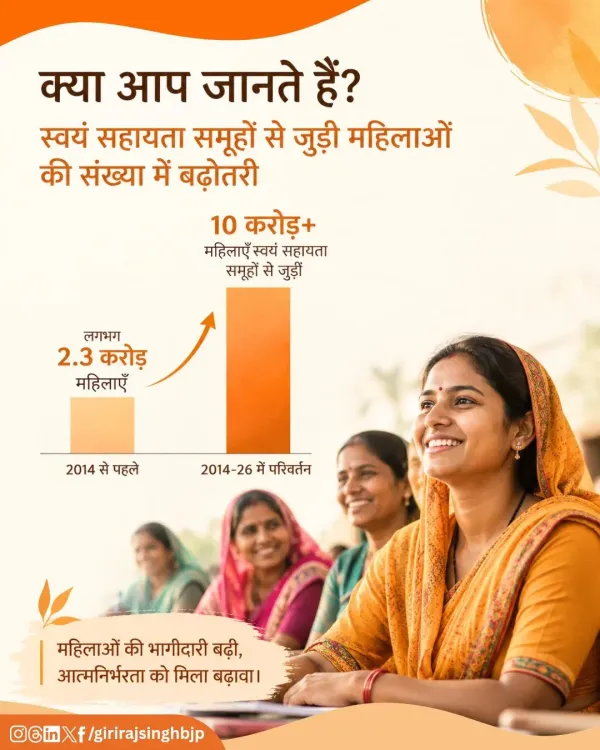
Union Textiles Minister Giriraj Singh posted on 20 October 2026 highlighting that more than 10 crore women in India are part of Self-Help Groups.
He described the trend as reflecting India's progress on women's empowerment and aarthik swavalamban (economic self-reliance).
NABARD launched the SHG-Bank Linkage Programme in 1992 , establishing the microcredit foundation for today's SHG ecosystem.
The Deendayal Antyodaya Yojana–National Rural Livelihoods Mission (DAY-NRLM) , restructured in 2011 , is the central government scheme driving SHG scale-up for rural poverty reduction.
The Textiles Ministry's remit — covering handloom clusters and artisan cooperatives — directly intersects with SHG networks across states including Bihar, Odisha, and West Bengal .
Updated DAY-NRLM progress data from the Ministry of Rural Development will be the next key benchmark for this milestone.
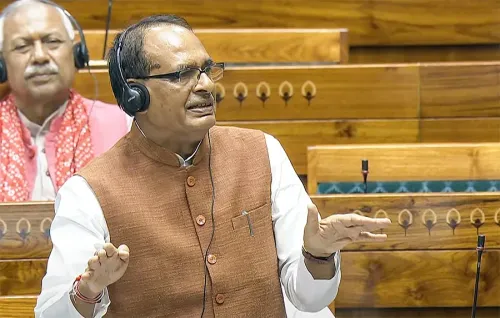
More than 10 crore women are walking the path of self-reliance through Self-Help Groups — and Union Textiles Minister Giriraj Singh wants the country to take notice. On Tuesday, 20 October 2026, the senior BJP leader posted on X, highlighting the scale of women's participation in SHGs as a marker of India's progress on economic empowerment.
In his post, Singh wrote: 'स्वयं सहायता समूहों से जुड़कर देश की 10 करोड़ से अधिक महिलाएँ आत्मनिर्भरता की राह पर आगे बढ़ रही हैं' — 'More than 10 crore women of the country, by joining Self-Help Groups, are moving forward on the path of self-reliance.' He added that this growing participation reflects India's progress towards women's empowerment and economic independence.
Three Decades of SHGs: From NABARD Pilot to National Mission
The Self-Help Group model has deep roots in Indian development policy. NABARD launched its SHG-Bank Linkage Programme in 1992, creating the first formal channel for microcredit to flow through women's savings collectives in rural India. The model worked: small groups of women pooled savings, lent to each other, and gradually accessed formal banking.
The architecture was scaled dramatically in 2011, when the government restructured the Swarnjayanti Gram Swarozgar Yojana into the Deendayal Antyodaya Yojana–National Rural Livelihoods Mission (DAY-NRLM). The mission made SHG mobilisation the centrepiece of rural poverty reduction — targeting household income, livelihood diversification, and financial inclusion simultaneously. Today it remains one of the largest women's livelihood programmes in the world.
Why the 10 Crore Number Matters
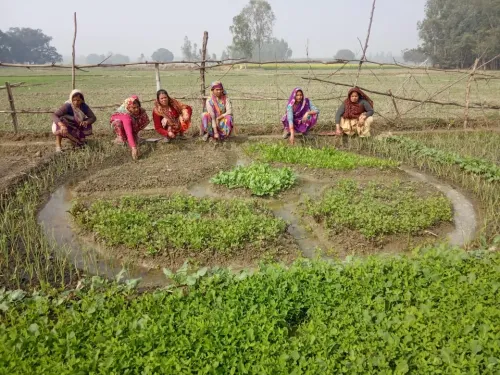
The figure Singh cited — more than 10 crore women — is not just a statistic. It represents a quiet structural shift in how rural Indian households manage money, credit, and enterprise. An SHG member is typically a woman who has moved from informal moneylenders charging usurious rates to a bank account, a credit history, and a peer network. That shift compounds: it changes how a household spends, saves, and plans.
The broader policy logic has remained consistent across successive governments: gender-inclusive growth cannot be driven only from the top down. SHGs function as bottom-up financial infrastructure — resilient, locally embedded, and self-correcting. Singh's post frames this momentum as evidence of 'आर्थिक स्वावलंबन' (economic self-reliance) — a term that has become central to the ruling dispensation's development vocabulary.
The Textiles Link: Artisans, Weavers, and the SHG Ecosystem
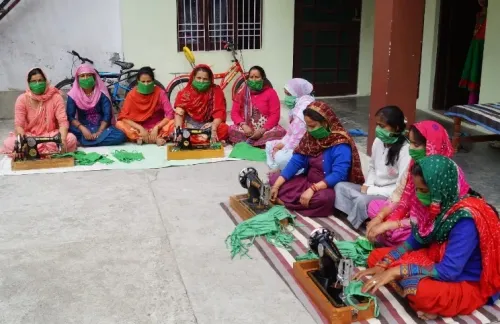
Singh's interest in SHGs is not incidental to his portfolio. The Ministry of Textiles has long intersected with women's SHG networks — particularly through handloom clusters, handicraft cooperatives, and schemes that channel government procurement toward SHG-produced goods. Rural women in weaving communities across states like Bihar, Odisha, and West Bengal have used SHG credit to buy yarn, upgrade looms, and access larger markets. The convergence of textiles policy and SHG infrastructure is a live working relationship, not a ceremonial one.
What comes next will matter: the next Ministry of Rural Development annual report and updated DAY-NRLM progress data will test whether the 10 crore milestone holds — and whether the quality of SHG membership, not just the count, is improving.
A number this large stops being a programme metric and starts being a social fact. The real question now is what those 10 crore women do next.
Point of View
Framing the 10 crore figure as a national achievement aligns with the BJP's 'Atmanirbhar Bharat' narrative and its effort to project women's economic agency as a signature outcome. The Textiles Ministry's operational link to women's artisan SHGs gives Singh a legitimate stake in this story, but the broader communication strategy is about brand association with a powerful social movement. The SHG model is also one of the few development instruments with bipartisan credibility — built across governments since 1992 — making it safe and effective political capital. The real test of the milestone's depth, however, lies in quality metrics: loan repayment rates, income graduation, and savings growth among members.
NationPress
20 Oct 2026
Frequently Asked Questions
What are Self-Help Groups (SHGs) in India?
Self-Help Groups are community-based collectives — primarily of rural women — that pool savings, extend credit to members, and access formal bank loans. They function as grassroots financial infrastructure and have been promoted by successive Indian governments since the early 1990s as a tool for financial inclusion and poverty reduction.
What is DAY-NRLM and how does it relate to SHGs?
The Deendayal Antyodaya Yojana–National Rural Livelihoods Mission (DAY-NRLM), restructured in 2011, is the central government's flagship scheme to mobilise rural women into SHGs and provide them with savings, credit, livelihoods support, and market linkages. It is one of the largest women's livelihood programmes globally.
Why did Giriraj Singh post about Self-Help Groups?
Singh, as Union Textiles Minister, posted on 20 October 2026 to highlight that over 10 crore Indian women are advancing on self-reliance through SHGs. The Textiles Ministry's work with handloom clusters and artisan cooperatives overlaps significantly with SHG networks, giving him a direct policy interest in the milestone.
How many women are currently in Self-Help Groups in India?
Union Textiles Minister Giriraj Singh cited more than 10 crore women as being part of Self-Help Groups in India as of October 2026. Updated official figures are expected in the next Ministry of Rural Development annual report and DAY-NRLM progress data release.
When did India's SHG-Bank Linkage Programme begin?
NABARD launched the SHG-Bank Linkage Programme in 1992, creating the foundational framework for channelling microcredit to women's savings collectives. It was the starting point for what has grown into India's vast SHG ecosystem today.