Giriraj Singh Highlights SHG Women Empowerment Under Modi Govt
Synopsis
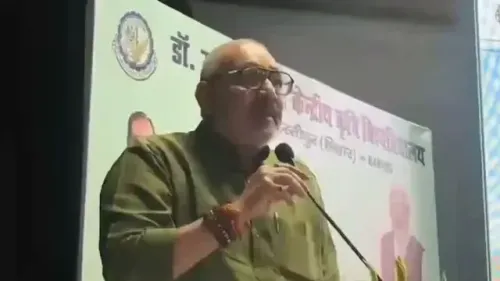
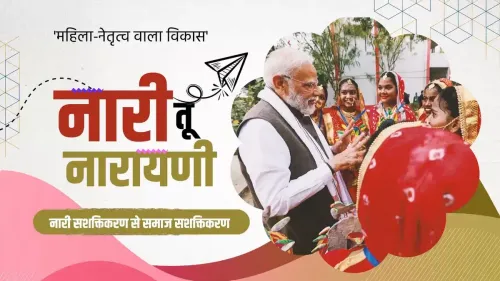
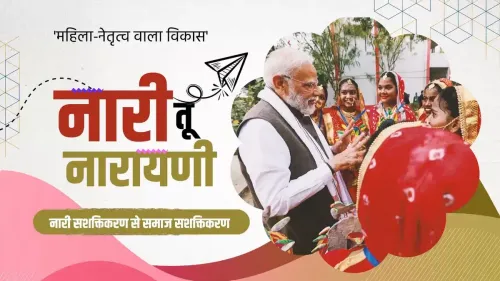
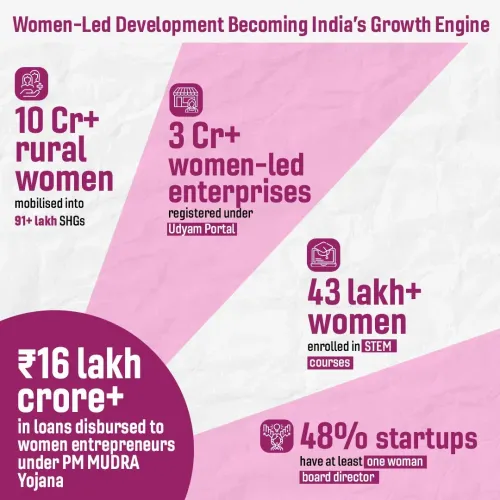
Union Textiles Minister Giriraj Singh on June 16, 2026, credited PM Modi's leadership with turning poverty alleviation into a mass movement by linking SHG women to banking, financial aid, and self-employment, citing improved living standards and reduced NPAs.
Key Takeaways
Union Textiles Minister Giriraj Singh posted on June 16, 2026 , praising the Modi government's welfare model centred on women's SHGs.
He credited banking access, financial assistance, and self-employment opportunities with making SHG-linked women self-reliant (Aatmanirbhar) .
Key schemes underpinning the claim include Pradhan Mantri Jan Dhan Yojana (2014) , DAY-NRLM (restructured 2015) , and the MUDRA scheme (April 2015) .
Singh asserted that the initiative has improved the living standards of the poor, increased trust in banks, and led to a notable reduction in NPAs .
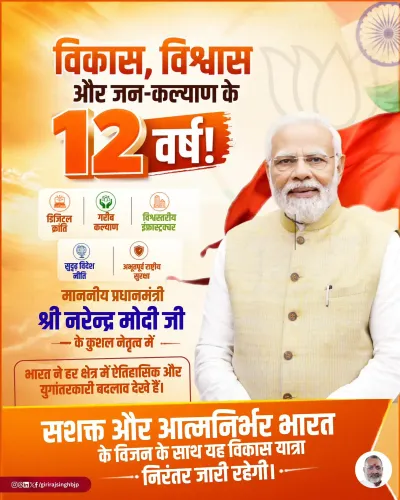
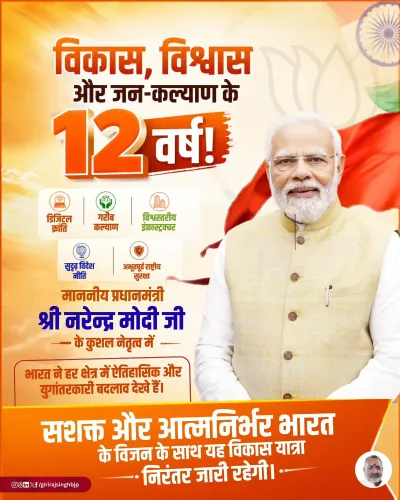
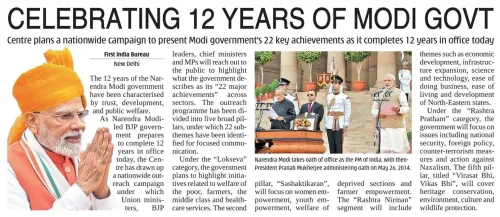
The post is tagged #12SaalSevaSushasanGaribKalyan , part of the BJP's broader messaging marking twelve years of the Modi administration.
Begusarai , Singh's Lok Sabha constituency in Bihar , is a focal point for the rural development narrative he regularly champions.
Union Textiles Minister Giriraj Singh on Tuesday, June 16, 2026, credited the Narendra Modi government with transforming poverty alleviation into a mass movement, citing the financial inclusion and self-reliance achieved by women linked to Self-Help Groups (SHGs) across the country.
Context
Posting in Hindi on X, Singh wrote that under Prime Minister Narendra Modi's leadership, 'गरीब कल्याण को जनआंदोलन का स्वरूप मिला है' ('welfare of the poor has taken the form of a mass movement'). He specifically highlighted how women affiliated with SHGs have been connected to banking infrastructure, financial assistance, and self-employment opportunities, making them self-reliant. The post carried the hashtags #12SaalSevaSushasanGaribKalyan and #AatmanirbharBharat, signalling the ruling party's broader messaging around twelve years of governance and the self-reliance agenda.
Policy Backdrop
The claims made by Singh draw on a cluster of flagship programmes launched after 2014. The Pradhan Mantri Jan Dhan Yojana, launched in August 2014, opened bank accounts for previously unbanked households and enabled direct benefit transfers to reach rural women. The Deendayal Antyodaya Yojana – National Rural Livelihoods Mission (DAY-NRLM) was restructured in 2015 with enhanced budgetary outlays to scale SHG credit linkage, turning women's collectives into the primary vehicle for last-mile credit delivery.
The MUDRA scheme, introduced in April 2015, further channelled collateral-free bank loans to micro-enterprises often promoted by SHG members. Together, these programmes form the policy architecture Singh referenced when crediting improved living standards among the poor, greater trust in banks, and a 'notable reduction in NPAs' — though the last claim, particularly as it relates to 2026 data, has not been independently verified.
Stakeholders and Impact
The primary beneficiaries of this model are rural women organised into SHGs, who gain access to formal credit, savings products, and livelihood training under DAY-NRLM. Rural and regional banks, particularly those with large priority-sector portfolios in states like Bihar, are the key institutional stakeholders. Singh represents Begusarai, a Lok Sabha constituency in Bihar — one of India's most populous and economically challenged states — making the SHG-bank linkage model especially relevant to his constituency's development narrative.
The broader Aatmanirbhar Bharat framework, announced in 2020, extended additional support to micro-enterprises and SHGs as part of a pandemic-era economic stimulus, reinforcing the policy continuum Singh invoked. Proponents of the model argue that group-based lending improves repayment discipline and reduces non-performing assets in rural bank portfolios.
What's Next
The government's messaging around SHG empowerment is expected to intensify as the BJP marks twelve years of the Modi administration. Observers will watch for the next NRLM progress report and any state-level SHG-bank linkage targets announced in upcoming Bihar budgets or central scheme reviews. The scale of NPA reduction specifically attributable to SHG lending remains a key metric that future policy disclosures could clarify.
Point of View
Coherent self-reliance arc. By invoking NPA reduction alongside SHG empowerment, he attempts to bridge the social and financial sectors, lending economic credibility to what is otherwise a political tribute. The hashtag #12SaalSevaSushasanGaribKalyan signals a coordinated party-wide communications push as the Modi government approaches a symbolic governance milestone. For Bihar — a state with deep rural poverty and a large SHG footprint — the framing also serves a local constituency purpose ahead of any future electoral cycle.
NationPress
15 Sept 2026
Frequently Asked Questions
What did Giriraj Singh say about SHG women on June 16 2026?
Union Textiles Minister Giriraj Singh stated that under PM Modi's leadership, women linked to Self-Help Groups have been connected to banking, financial assistance, and self-employment, making them self-reliant, and that this has improved living standards and reduced NPAs.
What is the Deendayal Antyodaya Yojana NRLM?
DAY-NRLM is a central government scheme restructured in 2015 that promotes women's Self-Help Groups and links them to formal credit and markets, serving as the backbone of rural livelihood promotion in India.
How does the Modi government's SHG model reduce NPAs?
Proponents argue that group-based lending under SHGs improves repayment discipline among rural borrowers, which in turn reduces non-performing assets in rural and regional bank portfolios, though specific verified NPA figures for 2026 are not yet publicly available.
What is the AatmanirbharBharat scheme and how does it relate to SHGs?
Aatmanirbhar Bharat is a 2020 economic self-reliance package that extended additional support to micro-enterprises and SHGs, reinforcing the financial inclusion model built through Jan Dhan Yojana and MUDRA since 2014.
Why does Giriraj Singh frequently mention Begusarai in development posts?
Begusarai is the Lok Sabha constituency in Bihar that Giriraj Singh represents; highlighting development and welfare outcomes there allows him to connect national policy achievements directly to his local constituency.