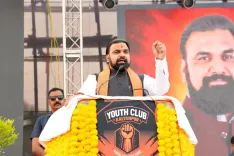
CM Dhami Celebrates Diwali at RSS Dehradun Office
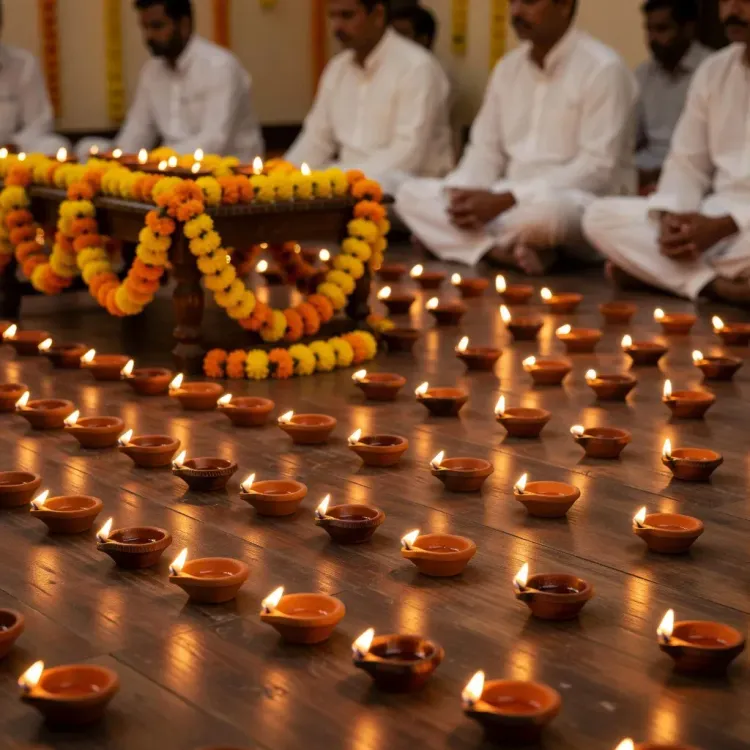
Synopsis
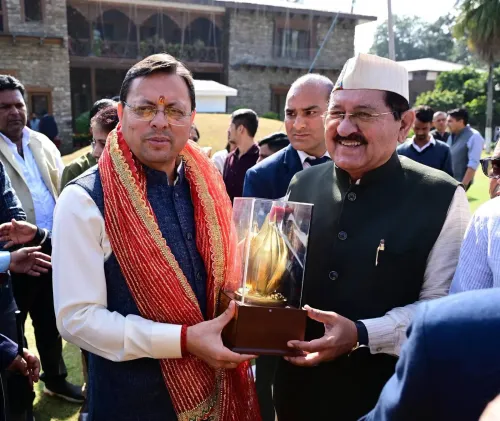
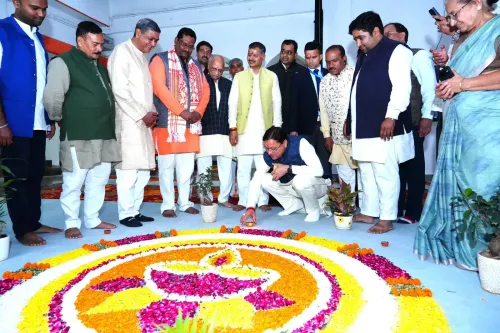
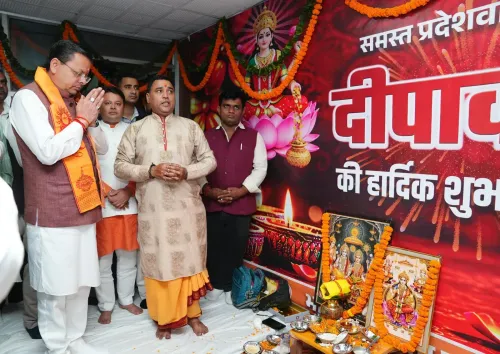
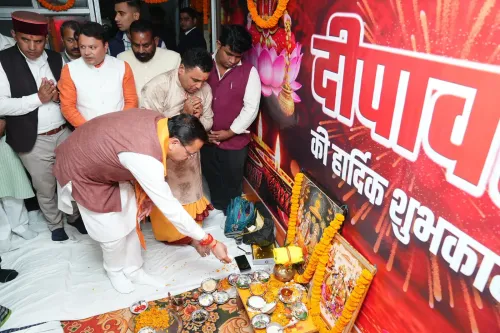
Uttarakhand Chief Minister Pushkar Singh Dhami celebrated Diwali at the RSS provincial office in Dehradun on 7 November 2026, joining Sangh volunteers and calling the festival a symbol of culture, spiritual consciousness, and social harmony.
Key Takeaways
CM Pushkar Singh Dhami celebrated Diwali at the RSS provincial office in Dehradun on 7 November 2026 .
He shared greetings with RSS office-bearers and volunteers ( swayamsevaks ) at the event.
Dhami described Diwali as a symbol of 'rich culture, spiritual consciousness, and social harmony.' He framed the festival as an inspiration for stronger commitments to service, goodwill, and national interest.
The visit follows a broader BJP pattern of chief ministers joining RSS events during major Hindu festivals to underscore ideological alignment.
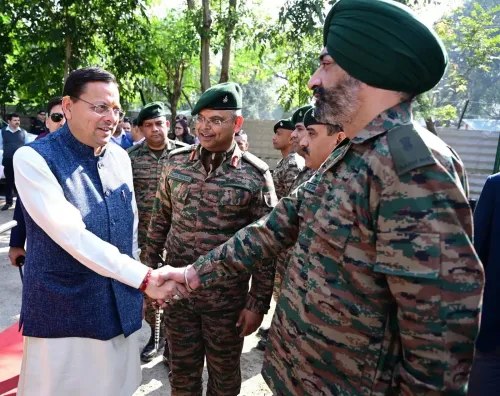
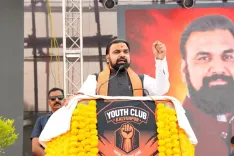
Light, resolve, and a familiar ideological homecoming — Uttarakhand Chief Minister Pushkar Singh Dhami marked Diwali 2026 at the Rashtriya Swayamsevak Sangh's provincial office in Dehradun, celebrating the festival alongside office-bearers and volunteers of the organisation that has long shaped his political worldview.
Sharing greetings on Saturday, 7 November, Dhami wrote in Hindi: 'दीपावली हमारी समृद्ध संस्कृति, आध्यात्मिक चेतना और सामाजिक समरसता का प्रतीक है' — 'Diwali is a symbol of our rich culture, spiritual consciousness, and social harmony.' He added that the festival inspires a stronger commitment to service, goodwill, and national interest, moving from darkness towards light.
Dhami at the RSS Dehradun Office
The choice of venue is deliberate and familiar. Dehradun, Uttarakhand's capital, houses the RSS provincial headquarters, and BJP leaders — particularly those with deep organisational roots in the Sangh — regularly mark major Hindu festivals there to signal both ideological alignment and personal gratitude to the volunteer body. For Dhami, whose political rise is closely linked to his Sangh background, the visit is as much a statement of continuity as it is a seasonal celebration.
The RSS, founded in 1925, is the ideological parent of the BJP and maintains an extensive network of swayamsevaks (volunteers) across India. Its provincial offices serve as nerve centres for cultural and social programmes, especially during festival seasons when themes of samajik samrasta — social harmony — are foregrounded.
Festival as Political Vocabulary
BJP chief ministers joining RSS events during Diwali has become a recognisable pattern in India's political calendar. The optics carry a consistent message: governance and cultural nationalism are not separate tracks but reinforcing ones. Dhami's post explicitly framed the festival in terms of seva (service), sadbhav (goodwill), and rashtra hit (national interest) — the precise trinity that RSS programmes regularly invoke.
This year's event in Dehradun adds another data point to that pattern — a Chief Minister spending a festival evening not at a state function, but inside the Sangh's own premises, with volunteers, reinforcing a bond that predates his time in office.
As the festival season continues, Uttarakhand is likely to see further state-level cultural programmes with RSS-linked participation — each one a quiet but legible signal of where the state's ruling alignment sits.
Point of View
Keeping the organisational base energised between election cycles. The choice of venue over a state ceremonial event signals that for Dhami, RSS affiliation is not just biography but active political identity. It also reflects a broader trend in which cultural nationalism is performed through institutional presence, not just rhetoric. Ahead of potential state political activities, such optics are rarely accidental.
NationPress
7 Nov 2026
Frequently Asked Questions
Where did CM Dhami celebrate Diwali in 2026?
CM Pushkar Singh Dhami celebrated Diwali at the RSS provincial office in Dehradun on 7 November 2026, alongside Sangh office-bearers and volunteers.
What did Dhami say about Diwali at the RSS event?
Dhami said Diwali is a symbol of India's rich culture, spiritual consciousness, and social harmony, and that the festival inspires stronger resolve for service, goodwill, and national interest.
What is the RSS provincial office in Dehradun?
The RSS provincial office in Dehradun is the headquarters of the Rashtriya Swayamsevak Sangh's Uttarakhand unit. The RSS, founded in 1925, is a Hindu nationalist volunteer organisation and the ideological parent of the BJP.
Why do BJP leaders celebrate festivals at RSS offices?
BJP leaders routinely join RSS events during Hindu festivals to signal ideological affinity and personal ties to the Sangh, reinforcing the party-organisation bond that underpins BJP politics.
Is Pushkar Singh Dhami connected to the RSS?
Yes, CM Pushkar Singh Dhami has longstanding connections to the RSS, and his political rise is closely associated with his background in the Sangh's volunteer network.