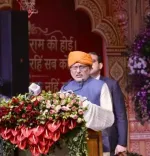
CM Dhami celebrates Diwali at RSS office in Dehradun
Synopsis
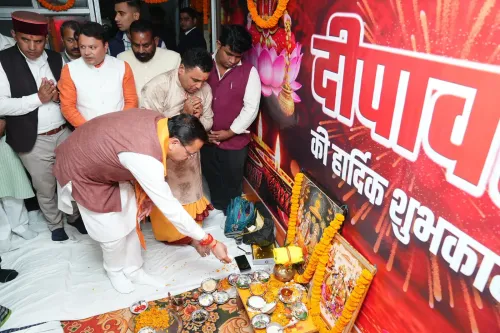
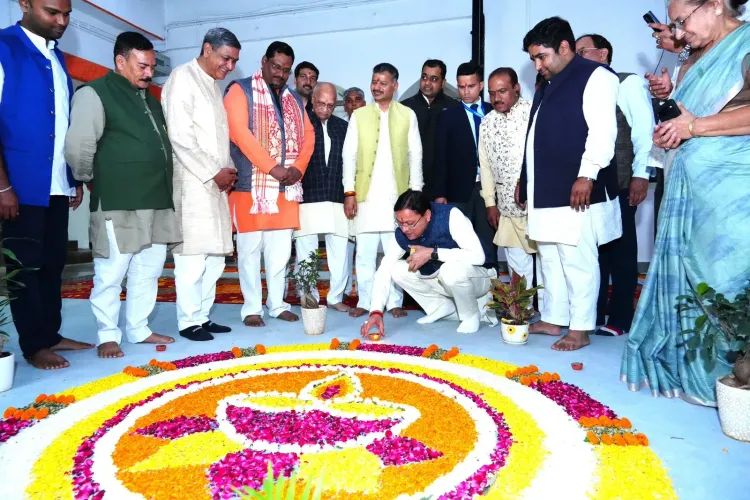
Uttarakhand Chief Minister Pushkar Singh Dhami visited the RSS Tilak Road provincial office in Dehradun on November 7, 2026, to celebrate Diwali with volunteers and office-bearers, calling the festival a symbol of social harmony and national duty.
Key Takeaways
CM Pushkar Singh Dhami visited the RSS Tilak Road provincial office, Dehradun on November 7, 2026 to celebrate Diwali.
He wished all present happiness, prosperity, good health, and well-being on the occasion.
Dhami described Diwali as a symbol of Indian culture and spiritual consciousness, urging movement from darkness to light and despair to hope.
He called Diwali a festival of social harmony, mutual goodwill, service, and cooperation — not merely a festival of lamps.
The visit follows an established pattern of BJP chief ministers maintaining Diwali engagements with RSS offices across states.
No policy announcements were made; the visit was explicitly ceremonial and cultural in nature.
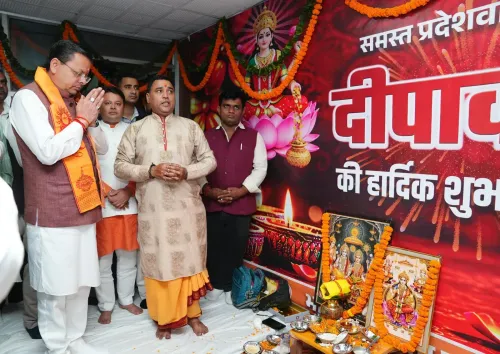
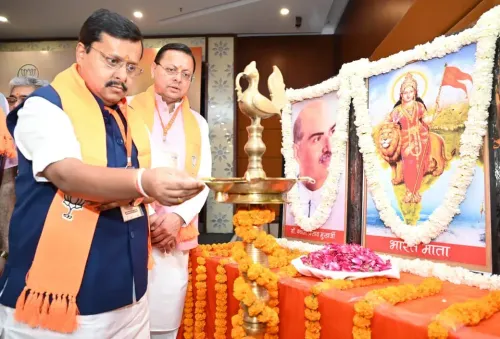
Diwali came alive at the Rashtriya Swayamsevak Sangh's Tilak Road provincial office in Dehradun on Saturday, November 7, 2026, as Uttarakhand Chief Minister Pushkar Singh Dhami joined RSS office-bearers and volunteers to mark the festival — carrying a message of social harmony and national duty.
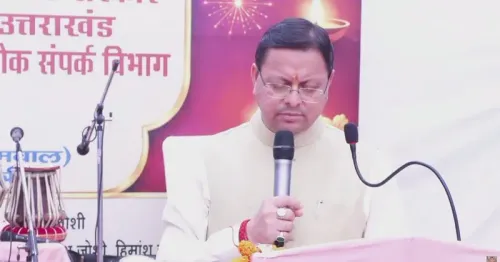
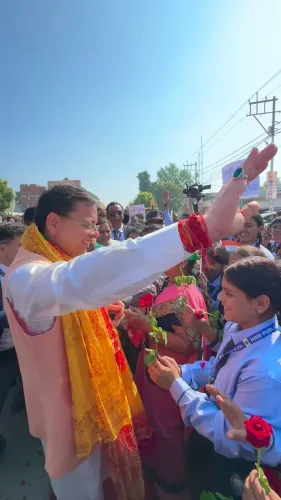
The Chief Minister's Office shared visuals of the visit, in which Dhami extended warm greetings to those present, wishing everyone happiness, prosperity, good health, and well-being. Speaking on the occasion, he described Diwali as a symbol of Indian culture, spiritual consciousness, and the country's rich traditions — 'andhkar se prakash ki aur' (from darkness to light), 'nirasha se asha ki aur' (from despair to hope), and from untruth to truth.
More than lamps — Dhami's message on social cohesion
Dhami went further than a standard festival greeting. He framed Diwali not merely as a festival of lights but as a vehicle for social harmony, mutual goodwill, service, cooperation, and positive energy. 'Diwali is not only a festival of lamps,' he said, 'but one that carries the message of social harmony and collective responsibility towards society and the nation.'
He called on citizens to channel the spirit of the festival into active participation in nation-building — a theme that sits squarely within the RSS's long-standing organisational vocabulary around seva (service) and rashtra nirmaan (nation-building).
BJP chief ministers and RSS offices — a well-worn Diwali tradition
Dhami's visit fits a wider, well-established pattern. BJP chief ministers across states have routinely visited RSS offices and shakhas during major Hindu festivals, maintaining organisational ties that date back decades. The RSS, founded in 1925, runs a network of prant karyalayas (provincial offices) through which it sustains grassroots cultural and social work — and Diwali visits by elected BJP leaders carry both symbolic and organisational weight.
In Uttarakhand, Dehradun serves not just as the state capital but as the seat of several key RSS provincial structures, making the Tilak Road office a natural focal point for such interactions.
No policy announcements or administrative decisions emerged from the visit — this was, explicitly, a cultural and ceremonial occasion. But in Indian politics, ceremony is rarely just ceremony: a Chief Minister at an RSS office on Diwali sends a signal of alignment that resonates well beyond the room.
Point of View
Whose political identity is closely aligned with Hindutva-centric governance, such visits are a form of base consolidation ahead of ongoing state political cycles. The language of 'nation-building duty' drawn from RSS vocabulary signals that the Chief Minister is positioning Diwali not as a private celebration but as a civic mobilisation moment. This soft-power alignment between elected office and organisational culture is a defining feature of BJP governance in Hindu-majority hill states like Uttarakhand.
NationPress
7 Nov 2026
Frequently Asked Questions
Why did CM Pushkar Singh Dhami visit the RSS office on Diwali 2026?
CM Dhami visited the RSS Tilak Road provincial office in Dehradun to celebrate Diwali with office-bearers and volunteers, extending festival greetings and speaking on themes of social harmony and national duty.
Where is the RSS prant karyalaya in Dehradun located?
The RSS provincial office in Dehradun is located on Tilak Road in the city, which also serves as the capital of Uttarakhand.
What did CM Dhami say about Diwali at the RSS office?
Dhami said Diwali is a symbol of Indian culture and spiritual consciousness, urging people to move from darkness to light and from despair to hope, and called it a festival of social harmony and collective responsibility.
Is it common for BJP chief ministers to visit RSS offices on Diwali?
Yes, BJP chief ministers across states have a well-established tradition of visiting RSS offices and shakhas during major Hindu festivals, maintaining organisational and cultural ties with the RSS network.
Did CM Dhami announce any new policy during the RSS Diwali visit?
No policy announcements were made during the visit. The occasion was explicitly ceremonial and cultural in nature.