Catholics in China face widening curbs on daily religious life
Synopsis
China's restrictions on Catholic worship are no longer confined to churches — they now reportedly reach prayer books, online rosary broadcasts, pilgrimages and even funeral rites. A Human Rights Watch report from April 2026 documented surveillance, travel bans, and alleged arbitrary detentions of underground clergy, painting a picture of faith life shrinking under President Xi Jinping's 'sinicisation' drive.
Key Takeaways
Restrictions on Catholic religious practice in China now reportedly extend to prayer books, pilgrimages, online rosary broadcasts and funeral ceremonies.
In Shanghai , a reported ban on Catholic funeral rites at city funeral homes has drawn particular concern.
An April 2026 report by Human Rights Watch (HRW) documented stepped-up surveillance, travel restrictions, alleged arbitrary detentions and enforced disappearances targeting Catholics.
Under President Xi Jinping , the 'sinicisation' policy requires religious institutions to conform to state-defined political and cultural priorities.
Catholic communities operating outside the state-approved Chinese Catholic Patriotic Association framework face increased pressure, according to reports.
Allegations are described as difficult to verify independently, with testimonies sourced from Catholics speaking anonymously.
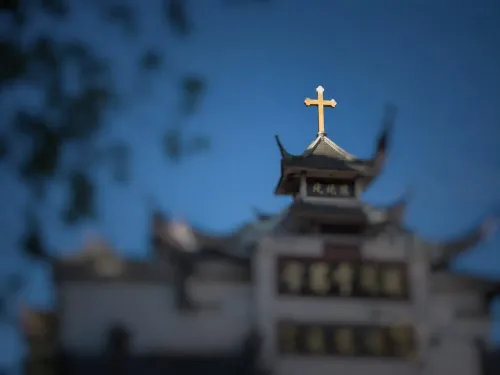
Restrictions on religious practice for Catholics in China are expanding well beyond church premises, now reaching into everyday expressions of faith — including access to prayer books, participation in pilgrimages, online rosary broadcasts and funeral rites, according to a report published by Myanmar media outlet Mizzima News.
Restrictions Reaching Into Ordinary Life
'A Bible removed from a church shop, a pilgrimage cancelled after a priest receives new instructions, a prayer broadcast that suddenly disappears from the internet: for Catholics in China, restrictions on religious practice are increasingly being felt in the ordinary details of spiritual life,' the report stated.
In Shanghai, reports of a ban on Catholic funeral rites at city funeral homes have added what observers describe as a particularly troubling dimension to the broader pattern — extending the reported curbs beyond worship and religious education to ceremonies surrounding death. The allegations were drawn from testimonies given by Catholics who spoke on condition of anonymity to US-based outlet The Epoch Times.
State Supervision and the 'Sinicisation' Policy
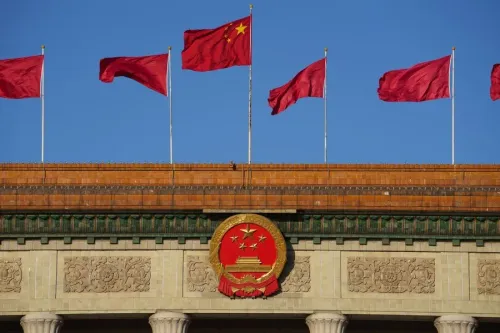
Although China's Communist Party (CCP) officially recognises Catholicism as one of five authorised religions, its practice remains subject to extensive political oversight. Religious institutions must operate within a regulatory framework that subjects registration, clergy appointments, publications and organised activities to government scrutiny.
Under President Xi Jinping, the policy of 'sinicisation' has further emphasised that religious beliefs and institutions must conform to the political priorities and cultural framework defined by the state, the report noted. The government recognises the Chinese Catholic Patriotic Association, while Catholic communities functioning outside the state-approved framework have reportedly come under increased pressure.
Human Rights Watch Findings
Citing an April 2026 report by Human Rights Watch (HRW), the Mizzima News report said Chinese authorities had stepped up surveillance, ideological scrutiny and travel restrictions targeting Catholics. The HRW findings also documented pressure on underground clergy and communities that refuse to operate within the state-controlled church structure, including alleged arbitrary detentions, enforced disappearances and house arrests.
The report acknowledged that 'the allegations are difficult to verify independently in every instance, but they raise questions about the practical space available for Catholic worship in a country where religious organisations operate under close state supervision.'
A Wider Struggle Over Church Governance
Analysts cited in the report describe the curbs on everyday religious activities as part of a broader contest over the governance and leadership of the Catholic Church in China. The state-imposed boundaries, the report concluded, 'are becoming more intrusive, reaching further into the private and communal dimensions of religious life.'
The developments add fresh scrutiny to China's record on religious freedoms at a time when international human rights bodies continue to monitor the situation closely.
Point of View
Then no expression of faith is too private to regulate. What is notable is how little international diplomatic pressure this has generated, even as the Vatican's own relationship with Beijing remains delicately balanced through a contested and periodically renewed accord. Independent verification remains a genuine obstacle, but the volume and consistency of testimony across multiple sources gives the pattern credibility that demands sustained scrutiny.
NationPress
7 Nov 2026
Frequently Asked Questions
What restrictions are Catholics in China reportedly facing?
Catholics in China are reportedly facing curbs that extend beyond churches to include access to prayer books, participation in organised pilgrimages, online rosary broadcasts and, in Shanghai, bans on Catholic funeral rites at city funeral homes. The restrictions affect everyday expressions of faith rather than just formal worship.
What did the Human Rights Watch report on Chinese Catholics find?
An April 2026 Human Rights Watch report found that Chinese authorities had intensified surveillance, ideological scrutiny and travel restrictions targeting Catholics. It also documented pressure on underground clergy and communities outside the state-controlled church, including alleged arbitrary detentions, enforced disappearances and house arrests.
What is China's 'sinicisation' policy and how does it affect Catholics?
'Sinicisation' is a policy under President Xi Jinping that requires religious institutions to align their beliefs and practices with Communist Party political priorities and Chinese cultural norms. For Catholics, this means operating under government scrutiny on matters ranging from clergy appointments to religious publications and organised activities.
Is Catholicism legal in China?
Yes, China's Communist Party officially recognises Catholicism as one of five authorised religions, alongside Buddhism, Taoism, Islam and Protestantism. However, its practice must occur within a state-regulated framework through the Chinese Catholic Patriotic Association; communities operating outside this structure reportedly face increasing pressure.
How reliable are the reports of restrictions on Catholics in China?
The report itself acknowledges that 'the allegations are difficult to verify independently in every instance.' Testimonies were gathered from Catholics speaking anonymously, and the findings have not been confirmed by Chinese government sources. Human rights organisations such as Human Rights Watch have separately corroborated elements of the broader pattern.