Is China Tightening Control Over Catholic Clergy with New Travel Restrictions?
Synopsis
China's latest regulations for Catholic clergy represent a significant shift in the government’s approach to religious figures, treating them as entities requiring stringent oversight rather than mere spiritual leaders. This move raises concerns about the intersection of religious freedom and state control in the country.
Key Takeaways
China has imposed new travel restrictions on Catholic clergy.
Clergy must surrender their passports and obtain approval for travel.
Non-compliance can lead to disciplinary actions.
This change indicates a shift in the government's view of religious leaders.
The regulations were issued by state-controlled religious organizations.
Colombo, Jan 5 (NationPress) China has long utilized passport control as a significant mechanism within the governance framework of the Chinese Communist Party (CCP). This system mandates that officials and personnel in sensitive sectors secure permission for international travel, disclose their travel plans, and report back upon their return.
The recent extension of this system to Catholic clergy indicates a notable shift in Beijing’s stance toward religious leaders, viewing them less as spiritual guides and more as individuals whose movements warrant rigorous scrutiny, according to a report published on Thursday.
A report from the Sri Lankan newspaper Daily Mirror reveals that China has rolled out comprehensive new internal regulations that aim to enhance state control over Catholic clergy, thereby broadening the CCP’s existing exit restrictions to bishops, priests, deacons, and nuns across the country.
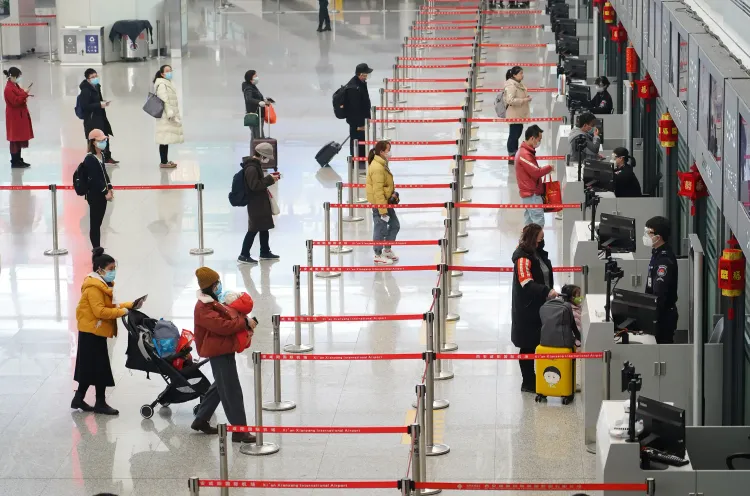
Under these new rules, clergy members are required to submit their passports and all relevant travel documentation, with international travel only permitted after obtaining prior approval and adhering to mandatory reporting requirements upon their return.
“The measures, which were enacted on December 16, represent a significant intensification in Beijing’s oversight of religious personnel, further merging religious governance with political control. These regulations were collaboratively issued by the Chinese Catholic Patriotic Association (CCPA) and the Bishops’ Conference of the Catholic Church in China (BCCCC), both of which operate under the CCP’s supervision,” detailed the report from Daily Mirror.
The core of the new rules revolves around a mandatory centralized management of travel documents, compelling clergy to relinquish ordinary passports, Hong Kong–Macau travel permits, and Taiwan travel permits to church authorities for collective management.
“Clergy members can no longer possess their own documents. Any international or cross-border travel—whether for ecclesiastical duties, training, conferences, or personal matters—necessitates prior authorization from supervising entities. Once approval is granted, travel documents are temporarily returned for visa application purposes,” the report elaborated.
“Upon returning to China, clergy are required to return their documents within seven days and provide written reports confirming their return and detailing their activities abroad,” it further explained.
The regulations clearly indicate that unauthorized changes to travel plans, prolonged stays, or failure to return documents will be classified as violations, leading to disciplinary measures.
“This approach closely parallels the CCP’s established exit controls on government officials, party members, and executives of state enterprises, whose passports are routinely confiscated to prevent defection, limit foreign interactions, and ensure political alignment. By extending this structure to Catholic clergy, the Chinese authorities seem to categorize these religious figures as politically sensitive rather than solely spiritual leaders,” the report highlighted.
Point of View
I observe that the recent developments in China's control over religious figures, particularly Catholic clergy, indicate a troubling trend toward increased state oversight. It highlights the delicate balance between governance and religious autonomy, raising questions about the future of spiritual leadership in the region.
NationPress
22 Sept 2026
Frequently Asked Questions
What are the new travel restrictions for Catholic clergy in China?
The new regulations require Catholic clergy to submit their passports and travel documents to church authorities, obtain prior approval for any international travel, and report back upon their return.
When were these new measures enacted?
These measures were officially adopted on December 16.
What organizations issued these new regulations?
The regulations were jointly issued by the Chinese Catholic Patriotic Association (CCPA) and the Bishops’ Conference of the Catholic Church in China (BCCCC), both under state control.
What happens if clergy do not comply with the new rules?
Failure to comply with the rules, including unauthorized travel changes or not returning documents, can lead to disciplinary action.
Why is this significant for religious freedom in China?
This marks an escalation in state control over religious practices, signaling a shift in how religious figures are viewed by the government.