Is China's Targeting of Churches Part of a Campaign Against Independent Christian Worship?
Synopsis
In a significant crackdown, China is intensifying its efforts against independent Christian worship, aligning social institutions with the CCP's ideological agenda. This report sheds light on the systematic targeting of churches and their leaders across the nation, marking a troubling phase in religious freedom. Find out more about the implications of these actions.
Key Takeaways
China is intensifying its crackdown on independent churches.
Recent actions indicate a coordinated national campaign.
Unregistered churches face severe repercussions.
Wenzhou remains a key region for independent Christianity.
The CCP views independent worship as a political risk.
Beijing, Feb 8 (NationPress) The ongoing assault on churches in China is a component of a larger strategy to synchronize social institutions with the ideological imperatives of the Chinese Communist Party (CCP), according to a recent report.
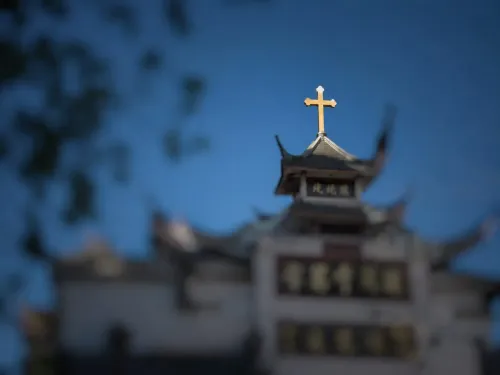
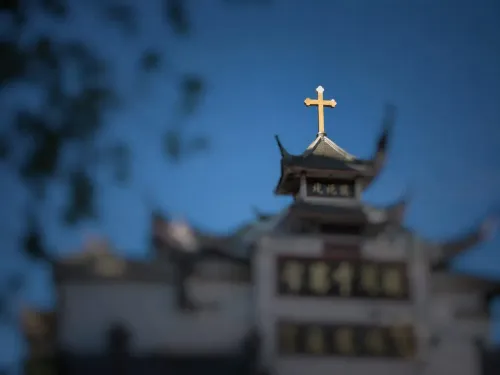
On January 5, a significant number of armed police encircled Yayang Church in the Wenzhou area of Zhejiang province and facilitated the removal of the church's cross, indicating that this was more than just a local zoning issue.
This targeting exemplifies a growing national initiative against independent Christian worship, a movement that has intensified from late 2025 into early 2026. Following several weeks of pressure, reports suggest that the initial crackdown on Yayang Church commenced in mid-December, resulting in the detention of various members.
By early January, the situation escalated into a comprehensive police operation, highlighting the authorities' resolve to firmly integrate unofficial churches under state control.
In China, Christianity is only acknowledged through government-sanctioned institutions. Protestant congregations are mandated to operate under the Three-Self Patriotic Movement, while Catholics must comply with the state-sanctioned Catholic Patriotic Association.
Churches that refuse to register, either due to theological independence or opposition to political oversight, are deemed illegal in China.
Zhejiang province, particularly Wenzhou, has long been recognized as a bastion of independent Christianity.
The systematic removal of crosses, closure of churches, and arrest of pastors has occurred repeatedly over the years. However, the latest actions signify a renewed, more coordinated enforcement effort rather than isolated local actions.
The crackdown was not limited to Wenzhou. During the same week, several leaders from an underground church in Chengdu reported arrests, as detailed in the European Times.
The Early Rain Covenant Church, one of China's most notable unregistered congregations, reported that nine members, including senior leaders, were detained during what they called a 'coordinated operation.'
For years, the Early Rain Covenant Church has endured persistent pressure, including raids, arrests, and lengthy prison sentences for its pastor and elders.
A report from the European Times noted that 'the latest detentions reveal that scrutiny has not diminished over time but has instead become more systematic, targeting the organizational leadership to undermine the churches' operational capabilities.' Further north, in Shanxi province, the Linfen Golden Lampstand Church has also fallen victim to the crackdown.
In mid-2025, approximately a dozen individuals associated with the church were convicted on fraud charges, according to human rights groups. Critics argue that such charges are often employed as legal tools to suppress religious groups when direct prosecution for worship would attract greater scrutiny.
Human rights advocates observe that recent operations indicate a coordinated effort across provinces.
The near-simultaneous actions in Zhejiang, Sichuan, and Shanxi suggest a centrally driven policy rather than isolated local enforcement.
A report from the European Times stated, 'The crackdown on churches is part of a broader initiative to align all social institutions with the ideological aims of the Chinese Communist Party. Religion, especially when organized independently, is perceived as a political risk. The demand for registration, loyalty, and conformity leaves little space for communities wishing to practice their faith without state intervention.'
Point of View
It is essential to emphasize that the targeting of churches in China underlines the ongoing struggle for religious freedom. The government's actions reflect a systematic approach to control and suppress independent worship. While the CCP maintains that these measures are necessary for social stability, the implications for human rights and individual freedoms are profound. Our commitment remains to provide a voice to those affected by these policies.
NationPress
30 Sept 2026
Frequently Asked Questions
What is the reason behind China's crackdown on churches?
China's crackdown on churches is part of a broader initiative to align social institutions with the ideological goals of the Chinese Communist Party (CCP).
How are unregistered churches treated in China?
Unregistered churches in China are considered illegal and face severe repercussions, including closure and the arrest of their leaders.
What is the significance of Wenzhou in the context of Christianity in China?
Wenzhou is recognized as a stronghold of independent Christianity in China, where many unregistered churches operate.
What are the consequences for churches that refuse state registration?
Churches that refuse registration are often subjected to crackdowns, including the removal of crosses and the detention of pastors.
How does the Chinese government view independent religious practices?
The Chinese government views independent religious practices as a political risk and insists on loyalty and conformity to state ideologies.