Is Chinese Media a Tool for CCP Propaganda?
Synopsis
A recent report uncovers how Chinese media, including films and television, serves as a tool for CCP propaganda. With stringent oversight from regulatory authorities, content is crafted to promote patriotic narratives while a new wave of online entertainment challenges the Party's control over historical memory. Discover the complexities of this cultural landscape.
Key Takeaways
Chinese media serves as a tool for state propaganda.
Regulatory authorities impose strict content guidelines.
Ultra-short war dramas challenge traditional narratives.
The CCP struggles to control historical memory in the digital age.
Patriotic education campaigns have evolved post-1989.
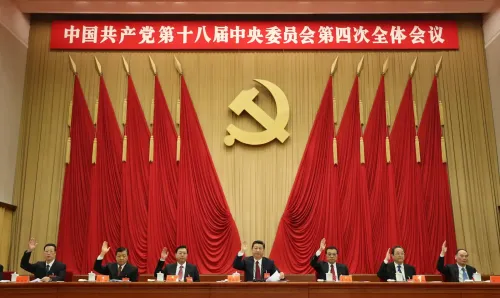
Beijing, Nov 1 (NationPress) Chinese media, including television shows and films, have long functioned as instruments for reinforcing official narratives. A report indicated that regulatory authorities in Beijing meticulously oversee and mold content to ensure it aligns with Chinese Communist Party (CCP) ideology.
According to the findings, scripts and plotlines are designed to celebrate the CCP's role in history, foster patriotism, and depict events that safeguard the regime's image.
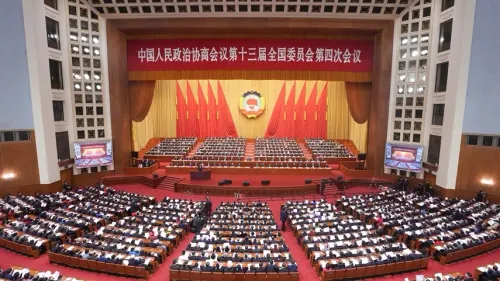
"On 3 September 2025, Tiananmen Square hosted a grand military parade, the highlight of Beijing's official campaign marking the 80th anniversary of China's victory in the War of Resistance Against Japanese Aggression. However, the emergence of viral ultra-short war dramas has transformed wartime memory into a form of online entertainment, illustrating Beijing's ongoing struggle to keep the memory of the war both politically advantageous and firmly under its control," the East Asia Forum report elaborated.
"The War of Resistance has consistently been a cornerstone of the CCP’s internal legitimacy and long-term war memory. Following the 1989 Tiananmen Square protests, the CCP ramped up its narrative strategy by initiating a nationwide patriotic education campaign. This campaign revamped textbooks and established mandatory patriotic education bases, emphasizing Japanese atrocities to exploit national humiliation as political leverage. Over the following decades, education in schools was overhauled to align with this campaign, placing the Party at the forefront of wartime resistance," it continued.
The report noted that the July–September 2025 commemorative campaign represented a significant moment in this enduring strategy, with the CCP orchestrating a series of coordinated events, including themed exhibitions at memorial museums and a grand military parade in September.
However, the excessive focus on wartime memory has led to a cultural byproduct, where alongside state-led commemorations, a burgeoning market for patriotic entertainment has emerged online, particularly among the youth.
The report highlighted that the rise of ultra-short war dramas on Douyin—China's version of TikTok—and other platforms signifies both an innovation in storytelling and a subtle challenge to the CCP's propaganda machinery. Yet, as these dramas blur the lines between state propaganda and commercial entertainment, they have drawn increased scrutiny from Chinese regulators.
"As the Party intensifies its crackdown on this digital phenomenon, it faces the challenging question of whether it can maintain its monopoly over historical memory in an age characterized by virality. The 80th anniversary underscored how contested the Party’s hold on memory has become. The struggle over how young Chinese perceive the war is no longer solely about the Party’s narrative authority but also involves negotiating the boundaries of political memory with Chinese society," the report concluded.
Point of View
It is crucial to approach this topic with an unbiased lens. The intertwining of media and politics in China raises important questions about freedom of expression and the role of narratives in shaping societal values. While the CCP's influence is evident, the emergence of new platforms and voices reveals the complexities of cultural memory in a rapidly changing digital landscape.
NationPress
3 Oct 2026
Frequently Asked Questions
How does Chinese media promote CCP ideology?
Chinese media promotes CCP ideology through strict regulatory oversight, ensuring that content aligns with state narratives that glorify the Party's role in history and foster patriotism.
What are ultra-short war dramas?
Ultra-short war dramas are brief online videos that depict wartime events, often blending entertainment with historical narratives, and have gained popularity on platforms like Douyin.
What challenges does the CCP face with new media?
The CCP faces challenges in maintaining control over historical narratives as new media platforms allow for diverse storytelling that can challenge state propaganda.
How has the CCP's narrative strategy evolved?
The CCP's narrative strategy has evolved to include nationwide patriotic education campaigns and the integration of historical events into modern media, reflecting a focus on national pride.
Why is the 80th anniversary significant?
The 80th anniversary of China's victory in the War of Resistance Against Japanese Aggression is significant as it marks a major state-led campaign to reinforce historical memory and national identity.