What Led to the Violence in Bangladesh After Sharif Osman Hadi's Death?
Synopsis
The tragic death of Sharif Osman Hadi, a radical leader, has ignited chaos in Bangladesh, leading to violent protests and attacks on media outlets. As the nation grapples with unrest, the government's response and the implications for public safety remain critical. This article explores the unfolding situation and its broader impact on society.
Key Takeaways
Sharif Osman Hadi 's death has sparked violent protests.
Multiple media outlets were targeted in arson attacks.
The interim government is facing criticism for public safety issues.
Hadi was a potential candidate in the upcoming elections.
Increased violence highlights deteriorating law and order.
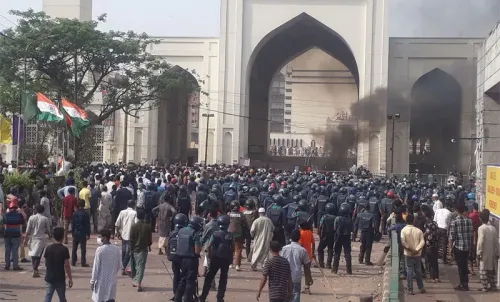
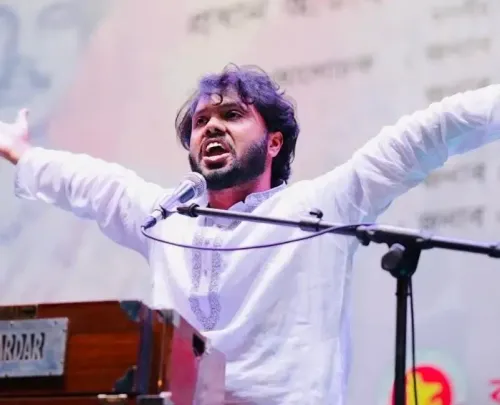
Dhaka, Dec 19 (NationPress) Unrest erupted in Bangladesh following the passing of Sharif Osman Hadi, the spokesperson for the radical faction Inqilab Mancha, as various media establishments faced arson assaults. Hadi succumbed to his injuries while receiving treatment in a Singaporean hospital, after a six-day struggle for life.
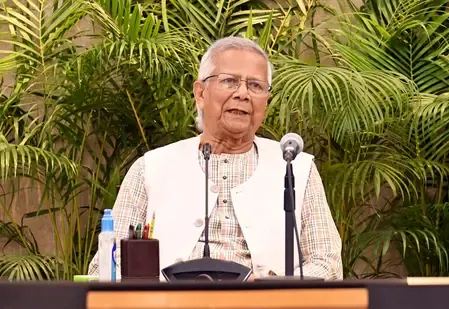
In a public address on Thursday night, the interim government’s Chief Advisor Muhammad Yunus confirmed Hadi’s demise, as reported by Bangladeshi media outlet BSS.
Additionally, the official Facebook page of Inqilab Mancha also shared the news that evening.
Hadi had been airlifted to Singapore on Monday for enhanced medical care after being in critical condition at Evercare Hospital in Dhaka.
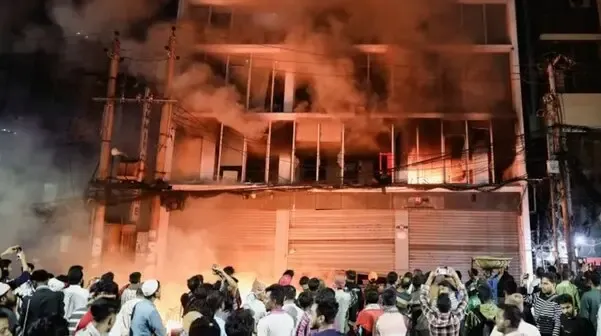
Shortly after the news of his death spread, an enraged mob set fire to the building of The Daily Star in Karwan Bazar, Dhaka, early Friday morning. Six firefighting units were dispatched to control the fire.
During this episode, several staff members, including journalists, found themselves trapped inside the building. Military personnel from the Bangladesh Army were later deployed to secure the vicinity while the mob remained positioned across the street.
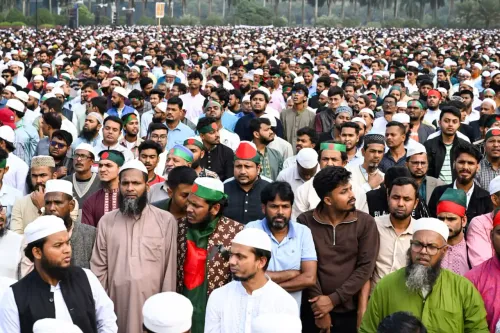
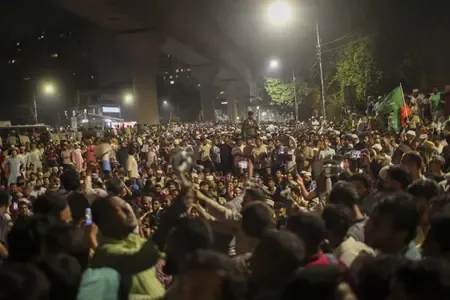
In a related event, demonstrators marched from Shahbagh towards Kawran Bazar in the capital, surrounding the office of the Bangladeshi daily Prothom Alo and staging a protest. Police present at the scene attempted to disperse the crowd but were unsuccessful.
Reports indicate that the aggression commenced late Thursday night, with protesters armed with sticks and rods vandalizing the office and shattering most of its windows. Around midnight, a faction of the protesters breached the office and torched furniture and critical documents in the street, as reported by the Dhaka Tribune.
A journalist from Prothom Alo stated that several reporters and staff remained trapped inside the office as tensions escalated in the area.
Meanwhile, the Jatiya Chhatra Shakti, the student wing of the National Citizen Party (NCP), organized a protest in Dhaka, burning an effigy of the interim government's Home Advisor Jahangir Alam Chowdhury, demanding his resignation due to the failure to apprehend Hadi’s assailants and the perceived decline in public safety. The group also announced intentions to hold a symbolic funeral for Hadi.
“We are not making any demands of Jahangir for arrests because he is unfit for this position. You cannot demand accountability from an irresponsible home advisor,” quoted Dhaka Tribune reporting Zahid Ahsan, President of Jatiya Chhatra Shakti.
Hadi was a potential independent candidate for the Dhaka-8 constituency in the upcoming February elections, having been shot in the head in broad daylight in Bijoynagar on December 12.
The assailants arrived on a motorcycle and opened fire on Hadi, who was riding a rickshaw in the Box Culvert area of Bijoynagar in Dhaka.
Bangladesh has seen a concerning increase in violence and a deteriorating law and order situation under the administration of Muhammad Yunus.
Point of View
The recent violence in Bangladesh underscores a significant concern for public safety and the government's ability to maintain order. The tragic death of Sharif Osman Hadi has ignited tensions that reflect deeper societal issues. It is crucial for the interim government to address the underlying causes of such unrest while ensuring the safety of its citizens and safeguarding the freedom of the press.
NationPress
14 Sept 2026
Frequently Asked Questions
What happened after Sharif Osman Hadi's death?
Following Sharif Osman Hadi's death, violent protests erupted in Bangladesh, with media outlets being targeted in arson attacks.
Who confirmed Hadi's death?
The interim government's Chief Advisor Muhammad Yunus confirmed Hadi's death in a public address.
What actions were taken by protesters?
Protesters vandalized media offices and set fire to furniture and important documents.
What was Hadi's political significance?
Hadi was a potential independent candidate for the Dhaka-8 constituency in the upcoming February elections.
What is the current situation regarding public safety?
The situation reflects a deteriorating law and order environment in Bangladesh under the interim government.