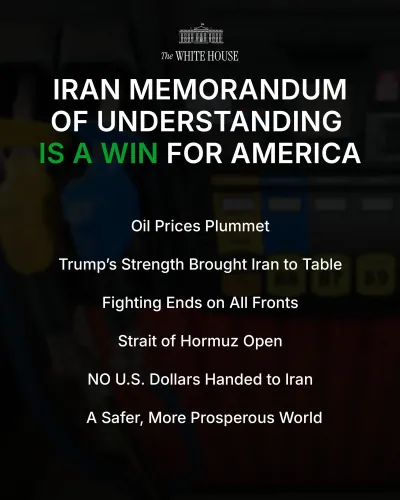
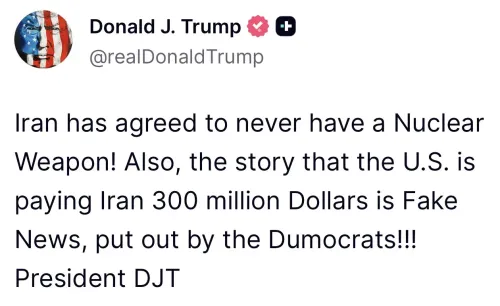
Trump: 'We Are Not Investing Any Money in Iran'
Synopsis
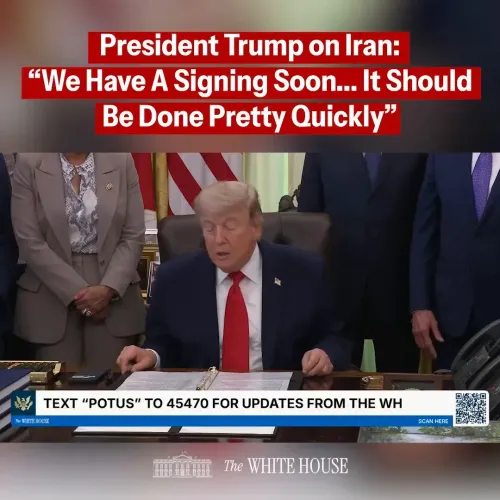
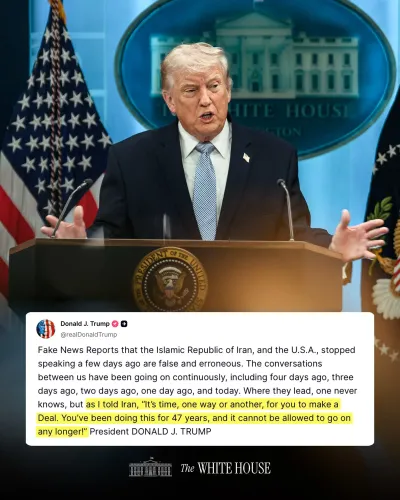
The White House on June 16, 2026, quoted President Trump flatly stating the US is not investing any money in Iran. The declaration reinforces Washington's long-running maximum pressure sanctions posture, which has sought to deny Tehran access to hard currency since the US exited the JCPOA in 2018.
Key Takeaways
The White House posted a direct quote from President Donald J.
Trump on June 16, 2026 : 'We are not investing any money in Iran.' The US withdrew from the JCPOA in 2018 and reimposed comprehensive nuclear-related sanctions on Iran .
The Trump administration's 'maximum pressure' campaign imposed secondary sanctions on foreign entities dealing with Tehran.
US policy permits only narrowly defined humanitarian exemptions — such as food and medicine — from Iran-related sanctions.
The statement has implications for any ongoing nuclear diplomacy, narrowing the space for financial concessions in potential negotiations.
Future Treasury and State Department guidance on sanctions enforcement will be closely watched by analysts and Congress.
The White House on Tuesday, June 16, 2026, quoted President Donald J. Trump reaffirming that the United States is not directing any financial investment toward Iran, in a terse but pointed statement posted on the official White House account on X.
Context
The statement — 'We are not investing any money in Iran' — is brief but carries significant diplomatic weight. It comes against the backdrop of longstanding US economic pressure on Tehran and recurring debates over whether any American funds, directly or indirectly, reach the Iranian government or its affiliated entities.
The White House chose to quote the President directly, without additional commentary, signalling that the message was intended to be unambiguous and public-facing.
Policy Backdrop
The United States formally withdrew from the Joint Comprehensive Plan of Action (JCPOA) — the 2015 multilateral nuclear agreement — in 2018, reimposing sweeping nuclear-related sanctions on Iran shortly thereafter. The Trump administration simultaneously launched what it called a 'maximum pressure' campaign, extending secondary sanctions to foreign entities that continued to do business with Tehran.
That policy sought to cut off Iran's access to hard currency by targeting its oil exports, central bank, and international financial channels. Successive administrations have maintained that no US government funds flow to Iran outside narrowly defined humanitarian exemptions, such as food and medicine.
Critics of various administrations have at times alleged that sanctions waivers or frozen-asset releases amounted to indirect financial benefit for Tehran — a charge that has been contested. Trump's statement appears designed to draw a clear, public line against any such characterisation.
Stakeholders and Impact
Iran remains under one of the most comprehensive US sanctions regimes in the world, affecting its oil sector, banking system, and access to dollar-denominated trade. The Iranian government has long argued that sanctions constitute economic warfare against its civilian population.
For US taxpayers and Congress, the statement reinforces the administration's posture that no American public money is being directed — through aid, investment, or asset transfers — to a government Washington designates as a state sponsor of terrorism. The declaration also carries implications for any ongoing diplomatic back-channels or nuclear negotiations that may be under way.
Allies and partners in the Middle East, particularly Israel and the Gulf states, have historically welcomed firm US stances on Iran funding, viewing economic isolation of Tehran as a cornerstone of regional security architecture.
What's Next
Analysts will watch for follow-up guidance from the US Treasury Department or the State Department on sanctions enforcement, particularly around any active waivers or exemptions. Congressional committees with oversight over foreign assistance and sanctions policy are also likely to weigh in.
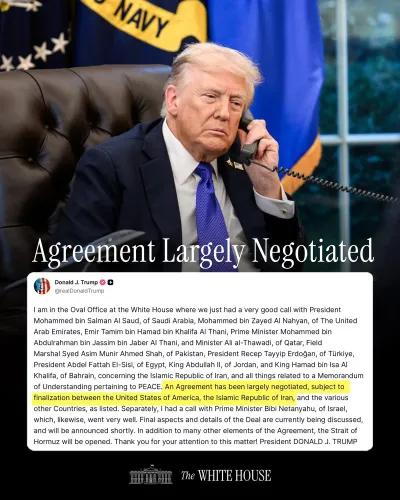
Any movement in nuclear diplomacy — whether direct US-Iran talks or multilateral negotiations — will be scrutinised in light of this public declaration, as it narrows the rhetorical space for financial concessions as part of a potential deal.
Point of View
One-line declaration serves a dual purpose: it pre-empts domestic political criticism that any administration action has softened the financial squeeze on Tehran, and it signals to regional allies that Washington's economic isolation posture remains intact. The choice to quote the President verbatim — without elaboration — is itself a messaging strategy, designed to leave no interpretive room. This fits a broader pattern in which the White House uses social media to lock in policy positions publicly before diplomatic developments can complicate the narrative. The statement will be read in Tehran, Riyadh, and Jerusalem as much as in Washington.
NationPress
19 Sept 2026
Frequently Asked Questions
Is the US giving money to Iran in 2026?
The White House has stated, quoting President Trump directly, that the US is not investing any money in Iran. US sanctions policy prohibits most financial transfers to Iran, with limited humanitarian exemptions for food and medicine.
What is the US maximum pressure policy on Iran?
The maximum pressure campaign, launched by the Trump administration in 2018 after the US withdrew from the JCPOA, uses sweeping economic sanctions to cut off Iran's access to hard currency, targeting its oil exports, banking system, and international financial channels.
Did the US leave the Iran nuclear deal?
Yes. The United States withdrew from the Joint Comprehensive Plan of Action (JCPOA) in 2018 and reimposed nuclear-related sanctions on Iran. The deal had been signed in 2015 by the US, Iran, and several other world powers.
What happens if a country invests in Iran despite US sanctions?
Under the Trump-era maximum pressure framework, secondary sanctions can be imposed on foreign companies or governments that conduct business with Iran, potentially cutting them off from the US financial system.
Why does the US sanction Iran?
The US designates Iran as a state sponsor of terrorism and has imposed sanctions in response to its nuclear programme, ballistic missile development, and support for regional proxy groups. Sanctions aim to limit Iran's access to revenues that could fund these activities.