Trump Addresses Iran Deal at G7 Summit in Evian
Synopsis
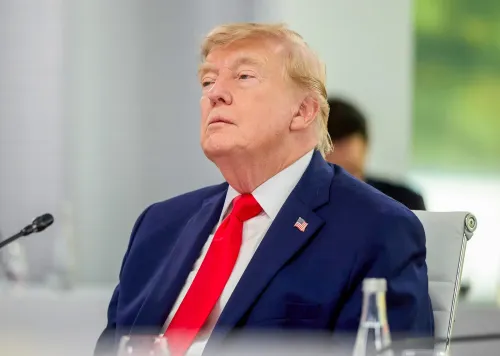
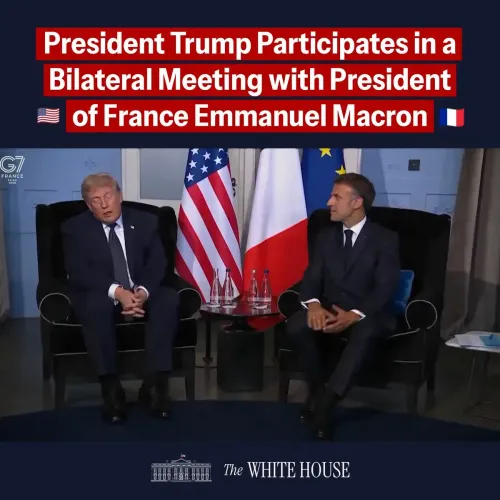
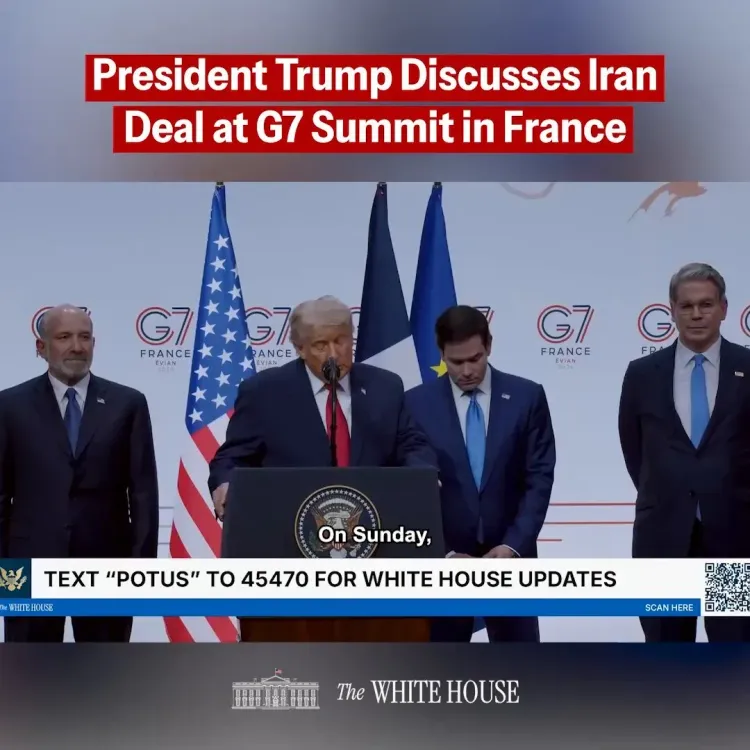
US President Donald Trump addressed the Iran nuclear deal at the closing session of the G7 Summit in Evian, France, on 17 June 2026. The White House posted live updates as Trump laid out his position on the JCPOA, the 2015 multilateral accord the US exited in 2018.
Key Takeaways
President Donald Trump addressed the Iran nuclear deal at the G7 Summit in Evian, France on 17 June 2026 .
The remarks came during the closing session of the annual G7 gathering of leaders from seven major economies plus the EU .
The JCPOA , concluded in 2015 , was designed to limit Iran's nuclear programme in exchange for sanctions relief.
The United States withdrew from the JCPOA in 2018 under Trump and reimposed sanctions through a 'maximum pressure' campaign.
European G7 members — France, Germany , and the UK — are original JCPOA signatories and may face renewed US pressure to adopt a tougher stance on Tehran .
Any coordinated G7 statement on Iran or subsequent US sanctions moves will be closely watched in the weeks ahead.
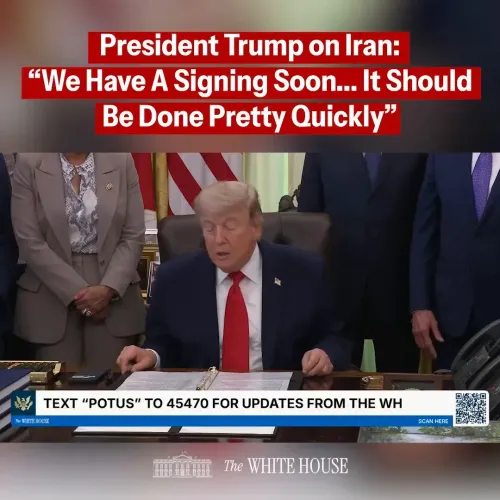
US President Donald Trump addressed the Iran nuclear deal on Wednesday, 17 June 2026, at the G7 Summit in Evian, France, using the closing session of the multilateral gathering to lay out his position on the agreement. The White House confirmed the remarks in a live post on X, describing the moment as it unfolded.
Context
The G7 Summit brings together leaders from Canada, France, Germany, Italy, Japan, the United Kingdom, and the United States, along with the European Union, to coordinate on pressing global economic and security matters. Iran's nuclear programme has remained a recurring flashpoint at such gatherings, with the United States and its European partners often holding divergent views on how to approach Tehran.
Trump's remarks came as the summit drew to a close, giving them added weight as a potential signal of the US position heading into the post-summit diplomatic period.
Policy Backdrop
The agreement in question is the Joint Comprehensive Plan of Action (JCPOA), concluded in 2015 between Iran and six world powers — the US, UK, France, Germany, Russia, and China — alongside the European Union. The deal was designed to cap Iran's nuclear activities in exchange for relief from international sanctions.
In 2018, during his first term, Trump withdrew the United States from the JCPOA and reimposed sweeping sanctions under a 'maximum pressure' campaign, arguing the agreement was too lenient and failed to address Iran's ballistic missile programme or its regional activities. European signatories attempted to keep the deal alive after the US exit, but the accord has remained in a fragile state since.
Criticism of the JCPOA has been a consistent thread in Trump-era foreign policy, frequently raised at multilateral forums to press European allies toward a tougher collective stance on Tehran.
Stakeholders and Impact
European allies present at the G7 — particularly France, Germany, and the UK, all original signatories to the JCPOA — face renewed pressure to align more closely with the US position. Any coordinated G7 language on Iran could influence the pace and shape of ongoing diplomatic engagement with Tehran.
Iran itself remains under significant US sanctions, and public statements by the US President at a major multilateral summit carry direct implications for the prospects of any future nuclear negotiations. Markets and governments tracking US-Iran tensions will parse the remarks closely for signals on sanctions policy.
For India, which maintains trade and energy ties with Iran while also managing a close strategic partnership with Washington, the trajectory of US Iran policy has direct economic and diplomatic consequences, particularly regarding oil imports and connectivity projects.
What's Next
Analysts will watch for any joint G7 statement on Iran emerging from the Evian summit, as well as any follow-on US sanctions actions in the weeks ahead. The tone and specifics of Trump's remarks — once a full transcript is available — will be scrutinised by European capitals and Tehran alike for indications of whether the US is preparing a new diplomatic initiative or doubling down on maximum pressure.
The coming weeks will test whether the G7 can present a unified front on Iran or whether the transatlantic gap on nuclear diplomacy widens further.
Point of View
The US effectively frames any joint communique through the lens of Iran policy, leaving European allies with limited room to soften language. For India, which walks a careful line between Washington and Tehran, the direction of US Iran policy post-G7 carries real economic stakes, particularly on energy and connectivity. The episode underscores that Iran's nuclear file remains one of the sharpest fault lines within the Western alliance.
NationPress
23 Sept 2026
Frequently Asked Questions
What did Trump say about the Iran deal at the G7 Summit?
President Trump addressed the Iran nuclear deal — the JCPOA — at the closing session of the G7 Summit in Evian, France, on 17 June 2026. The full transcript of his remarks was not immediately available, but the White House confirmed the address in a live post on X.
What is the JCPOA and why is Trump against it?
The JCPOA, or Joint Comprehensive Plan of Action, is a 2015 multilateral agreement between Iran and six world powers designed to limit Iran's nuclear programme in exchange for sanctions relief. Trump withdrew the US from the deal in 2018, arguing it was too lenient and did not cover Iran's ballistic missiles or regional activities.
Where is the G7 Summit 2026 being held?
The 2026 G7 Summit is being held in Evian, France.
How does the Iran nuclear deal affect India?
India maintains trade and energy ties with Iran while also managing a close strategic partnership with the United States. US sanctions on Iran have historically constrained Indian oil imports from Tehran and affected connectivity projects, making the direction of US Iran policy a matter of direct economic and diplomatic consequence for New Delhi.
What happens after Trump's remarks on Iran at the G7?
Analysts are watching for a coordinated G7 statement on Iran and any subsequent US sanctions actions. The specifics of Trump's remarks will be closely scrutinised by European governments and Tehran for signals on whether Washington is preparing a new diplomatic push or intensifying maximum pressure.