Trump, Macron Discuss Iran Deal and Oil Prices Ahead of G7
Synopsis
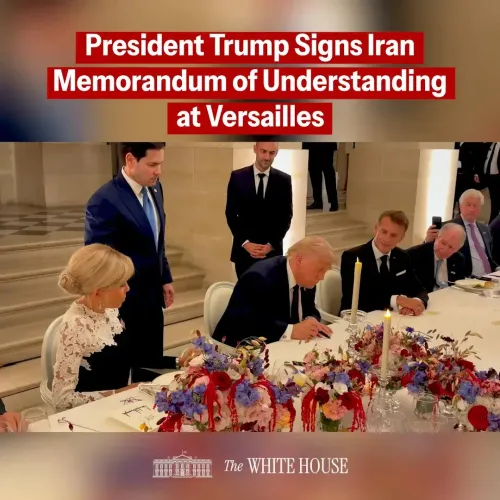
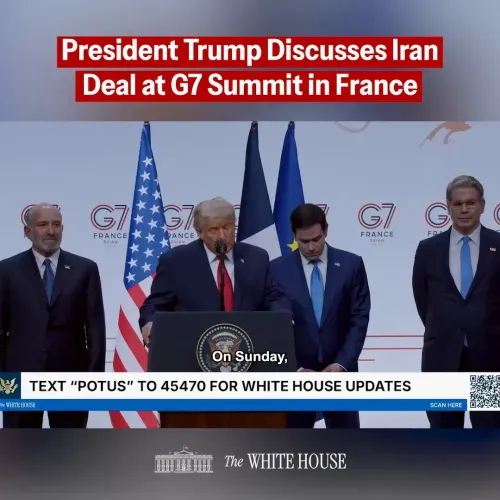
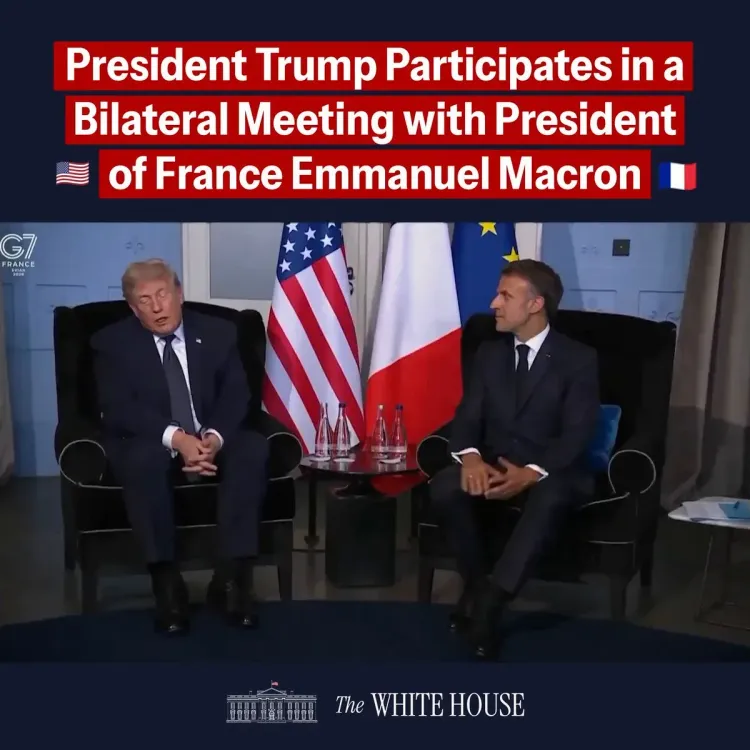
The White House confirmed President Trump spoke with French President Macron ahead of the G7 Summit in France, discussing the Iran nuclear deal, oil prices, and related foreign policy issues. The call underscores ongoing US-European coordination — and tensions — over Iran sanctions and energy markets before the high-stakes multilateral gathering.
Key Takeaways
President Trump held a call with French President Macron ahead of the G7 Summit in France .
Topics included the Iran nuclear deal (JCPOA) and global oil prices .
The United States withdrew from the JCPOA in May 2018 , creating a lasting rift with European signatories including France .
Oil-price stability is a shared G7 concern, as Iranian crude supply is directly affected by US sanctions policy.
France holds a dual role as G7 host and key European voice on Iran diplomacy.
Any joint G7 communiqué language on Iran or energy markets after the summit will signal how closely the two sides aligned.
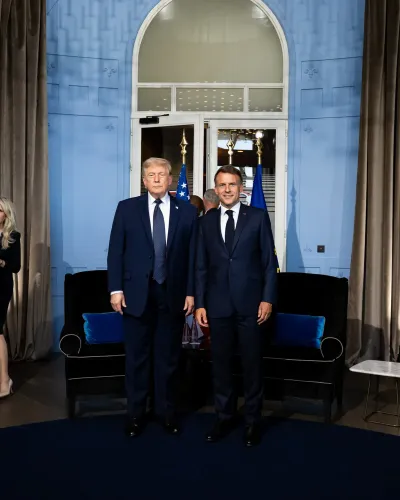
The White House announced on Monday, June 15, 2026, that President Donald J. Trump held discussions with French President Emmanuel Macron covering the Iran nuclear deal, oil prices, and related issues ahead of the upcoming G7 Summit in France.
Context
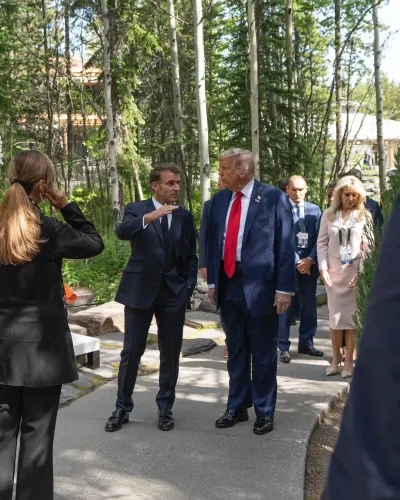
The White House confirmed the two leaders spoke directly, with the conversation spanning several high-stakes topics including the status of the Iran nuclear agreement and global oil market conditions. Such pre-summit bilateral calls between Washington and Paris are a longstanding feature of transatlantic diplomacy, allowing the two sides to align — or at least understand — each other's positions before multilateral negotiations begin.
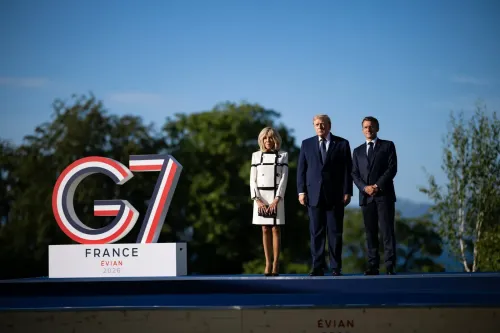
The G7, comprising the world's seven largest advanced economies, is set to convene in France, placing President Macron in the dual role of host and key interlocutor for the United States on contentious foreign policy issues.
Policy Backdrop
The Iran nuclear deal — formally the Joint Comprehensive Plan of Action (JCPOA), signed in 2015 — has remained a fault line between Washington and European capitals. During his first term, President Trump withdrew the United States from the JCPOA in May 2018, reimposing sweeping sanctions on Iran and triggering years of European diplomatic effort to keep the agreement alive.
France, alongside Germany and the United Kingdom, was among the European signatories that sought to preserve the deal's framework and maintain economic channels with Tehran despite US sanctions. That divergence has historically surfaced at G7 gatherings, where joint communiqués on Iran and energy security have required careful negotiation.
Oil prices are directly linked to any movement on Iran sanctions, since lifting or tightening restrictions affects Iranian crude exports and, by extension, global supply. G7 members, including France, have a shared interest in stable energy markets, giving oil-price discussions added urgency in the lead-up to the summit.
Stakeholders and Impact
European allies watch any US-Iran policy shift closely, as changes in American sanctions posture ripple through energy contracts, banking relationships, and regional security arrangements. France, as both a G7 member and a permanent member of the UN Security Council, carries particular weight in any multilateral framework governing Iran's nuclear activities.
Global oil markets are also a key stakeholder. Any signal from the Trump-Macron conversation — whether toward tighter sanctions or diplomatic engagement with Tehran — can influence crude benchmarks, with downstream effects on import-dependent economies including India, one of the world's largest consumers of oil.
Domestic audiences in both countries will be watching for indications of whether the two leaders found common ground or whether US-European tensions over Iran and energy policy persist into the summit itself.
What's Next
Attention will now turn to the G7 Summit in France, where any joint communiqué language on Iran sanctions or energy security will be closely parsed. A coordinated US-French position could signal a broader G7 consensus, while divergence would echo the fractured summits seen during earlier episodes of transatlantic disagreement.
Follow-up announcements from the US Treasury Department or the French Foreign Ministry on Iran-related measures or oil-market coordination would provide the clearest indication of what the two presidents actually agreed upon during their call.
Point of View
But the stakes are higher when the two sides carry unresolved disagreements into a multilateral forum. Washington's sanctions-first posture on Iran has historically clashed with Paris's preference for engagement within a multilateral framework, and any G7 communiqué will reflect how much — or how little — that gap has narrowed. For oil-importing nations like India, the outcome carries direct economic consequences, as US-Iran policy shifts can move crude benchmarks within hours. The call signals that Iran and energy will be defining agenda items at the France-hosted summit, not peripheral ones.
NationPress
16 Sept 2026
Frequently Asked Questions
What did Trump and Macron discuss before the G7 Summit?
President Trump and French President Macron discussed the Iran nuclear deal, oil prices, and related foreign policy issues ahead of the G7 Summit in France, according to a White House announcement on June 15, 2026.
What is the Iran nuclear deal and why does it matter at G7?
The Iran nuclear deal, formally the Joint Comprehensive Plan of Action (JCPOA), was a 2015 agreement limiting Iran's nuclear programme. The United States withdrew in 2018, creating a rift with European G7 members like France who sought to preserve it, making it a recurring point of tension at summits.
How do US-Iran tensions affect oil prices?
US sanctions on Iran restrict Iranian crude exports, tightening global supply and putting upward pressure on oil prices. Any signal of policy change — toward tighter sanctions or diplomatic engagement — can move energy markets quickly, affecting import-dependent countries including India.
Where is the G7 Summit being held?
The G7 Summit is being held in France, with President Macron serving as host, giving Paris added influence in shaping the agenda on Iran and energy issues.
Why do the US and France sometimes disagree on Iran policy?
France, along with other European signatories, has preferred a multilateral diplomatic framework for managing Iran's nuclear programme, while the United States under President Trump pursued a maximum-pressure sanctions strategy. This fundamental difference in approach has produced friction at past G7 gatherings.