Trump Greeted by Macron at G7 Summit in Évian, France
Synopsis
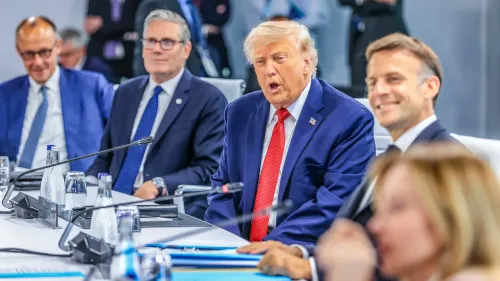
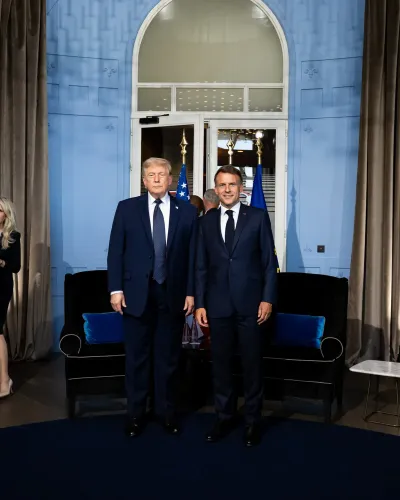
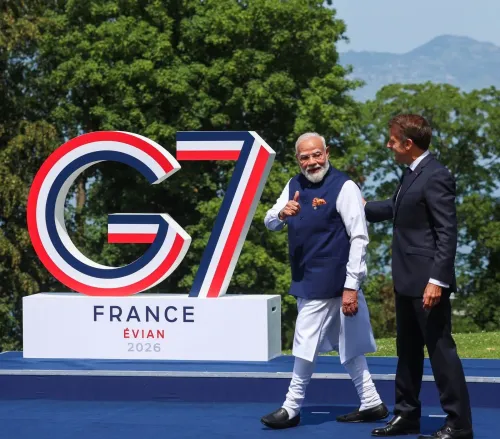
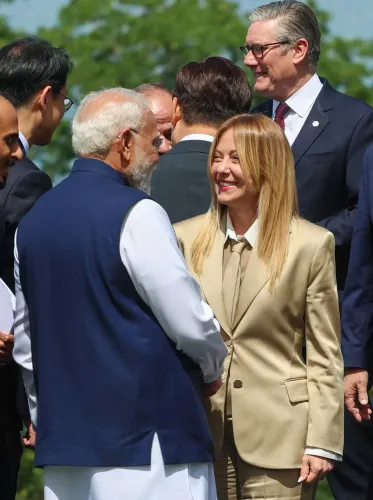
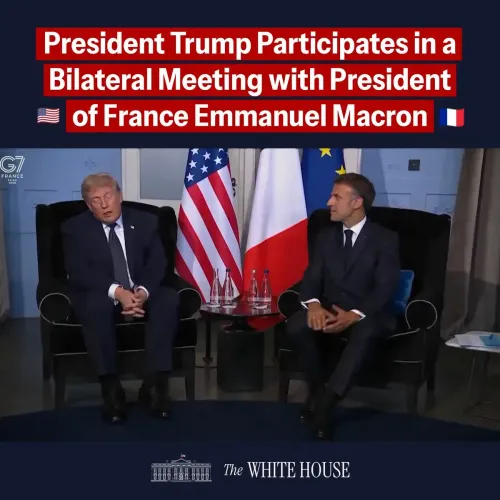
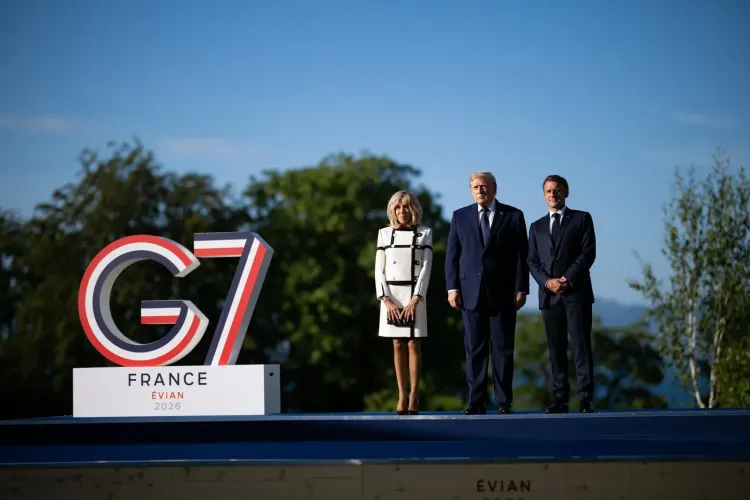
US President Donald J. Trump arrived at the G7 summit in Évian, France, and was formally greeted by French President Emmanuel Macron and First Lady Brigitte Macron on June 16, 2026. The White House shared images of the diplomatic welcome at the high-stakes multilateral gathering of the world's leading economies.
Key Takeaways
Trump arrived at the G7 summit in Évian, France on June 16, 2026 .
French President Emmanuel Macron and First Lady Brigitte Macron personally greeted Trump upon his arrival, a significant diplomatic protocol gesture.
The G7 unites leaders from seven major economies — Canada, France, Germany, Italy, Japan, the United Kingdom, and the United States.
US-France interactions at G7 summits have historically ranged from close cooperation to friction over trade, climate, and multilateral institutions.
Key summit agenda items are expected to include global trade, AI governance, energy security, and geopolitical stability.
The G7 joint communiqué at the summit's close will be the primary indicator of member-nation alignment on global priorities.
US President Donald J. Trump arrived at the G7 summit in Évian, France, where he was welcomed by French President Emmanuel Macron and First Lady Brigitte Macron on Tuesday, June 16, 2026. The White House shared images of the greeting, marking the formal opening of what is expected to be a high-stakes gathering of the world's leading economies.
Context
The G7 brings together leaders from Canada, France, Germany, Italy, Japan, the United Kingdom, and the United States to coordinate on pressing global economic and geopolitical challenges. France, as the host nation, extended a formal diplomatic welcome to each arriving leader, with President Macron and First Lady Brigitte Macron personally greeting Trump — a gesture that carries significant protocol weight at multilateral summits.
The lakeside city of Évian-les-Bains, situated on the southern shore of Lake Geneva in the Auvergne-Rhône-Alpes region, provides the backdrop for this year's summit. France has hosted the G7 before — most notably in Biarritz in 2019, when Trump and Macron engaged directly on trade disputes and Iran policy.
Policy Backdrop
US-France relations at G7 forums have historically oscillated between alignment on shared security interests and friction over trade tariffs, climate commitments, and the role of multilateral institutions. The 2018 G7 in Charlevoix, Canada, saw public disagreements between Washington and its European partners, including Paris, over steel and aluminium tariffs and the Paris Climate Agreement.
President Macron, who has championed European strategic autonomy since taking office in 2017, has simultaneously maintained a working relationship with Washington on defence and economic coordination. The personal greeting at Évian is consistent with France's tradition of using summit hosting duties to reset or reinforce bilateral ties with the United States.
Stakeholders and Impact
The meeting holds implications for a wide range of actors. G7 member governments and their diplomatic corps will be watching closely for signals on trade policy, defence burden-sharing within NATO, and energy cooperation. European allies in particular are attentive to the tone set between Washington and Paris, which often shapes the broader transatlantic agenda.
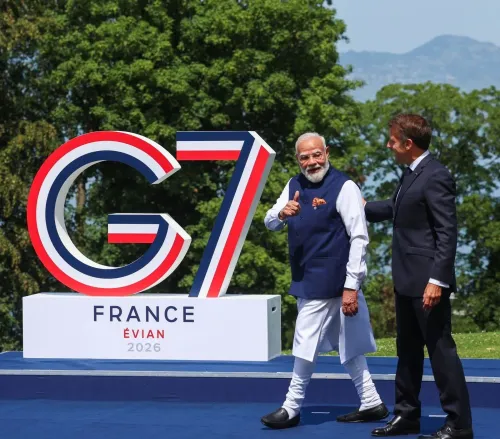
For India and other major emerging economies, the outcomes of the G7 — particularly on global supply chains, energy transition financing, and debt relief frameworks — carry direct economic relevance, even though India participates as an invitee rather than a core member. The joint communiqué expected at the summit's close will be the primary document to watch.
What's Next
Leaders are expected to hold a series of bilateral and plenary sessions over the course of the summit. Key agenda items are anticipated to include global trade frameworks, artificial intelligence governance, energy security, and ongoing geopolitical conflicts. The release of the G7 joint communiqué will indicate how far member nations have converged — or diverged — on these issues. Any announced bilateral outcomes between the United States and France on trade or defence cooperation would represent a significant diplomatic signal heading into the second half of 2026.
Point of View
As host, is investing in the bilateral relationship from the first moment. This choreography matters because US-France ties within the G7 framework set the tone for broader transatlantic cohesion. Given the historical pattern of friction over tariffs and climate between Washington and European capitals, the warmth of the welcome may reflect a French strategic calculation to manage differences through proximity rather than confrontation. For observers tracking the evolution of the transatlantic alliance, the substantive test will come in the communiqué and any bilateral announcements, not the greeting photographs.
NationPress
21 Sept 2026
Frequently Asked Questions
Where is the G7 summit 2026 being held?
The G7 summit 2026 is being held in Évian-les-Bains, France , a lakeside city on the southern shore of Lake Geneva in the Auvergne-Rhône-Alpes region.
Who greeted Trump at the G7 summit in France?
French President Emmanuel Macron and First Lady Brigitte Macron personally greeted US President Donald J. Trump upon his arrival at the G7 summit in Évian on June 16, 2026 .
What is the G7 summit and which countries are members?
The G7 is an annual summit of leaders from the world's leading democracies and economies: Canada, France, Germany, Italy, Japan, the United Kingdom, and the United States . It coordinates on global economic and geopolitical issues.
What are the key issues at the G7 summit 2026?
Key agenda items at the G7 summit 2026 are expected to include global trade frameworks, artificial intelligence governance , energy security, and responses to ongoing geopolitical conflicts, with outcomes summarised in a joint communiqué.
Has France hosted the G7 before?
Yes. France previously hosted the G7 in Biarritz in 2019 , when President Macron and President Trump engaged on trade and Iran policy. The Évian 2026 summit marks France's return as G7 host.