Trump Meets Macron in G7 Bilateral on Sidelines
Synopsis
President Donald J. Trump met French President Emmanuel Macron on the sidelines of the G7 summit on 16 June 2026. The White House confirmed the bilateral encounter on X. The meeting continues a pattern of US-France pull-asides at G7 gatherings, with transatlantic trade, defence, and multilateral coordination typically on the agenda.
Key Takeaways
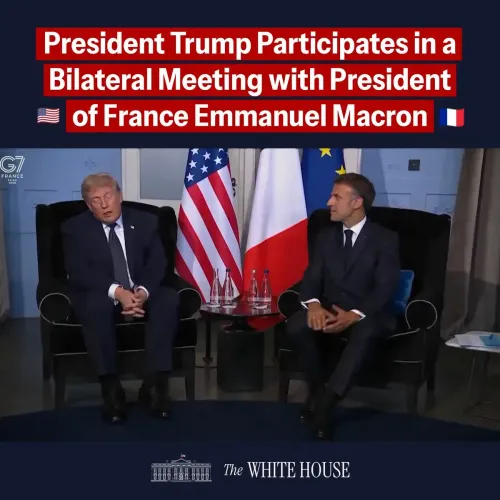
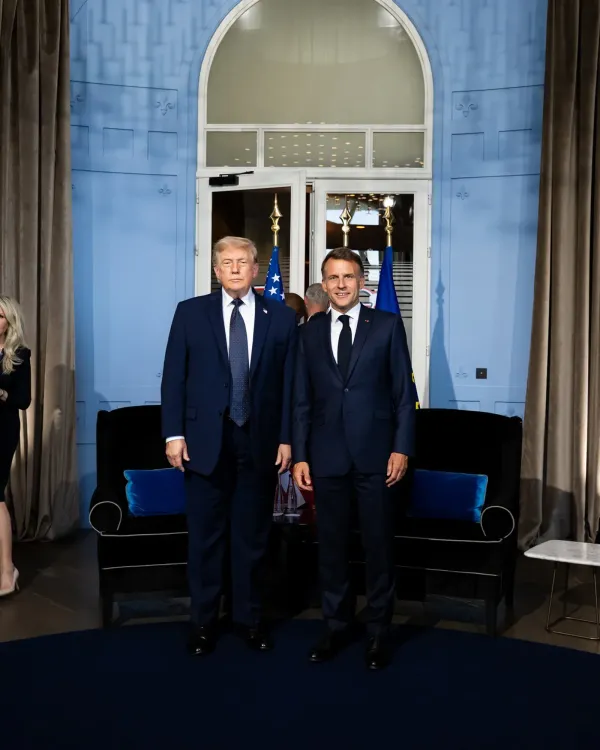
Trump and French President Emmanuel Macron held a bilateral meeting on the sidelines of the G7 summit on 16 June 2026 .
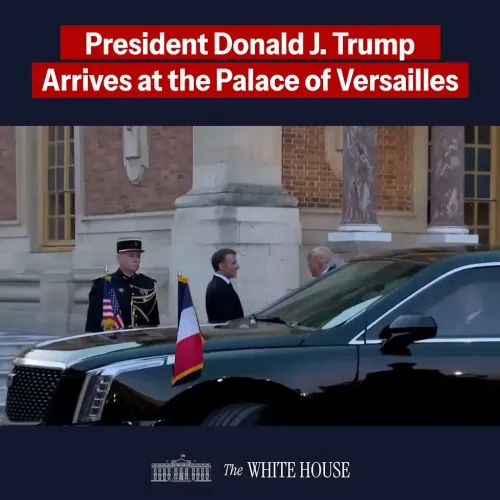
The White House confirmed the encounter through an official post on X, accompanied by an image from the meeting.
Trump and Macron have previously met bilaterally at the 2018 Charlevoix G7 and the 2019 Biarritz G7 , covering tariffs, Iran policy, and digital taxation.
The G7 has served as a key venue for transatlantic bilateral diplomacy since 1975 , running parallel to frameworks such as NATO and the EU-US dialogue.
A detailed readout from the White House or Elysee Palace on the meeting's agenda and outcomes is awaited.
US President Donald J. Trump met with French President Emmanuel Macron on the sidelines of the G7 summit on Tuesday, 16 June 2026, with the White House confirming the bilateral encounter through an official post on X, underscoring the continued diplomatic engagement between Washington and Paris within the multilateral forum.
Context
The White House announced the meeting with a brief post stating, 'President Donald J. Trump meets with French President Emmanuel Macron at G7,' accompanied by the US and French flag emojis and a handshake symbol — a visual shorthand for transatlantic solidarity. The post was accompanied by an image from the meeting, though no further details on the agenda were released at the time of publication.
The G7, which brings together the leaders of seven major advanced economies — the United States, France, Germany, Italy, Japan, Canada, and the United Kingdom — has since 1975 served as a key venue for heads of state to hold both plenary sessions and bilateral pull-asides on pressing global issues.
Policy Backdrop
Trump-Macron bilateral meetings at G7 gatherings have a documented history. The two leaders previously held discussions at the 2018 G7 in Charlevoix, Canada, where differences over tariffs and Iran policy were central, and again at the 2019 Biarritz G7 in France, where trade tensions and digital taxation dominated the agenda.
Transatlantic relations between the US and France have historically been managed through a layered set of multilateral frameworks, including NATO and the EU-US dialogue, with G7 encounters offering a recurring opportunity to align positions and manage friction points at the highest level.
Stakeholders and Impact
The meeting carries significance for transatlantic allies watching for signals on trade policy, defence burden-sharing, and coordination on global security issues. Diplomatic services on both sides — the US State Department and the French Elysee — are expected to follow up with readouts detailing any joint deliverables or areas of convergence.
For India and other major economies that engage with both Washington and Paris on multilateral platforms, the tenor of US-France ties at the G7 level can shape broader coalition-building on issues ranging from climate finance to global trade architecture.
What's Next
Observers will watch for an official readout from the White House or the Elysee Palace detailing the substance of the Trump-Macron discussion, including any joint statements or follow-up mechanisms agreed upon. The outcome of this bilateral may also set the tone for the broader G7 communique, particularly on trade and security matters where US and European positions have at times diverged.
As the G7 host rotation continues, the bilateral channel between Washington and Paris remains a bellwether for the health of the wider transatlantic alliance — and any signals of convergence or tension from this meeting are likely to reverberate well beyond the summit venue.
Point of View
Projecting unity without committing to specifics, a format the administration has used selectively to manage expectations around sensitive bilateral encounters. Trump-Macron meetings at G7 have historically been as much about optics as substance, with the two leaders often arriving with divergent positions on trade and multilateralism and leaving with carefully worded joint language. For Paris, a publicly acknowledged bilateral with Washington at the G7 level reinforces France's standing as America's primary European interlocutor — a role it has actively cultivated. The real test will be whether a White House or Elysee readout follows, and how much policy daylight, if any, it reveals between the two sides.
NationPress
16 Sept 2026
Frequently Asked Questions
Did Trump meet Macron at the G7 in 2026?
Yes. The White House confirmed on 16 June 2026 that President Donald J. Trump met French President Emmanuel Macron on the sidelines of the G7 summit, posting an announcement on X.
What is the G7 summit?
The G7 is an annual gathering of leaders from seven major advanced economies — the United States, France, Germany, Italy, Japan, Canada, and the United Kingdom — focused on global economic governance, security, and policy coordination. It has been held since 1975 .
Have Trump and Macron met at G7 before?
Yes. Trump and Macron held bilateral discussions at the 2018 G7 in Charlevoix, Canada , and again at the 2019 G7 in Biarritz, France , addressing issues including tariffs, Iran policy, and digital taxation.
What was discussed at the Trump-Macron G7 meeting?
The White House has not yet released a detailed readout of the meeting's agenda. Historically, US-France G7 bilaterals have covered trade, defence spending, and multilateral cooperation.
Why does the Trump-Macron meeting at G7 matter for India?
The tenor of US-France relations at the G7 level can influence coalition-building on issues such as climate finance and global trade architecture, both of which are significant for India as a major emerging economy engaged with these multilateral frameworks.