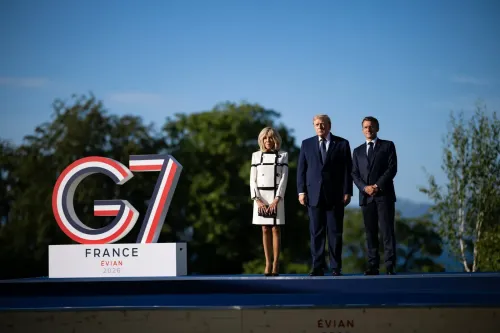
Trump Arrives at Versailles for Dinner with Macron
Synopsis
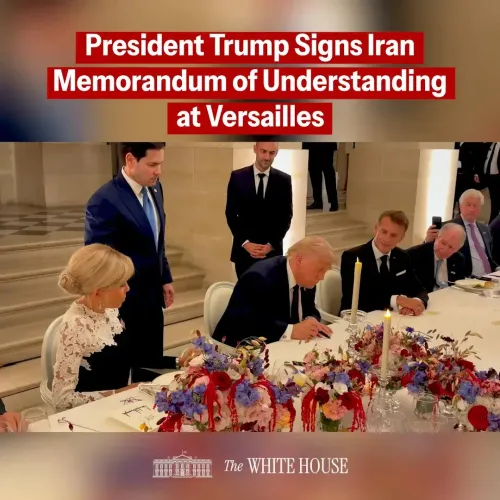
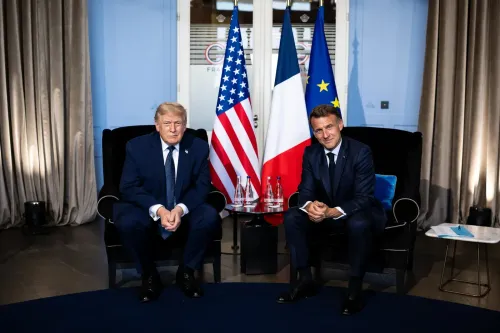
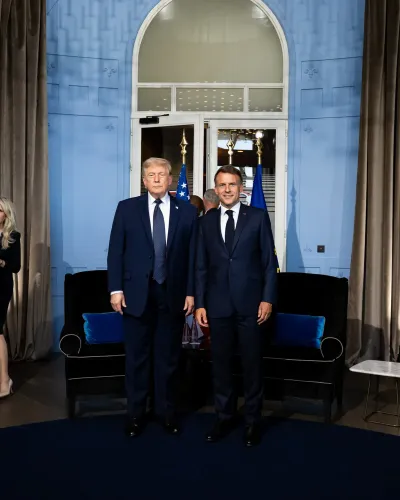
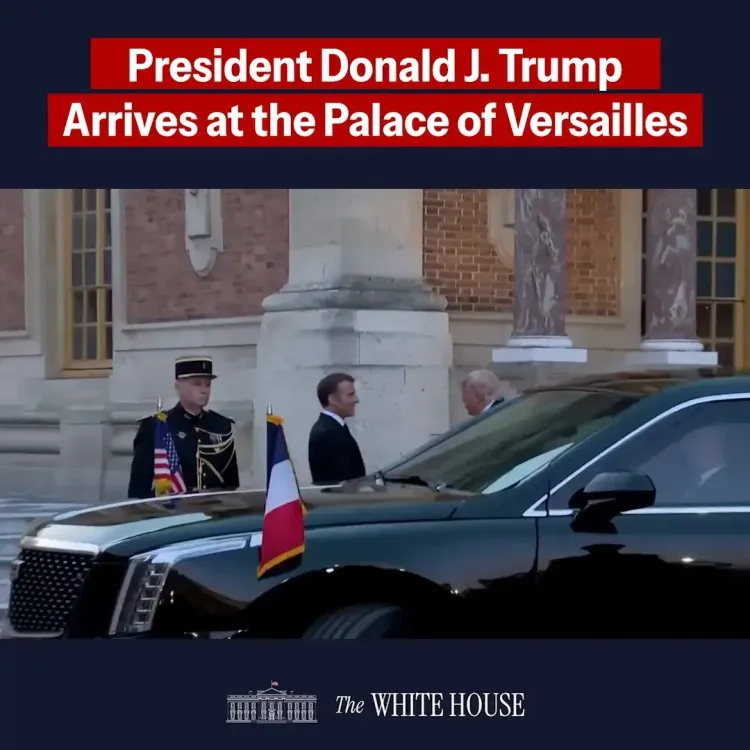
President Donald J. Trump arrived at the Palace of Versailles on 17 June 2026, where French President Emmanuel Macron and Brigitte Macron welcomed him for a high-protocol bilateral dinner. The visit signals a significant moment in U.S.-France diplomatic engagement ahead of the 2026 NATO summit.
Key Takeaways
Trump visited the Palace of Versailles, France on 17 June 2026 for a bilateral dinner.
Emmanuel Macron and Brigitte Macron personally received Trump at Versailles, signalling a high level of personal and institutional engagement.
The Palace of Versailles has served as a venue for major Franco-American diplomatic events across multiple administrations.
Trump and Macron have held bilateral meetings since 2017 , including at G7 summits in 2018 and 2019 .
Key policy areas likely on the agenda include NATO burden-sharing, EU-U.S. trade, and coordinated responses to global crises.
The 2026 NATO summit is the next major multilateral venue for transatlantic leaders.
The White House announced on Wednesday, 17 June 2026 that President Donald J. Trump arrived at the Palace of Versailles, France, where French President Emmanuel Macron and Brigitte Macron welcomed him for a bilateral dinner — a setting that has historically served as one of Europe's most consequential diplomatic stages.
Context
The White House shared the visit on its official communications channel, noting that the Macrons personally received Trump at Versailles for the evening engagement. The Palace of Versailles — a UNESCO World Heritage Site and former seat of French royal power — has been used by successive French governments for high-protocol state events precisely because of the weight its setting carries in the global imagination.
The visit marks a significant moment in U.S.-France diplomatic engagement, with the two heads of state meeting on French soil in a format that signals both personal rapport and institutional continuity in transatlantic ties.
Policy Backdrop
Trump and Macron have a well-documented diplomatic history. Trump attended Bastille Day celebrations in Paris in July 2017 as Macron's first high-profile American guest, and Macron subsequently conducted a state visit to Washington in April 2018, which included a formal address to the U.S. Congress and a White House dinner.
The two leaders also held multiple bilateral meetings on the sidelines of G7 summits in 2018 and 2019, covering issues ranging from NATO burden-sharing and defence expenditure commitments to trade disputes between the United States and the European Union. U.S.-France relations are underpinned by longstanding alliance obligations under NATO and interlocking economic frameworks that give bilateral summits immediate policy consequence.
Stakeholders and Impact
The diplomatic corps of both nations, NATO allies, and European governments will be watching the Versailles meeting closely. France holds a unique position in the transatlantic architecture as both a nuclear power and a permanent member of the UN Security Council, giving any Franco-American alignment — or divergence — an outsized effect on alliance cohesion.
Trade negotiators and defence ministries across Europe will be attentive to any signals emerging from the dinner regarding tariff frameworks, defence procurement, and coordinated positions on ongoing global crises. State dinners at Versailles have historically been followed by substantive joint readouts that set the bilateral agenda for months ahead.
What's Next
Diplomatic observers will look for any joint statement or readout from the two governments following the dinner, particularly on issues such as Ukraine, Indo-Pacific strategy, and transatlantic trade. The 2026 NATO summit is the next major scheduled multilateral venue at which Trump and Macron are expected to engage alongside other alliance leaders.
The Versailles dinner positions France as an early and prominent interlocutor for the Trump administration in Europe, a dynamic that could shape how other EU and NATO capitals calibrate their own approaches to Washington in the months ahead.
Point of View
Accepting the Versailles invitation echoes the 2017 Bastille Day playbook, suggesting both sides see value in projecting warmth in the relationship. The dinner comes ahead of the 2026 NATO summit, making any signals on defence spending or Ukraine policy immediately consequential for the broader alliance. How the two leaders emerge from Versailles will set the tone for European capitals navigating their own relationships with Washington.
NationPress
19 Sept 2026
Frequently Asked Questions
Why did Trump visit France in June 2026?
President Trump visited France on 17 June 2026 for a bilateral dinner hosted by French President Emmanuel Macron and Brigitte Macron at the Palace of Versailles, marking a significant diplomatic engagement between the United States and France.
Where did Trump and Macron meet in 2026?
Trump and Macron met at the Palace of Versailles, the historic French royal residence near Paris that France regularly uses for high-protocol state dinners and bilateral summits.
What is the history between Trump and Macron?
Trump and Macron have engaged diplomatically since 2017, when Trump attended Bastille Day in Paris. Macron visited Washington in April 2018 and the two met at multiple G7 summits in 2018 and 2019, covering NATO, trade, and global security issues.
What issues are expected at the Trump Macron Versailles dinner?
Diplomatic observers expect discussions to cover NATO defence spending commitments, EU-U.S. trade frameworks, the situation in Ukraine, and Indo-Pacific strategy, with a joint readout anticipated after the dinner.
What comes after the Trump Macron meeting at Versailles?
The 2026 NATO summit is the next major scheduled multilateral venue where Trump and Macron are expected to engage alongside other alliance leaders, making the Versailles dinner an important precursor to that gathering.