Trump Holds Bilateral Meeting with French President Macron

Synopsis
President Donald Trump held a bilateral meeting with French President Emmanuel Macron on June 15, 2026, at the White House. The engagement between the two NATO allies is expected to cover transatlantic security, trade, and coordination ahead of upcoming multilateral summits.
Key Takeaways
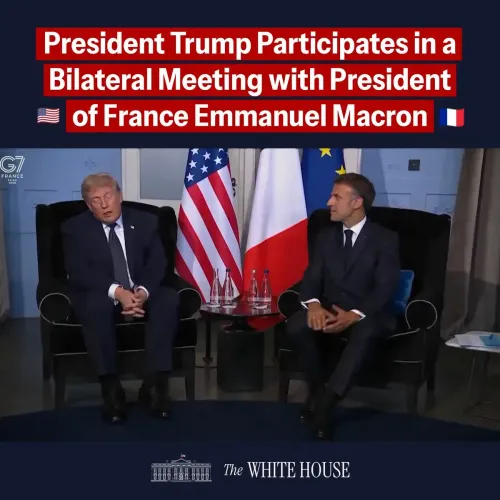
President Trump participated in a bilateral meeting with French President Emmanuel Macron on June 15, 2026 .
France is a longstanding US ally and a core NATO member, making this meeting significant for transatlantic security.
Trump and Macron previously held multiple bilateral engagements during Trump 's first term, including at G7 and NATO summits.
Historical US-France bilaterals have addressed NATO burden-sharing, trade disputes, and responses to crises in Russia and the Middle East .
The meeting is expected to inform allied coordination ahead of the next NATO or G7 summit.
The outcome carries implications for India , which holds strategic partnerships with both Washington and Paris .
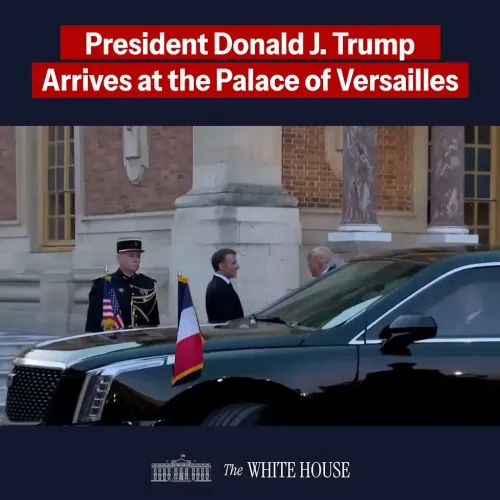
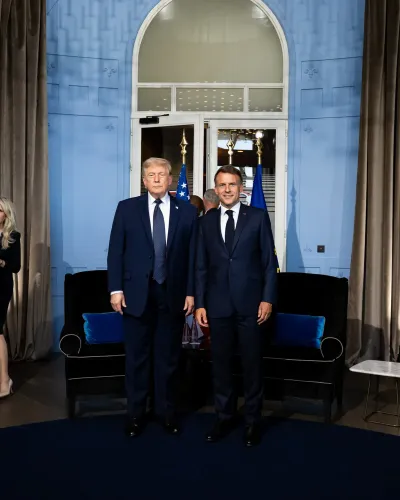
Washington DC, June 15, 2026 — The White House announced on Monday, June 15, 2026, that President Donald Trump participated in a bilateral meeting with President Emmanuel Macron of France, marking a formal engagement between the leaders of two of the world's most consequential allied nations.
Context
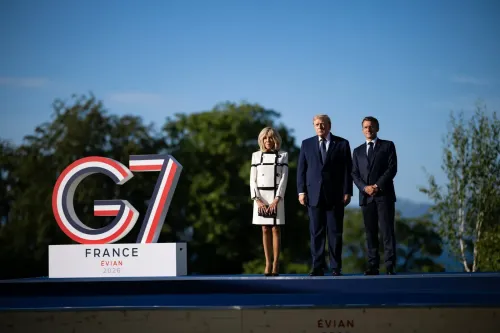
The bilateral meeting between Trump and Macron represents the latest chapter in a long-running diplomatic relationship between the United States and France. The two leaders have engaged across multiple high-stakes international forums, including G7 and NATO summits, since Macron first assumed the French presidency in 2017.
During Trump's first term, the two presidents held several bilateral meetings and calls, navigating both areas of alignment and tension on issues ranging from trade to collective defence. Trump's return to the White House in 2025 renewed that direct diplomatic channel at the highest level.
Policy Backdrop
France is a longstanding US ally and a core member of NATO, giving bilateral meetings between the two countries outsized significance for transatlantic security architecture. Historically, US-France summits have addressed recurring flashpoints including NATO burden-sharing arrangements, trade and tariff disputes, and coordinated diplomatic responses to crises in Russia and the Middle East.
The June 2026 meeting comes at a period of active international diplomacy, with major multilateral gatherings on the near-term horizon. Bilateral consultations of this nature typically serve as preparatory groundwork for coordinated allied positions ahead of broader summits.
Stakeholders and Impact
The meeting carries direct implications for NATO partners, the broader transatlantic diplomatic community, and allied nations watching for signals on collective defence commitments and Western coordination on global flashpoints. France, as a permanent member of the UN Security Council and a nuclear-armed NATO ally, occupies a unique position in shaping Western consensus.
For India, which maintains strategic partnerships with both Washington and Paris, the tenor of US-France relations has downstream consequences for multilateral forums including the G20 and broader Indo-Pacific strategic conversations. Stable transatlantic ties generally reinforce the rules-based international order that New Delhi has consistently advocated for.
What's Next
Diplomatic observers will watch for follow-on statements or joint communiqués from the two sides in the coming days. The meeting is expected to feed into coordination ahead of the next NATO summit or G7 gathering, where allied unity on defence spending, trade, and geopolitical responses will be closely scrutinised.
The depth of alignment — or any divergence — signalled by Trump and Macron in this bilateral will set the tone for transatlantic diplomacy in the months ahead, with consequences extending well beyond Washington and Paris.
Point of View
2026, underscores that direct leader-to-leader engagement remains the primary currency of transatlantic diplomacy, even as institutional frameworks like NATO face internal pressures. For Trump, the meeting signals a continued willingness to engage European allies through formal bilateral channels rather than exclusively through multilateral forums. Macron, who has long positioned himself as Europe's most prominent interlocutor with Washington, stands to gain diplomatic capital from a high-profile White House meeting. The broader arc here is one of managed alliance maintenance — both leaders seeking to project unity while navigating persistent disagreements on trade and defence spending.
NationPress
20 Sept 2026
Frequently Asked Questions
Why did Trump meet Macron in June 2026?
President Trump met French President Macron on June 15, 2026, for a bilateral meeting at the White House. The engagement is part of ongoing transatlantic diplomacy between the US and France, a key NATO ally, and is expected to address issues such as NATO commitments and global security coordination.
What topics are discussed at US-France bilateral meetings?
US-France bilateral meetings have historically covered NATO burden-sharing, trade and tariff disputes, and coordinated responses to crises involving Russia and the Middle East. Specific agenda items for the June 2026 meeting have not been officially confirmed.
How often do Trump and Macron meet?
Trump and Macron held multiple bilateral meetings and calls during Trump's first term, including at G7 and NATO summits. With Trump back in office since 2025, direct engagement between the two leaders has resumed as part of regular transatlantic diplomacy.
What is the significance of the US-France relationship for India?
India maintains strategic partnerships with both the United States and France, making the health of US-France ties relevant to multilateral forums like the G20 and broader Indo-Pacific strategy. Stable transatlantic relations generally support the rules-based international order that India advocates.
What comes after the Trump-Macron bilateral meeting?
Diplomatic observers expect follow-on coordination ahead of the next NATO summit or G7 gathering. Any joint statements or communiqués from the two sides will be closely watched for signals on allied unity on defence, trade, and geopolitical responses.