Rajnath Singh: Tech must bridge nations, not divide them
Synopsis
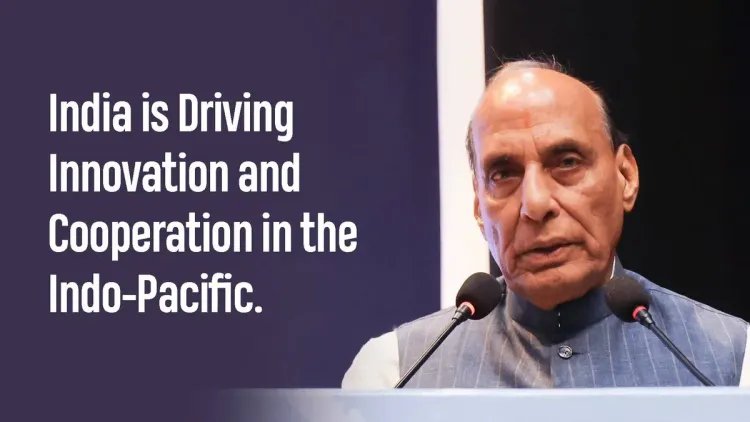
Union Defence Minister Rajnath Singh on 4 November 2026 called for technology to act as a bridge between nations rather than a driver of inequality, advocating research, innovation, education and capacity-building cooperation especially for smaller maritime nations and developing economies — in line with India's decade-long SAGAR and Global South advocacy.
Key Takeaways
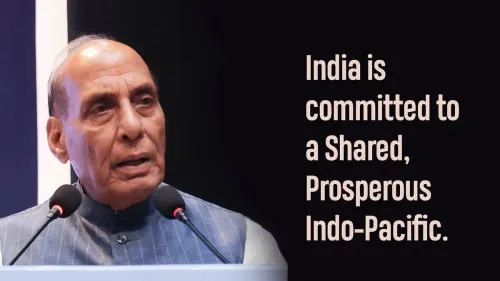
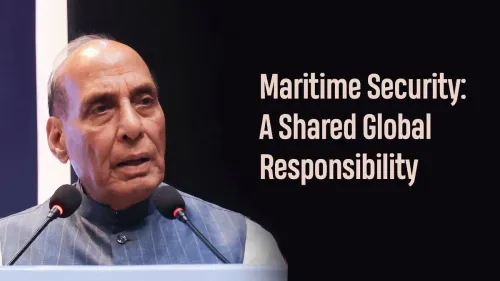
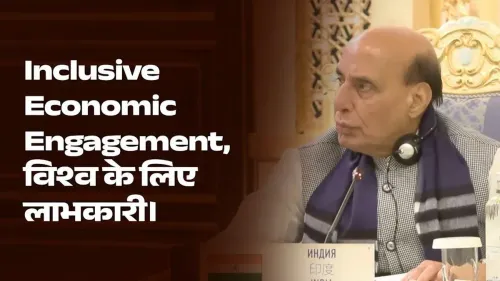
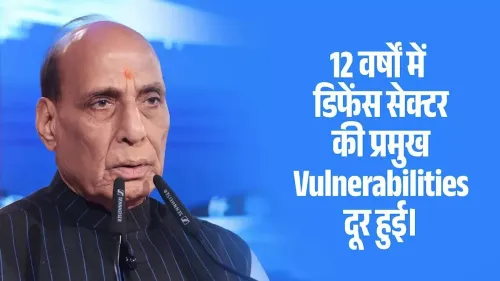
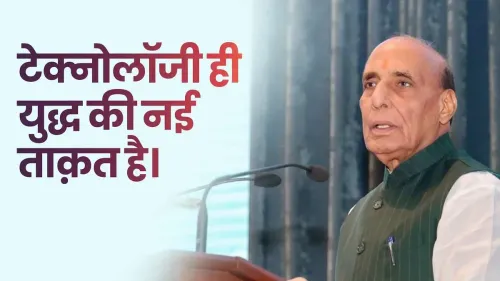
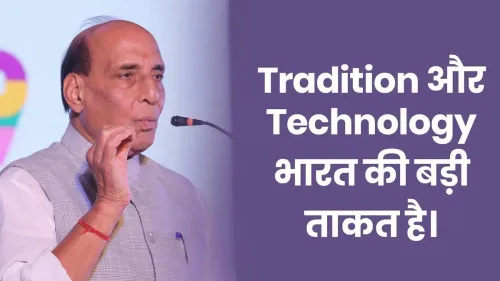
Union Defence Minister Rajnath Singh declared on 4 November 2026 that technology must be 'a bridge of cooperation, not a source of inequality among nations.' He called for greater global collaboration in research, innovation, education and capacity building .
Singh specifically prioritised smaller maritime nations and developing economies as the intended beneficiaries.
The statement aligns with India's SAGAR ( Security and Growth for All in the Region ) doctrine, launched by PM Modi in 2015 .
India has consistently championed South-South cooperation and digital equity at the G20 , the UN , and other multilateral forums.
The remarks signal India's continued strategic positioning as the leading voice of the Global South on technology access.
Technology should unite the world's nations rather than deepen the fault lines between them — that is the pointed message Union Defence Minister Rajnath Singh put on record on Wednesday, 4 November 2026, calling on the global community to treat innovation and research as shared assets, not competitive advantages hoarded by the powerful.
India's pitch for a level technological playing field
Singh's statement was unambiguous: 'Technology must become a bridge of cooperation, not a source of inequality among nations.' He specifically flagged smaller maritime nations and developing economies as the countries most at risk of being left behind, and placed India squarely on their side — calling for greater collaboration in research, innovation, education and capacity building.
The framing is deliberate. India has spent the better part of the last decade positioning itself as the principal advocate for the Global South on exactly these questions — from the floors of the G20 and the UN to bilateral engagements across Africa, Southeast Asia and the Pacific. The argument is consistent: technology blocs that concentrate capability among a handful of wealthy states produce a new kind of dependency, one just as constraining as the economic dependencies of the colonial era.
SAGAR, South-South cooperation and a decade of policy groundwork
Singh's remarks sit on a well-laid foundation. When Prime Minister Narendra Modi unveiled the SAGAR doctrine — Security and Growth for All in the Region — in 2015, it marked India's formal declaration that prosperity in the Indian Ocean Region had to be shared, not extracted. The policy explicitly linked maritime security with inclusive economic development, and technology access has since become one of its live wires.
That lineage matters because Singh is not simply expressing a sentiment — he is reaffirming a strategic posture. India's emphasis on South-South cooperation in innovation and capacity building is a direct counter-narrative to the idea of exclusive technology clubs, and it resonates with dozens of smaller nations that feel shut out of the conversations shaping artificial intelligence, semiconductor supply chains and digital infrastructure.
Why maritime nations are the pointed focus
The specific mention of 'smaller maritime nations' is worth unpacking. Island economies and coastal developing states face a double exposure: they are disproportionately vulnerable to climate and security disruptions, and they are frequently the last to receive the digital and maritime technologies — surveillance, early-warning, clean energy — that could make them more resilient. By naming them directly, Singh signals that India's offer of cooperation is not abstract goodwill but a targeted strategic commitment.
Whether that commitment translates into concrete joint research programmes or new capacity-building frameworks at an upcoming multilateral forum is the next question. The Defence Minister has set the terms of engagement loudly and in public. The follow-through is what the world will be watching.
Point of View
New Delhi is weaving its SAGAR security doctrine into the broader digital-equity debate — a linkage that expands India's sphere of influence at a moment when great-power competition over semiconductor and AI ecosystems is intensifying. The consistent framing of technology access as a justice issue, rather than a purely commercial or security one, also gives India moral high ground in multilateral negotiations. The practical test, however, lies in whether these rhetorical commitments are matched by funded joint research programmes or institutional frameworks that smaller nations can actually access.
NationPress
4 Nov 2026
Frequently Asked Questions
What did Rajnath Singh say about technology and developing nations?
On 4 November 2026, Union Defence Minister Rajnath Singh said technology must become a bridge of cooperation and not a source of inequality, calling for greater collaboration in research, innovation, education and capacity building — especially for smaller maritime nations and developing economies.
What is India's SAGAR policy?
SAGAR stands for 'Security and Growth for All in the Region.' It was announced by Prime Minister Narendra Modi in 2015 and lays out India's vision for inclusive maritime cooperation and shared prosperity across the Indian Ocean Region.
Why does India advocate for the Global South on technology access?
India has positioned itself as the principal voice of developing and smaller economies in multilateral forums such as the G20 and the UN, arguing that exclusive technology blocs create new forms of dependency. South-South cooperation in innovation and capacity building is a cornerstone of this posture.
Which countries did Rajnath Singh specifically mention?
Singh did not name specific countries but highlighted 'smaller maritime nations and developing economies' as the groups most in need of equitable technological progress.
What comes next after Rajnath Singh's technology cooperation statement?
Observers will watch for India's interventions at upcoming multilateral meetings on maritime security or digital governance, including potential announcements on joint research or capacity-building initiatives that could give concrete form to these commitments.