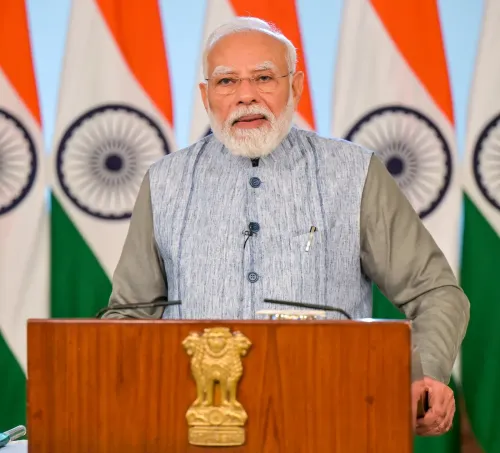
Rijiju: Cabinet Extends Fast Track Courts for Rape, POCSO Cases

Synopsis
The Union Cabinet has approved a five-year continuation of the Fast Track Special Courts scheme for rape and POCSO cases from FY 2026-27 to FY 2030-31, announced by Minister Kiren Rijiju. The scheme, originally launched in 2019 using Nirbhaya Fund resources, sustains 1,023 dedicated courts across India.
Key Takeaways
The Union Cabinet approved the continuation of the Centrally Sponsored Scheme for Fast Track Special Courts from FY 2026-27 to FY 2030-31 .
The courts handle rape and POCSO Act cases for expeditious trial of sexual offences.
The scheme was originally launched in 2019 with 1,023 Fast Track Special Courts funded through the Nirbhaya Fund .
Successive extensions have kept the scheme running since its inception, each subject to case-disposal performance reviews.
The scheme remains centrally sponsored , meaning states co-fund and operationalise the courts.
State-level notifications and Parliament disposal reports will be the key accountability mechanisms in the new cycle.
Justice for survivors of sexual violence just got a five-year guarantee. Union Parliamentary Affairs Minister Kiren Rijiju announced on Wednesday, November 4, 2026 that the Union Cabinet, under Prime Minister Narendra Modi, has approved the continuation of the Centrally Sponsored Scheme for Fast Track Special Courts (FTSCs) — dedicated benches for rape and POCSO Act cases — for another five years, from FY 2026–27 through FY 2030–31.
What the Cabinet greenlit — and why it matters
Fast Track Special Courts are not ordinary courtrooms. They are purpose-built judicial units designed to slash the pendency that has long plagued sensitive criminal cases involving women and children. The Cabinet's approval ensures that this dedicated infrastructure does not go dark when the previous authorisation cycle lapsed at the end of FY 2025–26. Rijiju framed the decision as a direct expression of the government's commitment to 'speedy justice,' quoting the action under PM Modi's leadership.
The POCSO Act, enacted in 2012 to protect children from sexual offences, routes its most serious cases through these courts precisely because speed is inseparable from justice for young survivors — delayed trials re-traumatise victims and allow accused persons to remain in communities they have already harmed.
From Nirbhaya Fund to a standing national architecture
The scheme's roots trace back to 2019, when the Union Cabinet first cleared a network of 1,023 Fast Track Special Courts using resources from the Nirbhaya Fund — money the government ring-fenced after the outrage that followed the December 2012 Delhi gang-rape case and the sweeping criminal law amendments that followed. What began as a time-bound crisis response has, through successive extensions, hardened into a standing institutional commitment across states.
Each extension cycle has come with performance reviews — case disposal rates, state compliance, judicial vacancies. The latest five-year window signals confidence that the model is working well enough to anchor for the long term, while keeping states accountable for how efficiently the courts actually clear their dockets.
What states and survivors can expect next
The immediate watch-point is state government notifications operationalising the extended funding from April 1, 2027. Periodic case-disposal reports to Parliament will serve as the public scorecard. Crucially, the scheme remains centrally sponsored rather than fully central — states still carry a funding share, meaning administrative and financial bandwidth at the state level will determine how quickly the courts hit full capacity in the new cycle.
For survivors waiting in queue, the extension means the specialised bench that heard their case last year will still be there next year — and the year after that.
Five years, one message: the institutional fight against sexual violence in India's courts is not winding down — it is being locked in.
Point of View
Where the Nirbhaya case catalysed not just law reform but structural changes to the justice delivery system. The extension also implicitly pressures states: central funding is renewed, so delays in case disposal can no longer be attributed to a lapsing scheme. The real test of this cycle will be whether disposal rates accelerate or whether pendency simply migrates to a larger, now-institutionalised backlog.
NationPress
5 Nov 2026
Frequently Asked Questions
What are Fast Track Special Courts in India?
Fast Track Special Courts (FTSCs) are dedicated judicial benches set up under a centrally sponsored scheme to hear rape and POCSO Act cases on a priority basis, reducing trial delays for survivors of sexual violence.
How long has the Fast Track Special Courts scheme been running?
The scheme was first approved by the Union Cabinet in 2019 for a two-year period using Nirbhaya Fund resources, and has since been extended multiple times, now continuing through FY 2030-31 .
What is the POCSO Act and why does it need special courts?
The Protection of Children from Sexual Offences (POCSO) Act was enacted in 2012 to address sexual crimes against minors. Special courts ensure swift trials to minimise re-traumatisation of young survivors and reduce pendency.
How many Fast Track Special Courts are there in India?
The original 2019 scheme provided for 1,023 Fast Track Special Courts across states, funded through the Nirbhaya Fund under a centrally sponsored model.
What is the Nirbhaya Fund and its connection to these courts?
The Nirbhaya Fund is a dedicated government corpus created after the December 2012 Delhi gang-rape case to finance schemes and initiatives aimed at women's safety, including the initial setup of Fast Track Special Courts.