Cabinet clears Fast Track Court scheme extension, 850 POCSO courts by 2031
Synopsis
The Union Cabinet has cleared a five-year, ₹3,788-crore extension of India's Fast Track Special Courts scheme — expanding POCSO and rape-trial courts from 779 to 850 by 2031. With over 4 lakh cases already disposed of since 2019, the renewal is both an acknowledgement of what works and a signal that the backlog of sexual offence cases remains a national judicial challenge.
Key Takeaways
The Union Cabinet on 4 November 2026 approved the continuation of the Fast Track Special Courts scheme from 1 April 2026 to 31 March 2031 .
Total financial outlay is ₹3,788.04 crore ; the Central share of ₹2,353.15 crore will be drawn from the Nirbhaya Fund .
The number of Fast Track Special Courts will expand from 779 to 850 , with expansion based on district-level case pendency.
Since its launch on 2 October 2019 , the scheme has disposed of 4,02,457 rape and POCSO cases across 29 states and UTs .
Each court will have a dedicated Judicial Officer , a Special Public Prosecutor , and six support staff .
Implementation will be monitored by the Department of Justice via the FTSC Dashboard and regular High Court consultations.
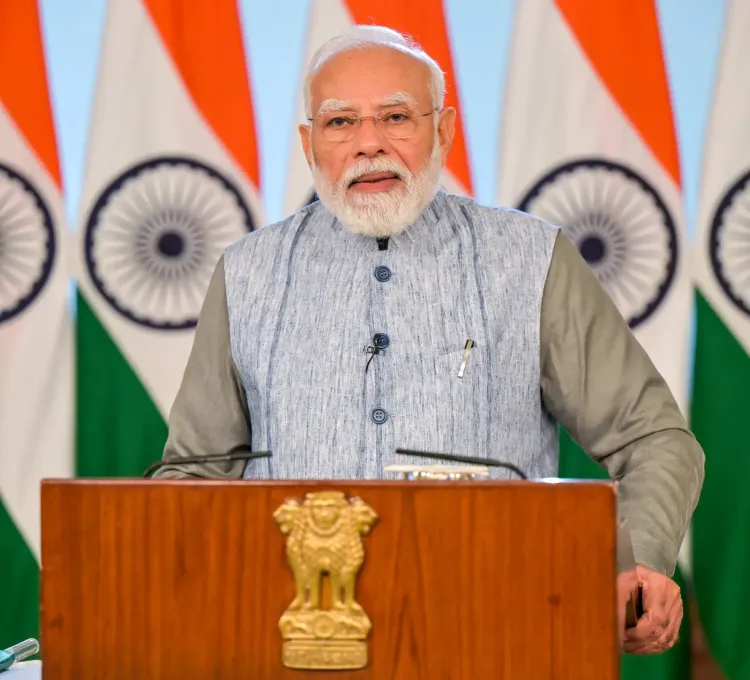
The Union Cabinet, chaired by Prime Minister Narendra Modi, on Wednesday, 4 November 2026, approved the continuation of the Centrally sponsored scheme for Fast Track Special Courts (FTSCs) — including exclusive POCSO Courts — for a further five years from 1 April 2026 to 31 March 2031. The extension carries a total financial outlay of ₹3,788.04 crore, making it one of the largest dedicated judicial-infrastructure investments for crimes against women and children.
Prime Minister Modi, in a post on his official social media account, described the decision as a move 'from less delay to faster justice.'
Financial Outlay and Funding Structure
Of the total ₹3,788.04 crore allocated, the Central share amounts to ₹2,353.15 crore, to be funded entirely from the Nirbhaya Fund. The remaining ₹1,434.89 crore will be borne by participating states and Union Territories (UTs). Central assistance will continue to cover the operational expenditure of these courts in line with the approved funding pattern.
Expansion to 850 Courts Across India
The extended scheme provides for the operationalisation of 850 Fast Track Special Courts across the country, up from the current 779 functional courts. The expansion to 850 will be calibrated on the basis of the pendency of rape and Protection of Children from Sexual Offences (POCSO) Act, 2012 cases in individual districts.
Each court will have a dedicated Judicial Officer, a Special Public Prosecutor assigned exclusively to that court, and six support staff to ensure focused and expeditious disposal of pending cases. The scheme also envisages the establishment of Vulnerable Witness Deposition Centres and specially designed court spaces to create a child-friendly, victim-centric environment.
Track Record Since Launch in 2019
Launched on 2 October 2019 in the aftermath of the Criminal Law (Amendment) Act, 2018 and directions from the Supreme Court, the scheme currently operates in 29 states and UTs. Since inception, the 779 functional FTSCs — including 399 exclusive POCSO Courts — have disposed of 4,02,457 cases. The scale of case clearance underscores the scheme's operational significance even as a large backlog of rape and POCSO cases remains pending nationwide.
Oversight and Monitoring
Implementation will be overseen by the Department of Justice in coordination with state governments and UT administrations. Performance will be tracked through the FTSC Dashboard, periodic progress reports, expenditure statements, and regular consultations with High Courts and state governments. The primary beneficiaries of the scheme remain women and children who are victims of sexual offences, with the continuation intended to reduce inequalities in access to justice by prioritising these cases.
Point of View
But it also quietly concedes that seven years and 4 lakh-plus disposals have not cleared the backlog — which raises harder questions about case inflow rates versus disposal capacity. Expanding from 779 to 850 courts is incremental, not transformative. The Nirbhaya Fund continues to do heavy lifting, yet accountability for fund utilisation at the state level has historically been uneven. The real test of this extension is not the headline court count but whether the FTSC Dashboard's monitoring teeth are sharp enough to catch states that underperform on staffing and sentencing timelines.
NationPress
5 Nov 2026
Frequently Asked Questions
What is the Fast Track Special Courts scheme and why has it been extended?
The Fast Track Special Courts (FTSC) scheme is a Centrally sponsored initiative that sets up dedicated courts to expedite trials in rape and POCSO cases. The Union Cabinet extended it for five years to 31 March 2031, with a ₹3,788.04 crore outlay, to continue reducing the backlog of sexual offence cases and deliver timely justice to victims.
How much will the Fast Track Courts scheme cost and who funds it?
The extended scheme has a total outlay of ₹3,788.04 crore. The Central government will contribute ₹2,353.15 crore from the Nirbhaya Fund, while participating states and UTs will collectively fund the remaining ₹1,434.89 crore.
How many Fast Track Special Courts will operate under the extended scheme?
The extended scheme targets 850 Fast Track Special Courts, up from the current 779 functional courts. The expansion will be driven by the pendency of rape and POCSO cases in individual districts across the country.
What has the scheme achieved since its launch in 2019?
Since its launch on 2 October 2019, the 779 functional FTSCs — including 399 exclusive POCSO Courts — have disposed of 4,02,457 cases across 29 states and UTs. The scheme was initiated following the Criminal Law (Amendment) Act, 2018 and Supreme Court directions.
Who are the primary beneficiaries and how will the scheme be monitored?
The primary beneficiaries are women and children who are victims of sexual offences. Performance will be monitored through the FTSC Dashboard, periodic progress reports, and regular consultations with High Courts and state governments, overseen by the Department of Justice.