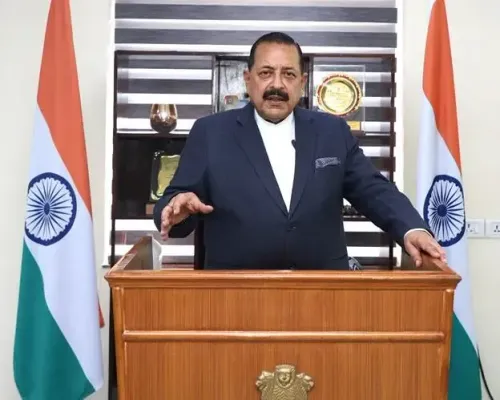
Tech Sovereignty: Dr Jitendra Singh Urges India to Lead Critical Technologies
Synopsis
Union Minister Dr. Jitendra Singh told PAN-IIT alumni in Los Angeles that India must stop being a technology consumer and become a global creator — citing AI, semiconductors, quantum tech, and robotics as critical to national security and the Viksit Bharat 2047 vision. The stakes couldn't be higher.
Key Takeaways
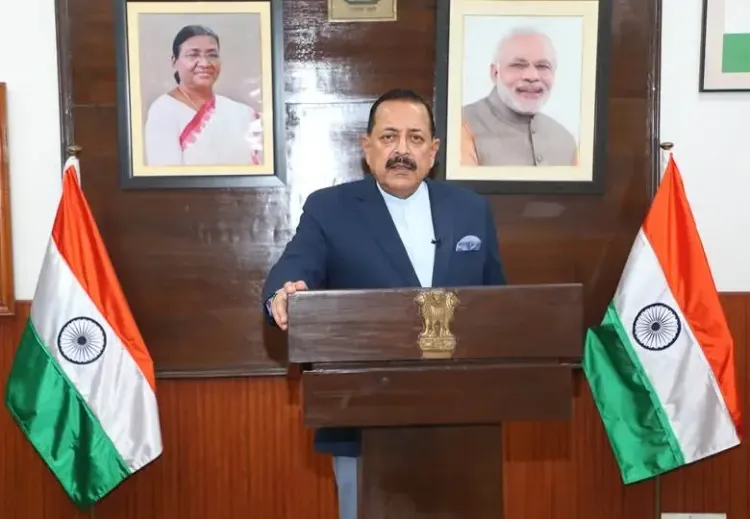
Jitendra Singh , Union Minister of State, addressed the PAN-IIT Alumni Conference in Los Angeles virtually on April 27, 2025 , calling for India's technological sovereignty.
India must transition from a technology consumer to a global creator in sectors including semiconductors , AI , robotics , and quantum technologies .
The minister linked this vision to Viksit Bharat 2047 , India's roadmap to becoming a fully developed nation by the centenary of independence.
India's India Semiconductor Mission carries an incentive outlay of over ₹76,000 crore , while the National Quantum Mission was approved with a budget of ₹6,003 crore in 2023.
India's R&D spending stands at roughly 0.65% of GDP — significantly below the global average of 1.8% — posing a structural challenge to these ambitions.
IIT alumni and the broader Indian diaspora were identified as critical enablers through investments, mentorship, and global institutional collaborations.
New Delhi, April 27, 2025 — Union Minister of State Dr. Jitendra Singh on Sunday declared that India must assert itself as a global frontrunner in critical and emerging technologies to achieve technological sovereignty and cement its standing in the evolving world order. Addressing the prestigious PAN-IIT Alumni Conference in Los Angeles via virtual link, Singh stressed that India can no longer afford to be merely a passive consumer of global technology — it must transform into a creator, designer, and driver of worldwide innovation.
India at a Defining Technological Crossroads
The minister told a distinguished gathering of IIT alumni — comprising global tech executives, entrepreneurs, researchers, and investors — that the country stands at a pivotal inflection point in its development journey. He connected this vision directly to the national ambition of Viksit Bharat by 2047, where science, technology, and innovation are expected to form the foundational pillars of economic growth and geopolitical influence.
"This shift is essential for the country to shape its global rise and safeguard long-term strategic interests," Dr. Singh stated. The remark carries significant weight at a time when global technology supply chains are being restructured and nations are racing to secure dominance in next-generation sectors.
India's current trajectory lends credibility to these ambitions. The country's space programme has expanded rapidly — highlighted by ISRO's landmark lunar and solar missions — while the biotechnology sector has emerged as a global force, and a robust ecosystem of deep-tech startups is reshaping domestic innovation. These developments signal that India possesses the foundational capabilities to compete in high-impact global sectors.
Strategic Sectors: Semiconductors, AI, Quantum, and Robotics
Singh specifically identified semiconductors, artificial intelligence (AI), robotics, and quantum technologies as the next critical frontier. He argued these domains are not merely economic opportunities — they are imperatives for national security, economic resilience, and sustained global competitiveness.
This aligns with India's broader policy push. The government's India Semiconductor Mission, launched in 2021 with an incentive outlay of over ₹76,000 crore, and the National Quantum Mission approved in 2023 with a budget of ₹6,003 crore, reflect a deliberate state-backed effort to reduce dependency on foreign technology ecosystems — particularly those dominated by the United States and China. Singh's address reinforces that this is not just industrial policy but a matter of strategic sovereignty.
Notably, the global semiconductor shortage of 2021-2023 exposed India's deep vulnerability as a technology consumer, disrupting automotive, electronics, and defence manufacturing sectors. Singh's call to action is therefore rooted in a hard lesson about the risks of technological dependence.
Role of IIT Alumni and the Indian Diaspora
Addressing one of the most influential alumni networks in the world, Dr. Singh underscored the irreplaceable role of the Indian diaspora — especially IIT graduates — as strategic connectors between India's domestic innovation ecosystem and global technology hubs. He acknowledged their contributions through investments, mentorship, and institutional collaborations as critical catalysts in India's development trajectory.
The Indian Institutes of Technology have produced alumni who now lead some of the world's most influential corporations — from Google and Microsoft to IBM and numerous unicorn startups. Singh called on this community to deepen their engagement with India's emerging tech ecosystem, not just as philanthropists but as active architects of the country's technological future.
He also called for structural reforms — including new models of education and institution-building — and deeper collaboration between academia, industry, and government to sustain this momentum.
Geopolitical Context: Why Tech Sovereignty Matters Now
Singh's address comes at a moment of intense global realignment. The US-China tech war, sweeping export controls on advanced chips, and the weaponisation of technology supply chains have forced every major nation to rethink dependency. For India, which imports a significant share of its electronics and semiconductor components, achieving technological self-reliance is both an economic and a national security imperative.
Critics, however, argue that ambition must be matched by execution. India's R&D spending as a percentage of GDP remains at roughly 0.65% — well below the global average of 1.8% and far behind innovation leaders like South Korea (4.9%) and Israel (5.4%). Closing this gap will require not just policy rhetoric but sustained, large-scale public and private investment in research infrastructure.
As India accelerates its push toward technological leadership ahead of the 2047 centenary of independence, the coming years will be critical in determining whether the country transitions from technology consumer to technology sovereign — a transformation that will shape its economic trajectory, strategic autonomy, and global standing for decades to come.
Point of View
India spends a fraction of what serious technology powers invest. The government's semiconductor and quantum missions are the right moves, but they remain islands of intent in a sea of structural deficits. India's diaspora is being asked to bridge that gap — a legitimate strategy, but one that cannot substitute for a domestic research culture that rewards risk and rewards failure as a learning tool.
NationPress
16 Sept 2026
Frequently Asked Questions
What did Dr. Jitendra Singh say about India's technological sovereignty?
Dr. Jitendra Singh stated that India must become a global leader in critical and emerging technologies — including AI, semiconductors, quantum tech, and robotics — to secure its technological sovereignty. He made these remarks at the PAN-IIT Alumni Conference in Los Angeles on April 27, 2025.
What is India's plan for semiconductor and quantum technology development?
India launched the India Semiconductor Mission in 2021 with an incentive package exceeding ₹76,000 crore, and the National Quantum Mission was approved in 2023 with a budget of ₹6,003 crore. These initiatives aim to reduce India's dependence on foreign technology supply chains.
What is Viksit Bharat 2047 and how does it relate to technology?
Viksit Bharat 2047 is India's national vision to become a fully developed nation by the centenary of its independence. Science, technology, and innovation are central pillars of this roadmap, with critical technologies seen as essential for economic growth and global influence.
Why is India's R&D spending a concern for its tech ambitions?
India currently spends approximately 0.65% of GDP on research and development, well below the global average of 1.8% and far behind innovation leaders like South Korea and Israel. Experts argue this gap must be urgently addressed to translate policy ambitions into real technological leadership.
What role do IIT alumni play in India's technology growth?
IIT alumni are considered key connectors between India's domestic innovation ecosystem and global technology hubs, contributing through investments, mentorship, and institutional partnerships. Dr. Singh called on the diaspora to deepen engagement as active architects of India's tech future, not just philanthropists.