Trump Holds Bilateral Meeting with India's PM at White House

Synopsis
The White House confirmed on 17 June 2026 that President Trump held a bilateral meeting with India's Prime Minister, continuing a pattern of high-level US-India engagement spanning trade, defence, and Indo-Pacific strategy that has deepened since the 2008 civil nuclear agreement.
Key Takeaways
The White House confirmed President Trump participated in a bilateral meeting with the Prime Minister of India on 17 June 2026 .
US-India bilateral meetings have a strong precedent, including Trump-era summits in 2017, 2019, and 2020 that produced the US-India Strategic Partnership 2.0 framework.
The relationship is underpinned by foundational defence agreements including LEMOA (2016) and BECA (2020) , enabling military interoperability.
Key sectors watching the outcome include defence, technology, and trade , with bilateral goods and services trade exceeding $200 billion annually.
Any joint statement or communiqué will be closely monitored for signals on trade agreements, defence pacts, and Quad coordination .
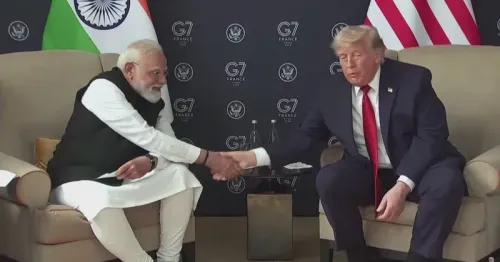
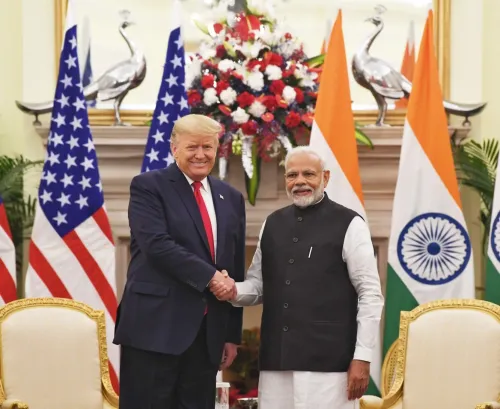
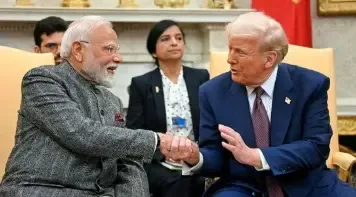
The White House announced on Wednesday, 17 June 2026 that President Donald Trump participated in a bilateral meeting with the Prime Minister of the Republic of India, marking a high-level engagement between the two nations at the highest executive level.
Context
The bilateral meeting between the leaders of the United States and India represents one of the most consequential diplomatic engagements in the Indo-Pacific strategic architecture. The White House confirmed the meeting through its official communications channel, underscoring the formal and significant nature of the engagement. Such leader-level interactions between Washington and New Delhi have become a recurring feature of the broader US-India strategic partnership.
US-India bilateral summits have historically produced substantive outcomes spanning trade, defence cooperation, and technology sharing. The two countries have deepened ties steadily since the landmark 2008 civil nuclear agreement, which opened the door to a broader strategic framework.
Policy Backdrop
The current engagement builds on a dense policy lineage. Previous Trump-era bilateral meetings — held in Washington (2017), Houston and Ahmedabad (2019), and New Delhi (2020) — produced the US-India Strategic Partnership 2.0 framework, which anchored cooperation across defence, energy, and digital infrastructure.
Key foundational agreements underpinning the relationship include the Logistics Exchange Memorandum of Agreement (LEMOA, 2016) and the Basic Exchange and Cooperation Agreement (BECA, 2020), which together enable deeper military interoperability. The elevation of the Quad leaders' format in 2021 further institutionalised US-India cooperation within a broader multilateral framework covering Australia and Japan as well.
Trade and technology have emerged as equally central pillars. Supply-chain resilience — particularly in semiconductors and critical minerals — and counter-terrorism cooperation have featured prominently in recent bilateral agendas, reflecting shared concerns over regional stability.
Stakeholders and Impact
The bilateral meeting carries direct implications for a wide range of actors. Defence contractors on both sides watch these engagements closely for signals on major platform sales, co-production arrangements, and technology-transfer agreements. Technology firms — particularly those operating in cloud infrastructure, artificial intelligence, and semiconductor manufacturing — look for policy signals that could shape investment flows between the two countries.
Trade negotiators from both governments will be attentive to any language around tariffs, market access, or the broader trajectory of a potential bilateral trade agreement, discussions on which have been ongoing for several years. For India, the meeting also carries significance in the context of its broader foreign-policy posture of strategic autonomy, as it balances relationships with the United States, Russia, and other major powers.
What's Next
Observers will watch closely for any joint statement, press conference, or communiqué emerging from the meeting, which would clarify the specific deliverables agreed upon. Historically, US-India bilateral summits have been followed by announcements on defence procurement, trade frameworks, or multilateral coordination — including at the Quad level.
The outcome of this engagement is likely to shape the diplomatic calendar for the remainder of 2026, with potential follow-up at scheduled multilateral forums. Any agreement on trade or defence pacts would carry significant implications for the broader Indo-Pacific strategic balance and for bilateral economic relations that already exceed $200 billion in annual goods and services trade.
Point of View
A posture that has held across administrations. Coming amid ongoing discussions over a bilateral trade deal and persistent Indo-Pacific security concerns, the timing suggests both sides see value in a high-profile reset or reinforcement of the relationship. For India, the meeting is a calibrated move within its strategic autonomy doctrine — deepening the US partnership without foreclosing other alignments. The key test will be whether the meeting produces concrete deliverables or remains a relationship-maintenance exercise ahead of larger multilateral engagements.
NationPress
16 Sept 2026
Frequently Asked Questions
Why did Trump meet India's Prime Minister at the White House in June 2026?
The White House confirmed the bilateral meeting as part of the ongoing US-India strategic partnership, which covers defence, trade, technology, and Indo-Pacific security cooperation. Such leader-level meetings are a recurring feature of the relationship and typically address current bilateral priorities.
What is the US-India Strategic Partnership 2.0?
The US-India Strategic Partnership 2.0 is a framework produced during the Trump administration's earlier term through bilateral summits in 2017, 2019, and 2020. It anchors cooperation across defence, energy, digital infrastructure, and counter-terrorism.
What defence agreements exist between the US and India?
The two countries have signed several foundational defence agreements, including the Logistics Exchange Memorandum of Agreement (LEMOA) in 2016 and the Basic Exchange and Cooperation Agreement (BECA) in 2020, which enable military interoperability and intelligence sharing.
What is the Quad and how does it relate to US-India bilateral meetings?
The Quad is a strategic grouping comprising the United States, India, Australia, and Japan, elevated to a leaders' format in 2021. US-India bilateral meetings often complement or precede Quad-level engagements, reinforcing the Indo-Pacific security architecture.
How large is the trade relationship between the US and India?
Annual goods and services trade between the United States and India exceeds $200 billion, making the economic dimension a central element of every bilateral summit. Both sides have held ongoing discussions on a potential bilateral trade agreement.