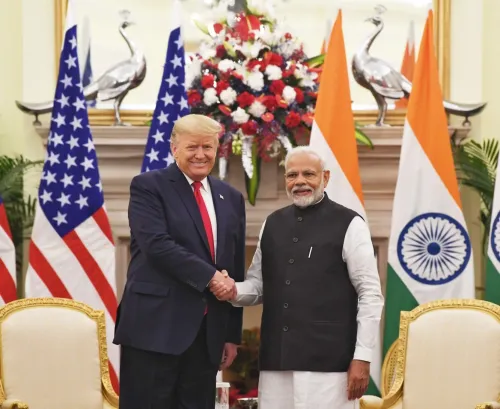
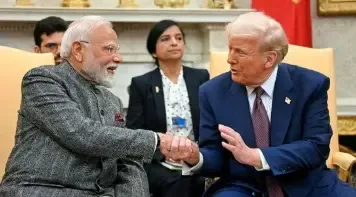
Trump Hails 'Closest' Bond with Modi, India in Rare Praise
Synopsis
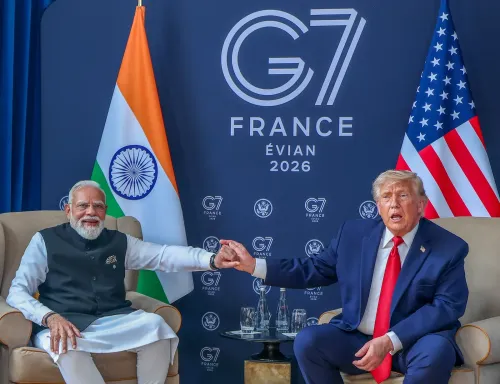
The White House quoted President Trump saying his personal bond with PM Modi and the US-India relationship 'cannot be closer,' in a striking public endorsement posted on 17 June 2026 that underscores the personal diplomacy driving one of the world's most consequential bilateral partnerships.
Key Takeaways
The White House posted a direct quote from President Trump on 17 June 2026 praising his closeness with PM Modi .
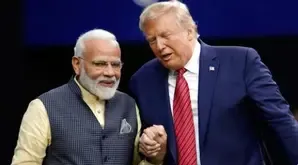
Trump stated: 'We cannot be closer than we are... it really starts with the two of us.' The two leaders previously showcased their rapport at the 'Howdy, Modi!' rally in Houston in September 2019 .
US-India ties span defence co-production, iCET technology initiatives, and Indo-Pacific strategy .
The statement is expected to be watched by diplomats and trade officials for follow-on bilateral action.
Possible next steps include a bilateral summit , QUAD leaders' meeting , or progress on iCET agreements.
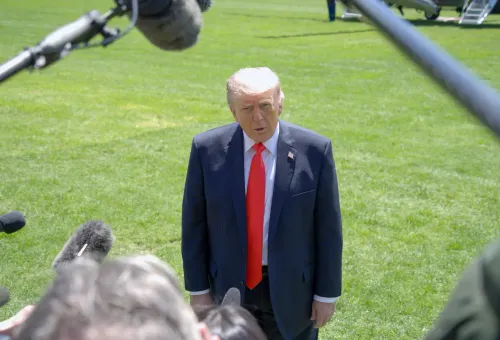
The White House on Wednesday, 17 June 2026, shared a striking personal endorsement from President Donald Trump, who declared that his relationship with Prime Minister Narendra Modi — and by extension, the ties between the United States and India — could not be closer, framing the bilateral bond as rooted first in personal chemistry between the two leaders.
Context
Trump was quoted by the White House as saying: 'We cannot be closer than we are... I don't think we could be any closer. Both him, and I, and our nations, but it really starts with the two of us, we cannot be closer.' The statement positions the personal rapport between the two heads of government as the primary engine of the broader US-India relationship, a framing Trump has used consistently across his political career.
This is not the first time Trump has publicly celebrated his ties with Modi. In September 2019, the two leaders shared a stage at the 'Howdy, Modi!' rally in Houston, Texas, drawing tens of thousands of Indian-Americans and signalling the personal dimension of the partnership to a global audience.
Policy Backdrop
The US-India relationship has been on a sustained upward trajectory since the landmark civil nuclear agreement of 2008, which unlocked civilian nuclear cooperation and set the template for a strategic partnership that has grown across successive administrations. Under both Republican and Democratic presidencies, the two countries have expanded cooperation into defence co-production, advanced technology sharing, and coordinated Indo-Pacific strategy.
A key institutional vehicle for this deepening has been the initiative on Critical and Emerging Technology (iCET), launched in recent years to align the two countries on semiconductors, artificial intelligence, space, and defence innovation. These structural ties give the personal warmth Trump describes a concrete policy foundation.
Stakeholders and Impact
The statement carries weight for US-India diplomats, defence procurement officials, and trade negotiators on both sides, for whom a visible signal of top-level commitment can accelerate stalled negotiations and unlock bureaucratic momentum. Indian-American diaspora communities — numbering over 4 million in the United States — have historically served as a bridge constituency whenever the two leaders have publicly celebrated their bond.
For New Delhi, a public declaration of closeness from Washington carries strategic value at a time when India is navigating its relationships with multiple great powers. The framing of the relationship as personally driven also insulates it, to a degree, from routine diplomatic friction over trade deficits, visa policy, or defence procurement timelines.
What's Next
Analysts and officials will watch for whether this public expression of warmth translates into concrete deliverables: a bilateral summit, progress on iCET technology initiatives, a QUAD leaders' meeting, or movement on pending defence and trade agreements. Trump's pattern of using personal statements to signal diplomatic direction suggests this post may be a precursor to a formal engagement. The trajectory of US-India ties, built over nearly two decades of bipartisan investment, gives both sides ample institutional ground to convert goodwill into outcomes.
Point of View
Not merely rhetoric — leaders who anchor alliances in personal trust tend to move faster on deals that bureaucracies alone cannot unlock. The statement fits a broader pattern in which Washington has used high-visibility personal endorsements to signal strategic prioritisation of New Delhi, particularly as the Indo-Pacific competitive landscape intensifies. For India, the optics of being singled out as America's 'closest' partner carry value well beyond the bilateral relationship, reinforcing its standing in multilateral forums. The real test, however, will be whether this warmth converts into tangible progress on the trade and technology files that have long tested the partnership's depth.
NationPress
19 Sept 2026
Frequently Asked Questions
What did Trump say about his relationship with Modi?
Trump said 'We cannot be closer than we are... it really starts with the two of us,' describing both his personal bond with PM Modi and the broader US-India relationship as the closest possible.
When did Trump make this statement about Modi?
The White House posted Trump's statement on Wednesday, 17 June 2026 .
What is the history of Trump and Modi's personal relationship?
Trump and Modi have a well-documented personal rapport, most visibly demonstrated at the 'Howdy, Modi!' rally in Houston in September 2019 , where both leaders addressed tens of thousands of Indian-Americans together.
What does this mean for US-India relations?
The statement signals strong top-level political will, which diplomats and trade officials on both sides typically use as momentum to advance defence, technology, and trade negotiations.
What is iCET and how does it relate to US-India ties?
The initiative on Critical and Emerging Technology (iCET) is a bilateral framework aligning the US and India on semiconductors, artificial intelligence, space, and defence innovation, and is one of the most concrete institutional expressions of the deepening strategic partnership.