Rajnath Singh: Indo-Pacific shaped by partnerships, not tech alone
Synopsis
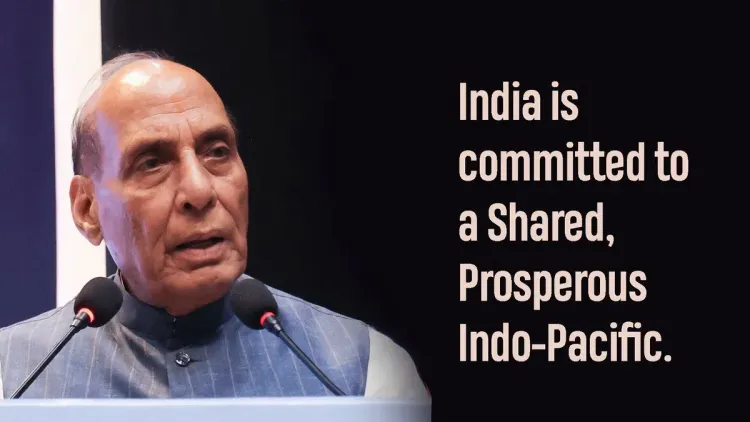
Union Defence Minister Rajnath Singh declared on 4 November 2026 that the Indo-Pacific's future hinges on how nations use technology and the partnerships they forge, pledging India's commitment to turning shared aspirations into joint initiatives and measurable outcomes.
Key Takeaways
Rajnath Singh posted on 4 November 2026 that the Indo-Pacific will be shaped by partnerships and the use of technology, not technology alone.
India pledged to convert 'shared aspirations into joint initiatives, meaningful partnerships and measurable outcomes.' India's Indo-Pacific vision was first formally articulated by PM Narendra Modi at the Shangri-La Dialogue in Singapore in 2018 .
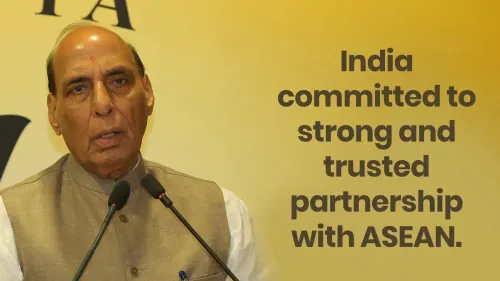
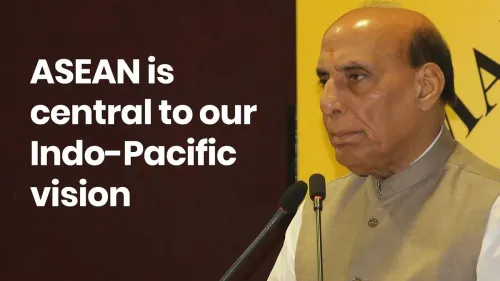
India pursues the strategy through the Quad — with the United States, Japan and Australia — and expanded ties with ASEAN nations.
Singh's use of 'measurable outcomes' signals a demand for concrete, verifiable deliverables over diplomatic platitudes.
The next Quad or ASEAN-India Defence Ministers' meeting will serve as the near-term test of these commitments.
Partnerships, not processors — that is the thesis Union Defence Minister Rajnath Singh put before the world on Wednesday, 4 November 2026, with a pointed message on how the Indo-Pacific's future will ultimately be decided.
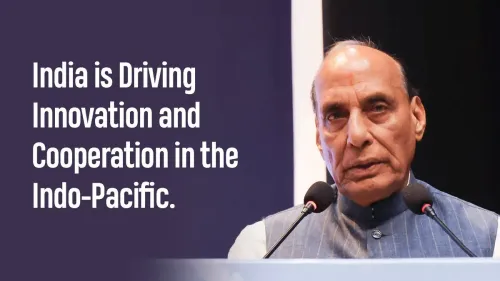
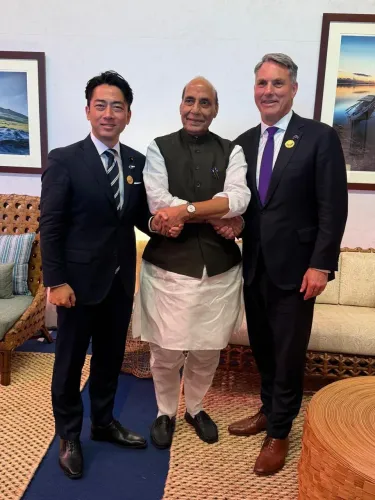
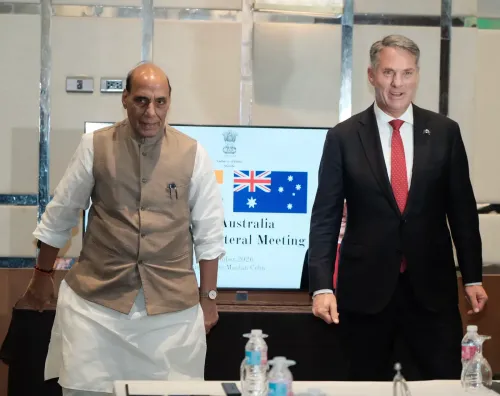
Singh's post cuts to the core of a debate that has quietly dominated defence corridors from Tokyo to Canberra: in a region being rapidly reshaped by artificial intelligence, hypersonic systems and contested maritime lanes, is technological superiority enough? The Defence Minister's answer was an unambiguous no. 'The future of the Indo-Pacific will be shaped not by technology alone, but by how nations use it and the partnerships they build,' he wrote, adding that India remains committed to converting 'shared aspirations into joint initiatives, meaningful partnerships and measurable outcomes.'
India's rules-based Indo-Pacific playbook
The philosophical grounding of Singh's statement traces back to 2018, when Prime Minister Narendra Modi laid out India's Indo-Pacific vision at the Shangri-La Dialogue in Singapore — framing the region not as a zone of great-power rivalry but as a shared space governed by rules, freedom of navigation and collective prosperity. That framework has since been operationalised through the Quad — the grouping of India, the United States, Japan and Australia — and through deepening defence cooperation with ASEAN members.
Successive Indian Defence Ministers have consistently paired the technology agenda with what officials call 'capacity-building' — joint exercises, logistics agreements, interoperability frameworks and technology-transfer arrangements. Singh's post signals that this two-track approach remains the bedrock of New Delhi's regional strategy.
Why 'measurable outcomes' is the operative phrase
The language Singh chose — 'measurable outcomes' — is a deliberate departure from the vague communiqué-speak that often defines multilateral defence diplomacy. It signals that India wants results that can be counted: signed agreements, operationalised facilities, deployed platforms, shared intelligence architectures. For partners watching whether New Delhi will translate strategic intent into binding commitments, that phrasing carries weight.
The statement lands against a backdrop of heightened Indo-Pacific competition, with regional nations making fast-moving decisions about defence supply chains, basing arrangements and emerging-technology partnerships. India, as a Quad member and the region's largest democracy, sits at the centre of multiple overlapping alliance conversations — and Singh's framing of 'joint initiatives' as the decisive variable is a clear signal about where New Delhi sees its comparative leverage.
The next Quad leaders' summit or ASEAN-India Defence Ministers' meeting will be the test: whether Singh's aspirational language produces the specific, signed frameworks he is implicitly promising.
Point of View
Not merely endorses, the rules-based order. The emphasis on 'measurable outcomes' marks a rhetorical shift from aspirational multilateralism toward accountability diplomacy — a posture that reflects India's growing confidence as a net security provider in the region. Framed against Modi's 2018 Shangri-La articulation, the statement reinforces strategic continuity while nudging partners to expect — and demand — concrete joint deliverables. It also implicitly positions India as a counter-narrative to purely transactional or coercive regional engagement.
NationPress
4 Nov 2026
Frequently Asked Questions
What did Rajnath Singh say about the Indo-Pacific?
On 4 November 2026, Rajnath Singh stated that the Indo-Pacific's future will be determined not by technology alone but by how nations use it and the partnerships they build, and that India is committed to turning shared aspirations into joint initiatives and measurable outcomes.
What is India's Indo-Pacific strategy?
India's Indo-Pacific strategy, first outlined by PM Narendra Modi at the Shangri-La Dialogue in Singapore in 2018, advocates a rules-based, inclusive regional order. It is pursued through the Quad grouping with the US, Japan and Australia, and through defence cooperation agreements with ASEAN nations.
What is the Quad and India's role in it?
The Quad is a strategic grouping comprising India, the United States, Japan and Australia. India is a founding member and uses the forum to advance interoperability, technology-sharing and joint maritime security initiatives across the Indo-Pacific.
Why does Rajnath Singh say technology alone is not enough for the Indo-Pacific?
Singh's argument is that technology is a tool, not a strategy; regional stability and security ultimately depend on the norms, rules and cooperative frameworks that govern how that technology is deployed, making partnerships the decisive factor.
What does 'measurable outcomes' mean in India's defence diplomacy?
'Measurable outcomes' signals India's intent to pursue concrete, verifiable results — signed agreements, operationalised joint facilities, deployed platforms — rather than aspirational statements, reflecting a push toward accountability in multilateral defence partnerships.