Rajnath Singh Champions JAI Trilateral Tie-Up
Synopsis
Union Defence Minister Rajnath Singh publicly championed the JAI — Japan, Australia, India — trilateral framework on 29 October 2026, reinforcing India's layered Indo-Pacific minilateral strategy alongside the Quad and deepening bilateral defence agreements with Tokyo and Canberra.
Key Takeaways
JAI stands for Japan, Australia, and India — a trilateral minilateral grouping focused on Indo-Pacific security and connectivity.
Trilateral JAI foreign ministers' meetings began on the sidelines of multilateral summits from 2019 onward.
Union Defence Minister Rajnath Singh publicly invoked the JAI acronym on 29 October 2026 , signalling defence-level engagement.
India has signed logistics support agreements with both Japan (ACSA) and Australia (MLSA), forming the operational backbone of the grouping.
JAI complements the Quad , giving India a nimbler trilateral channel with Tokyo and Canberra independent of Washington.
Observers will watch for the next dedicated JAI ministers' meeting and any joint statement on maritime surveillance, critical minerals, or humanitarian assistance.
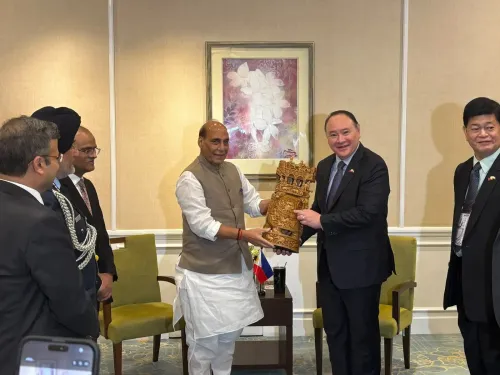
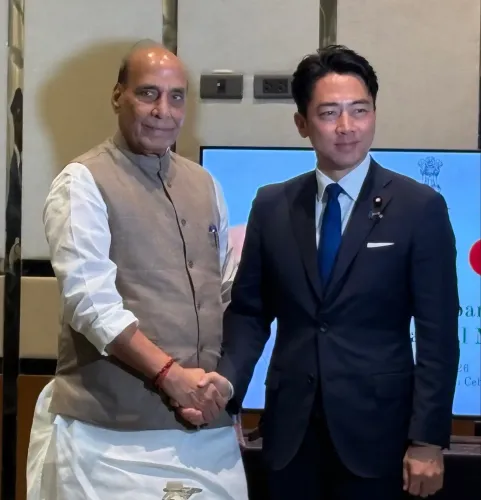
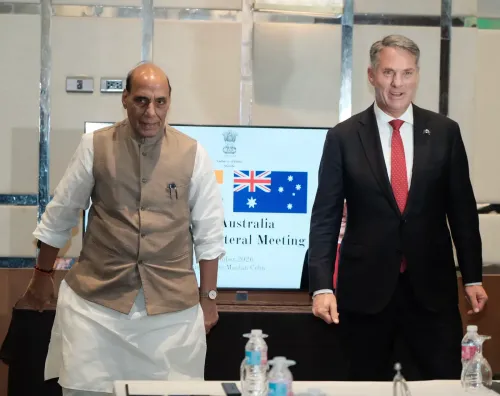
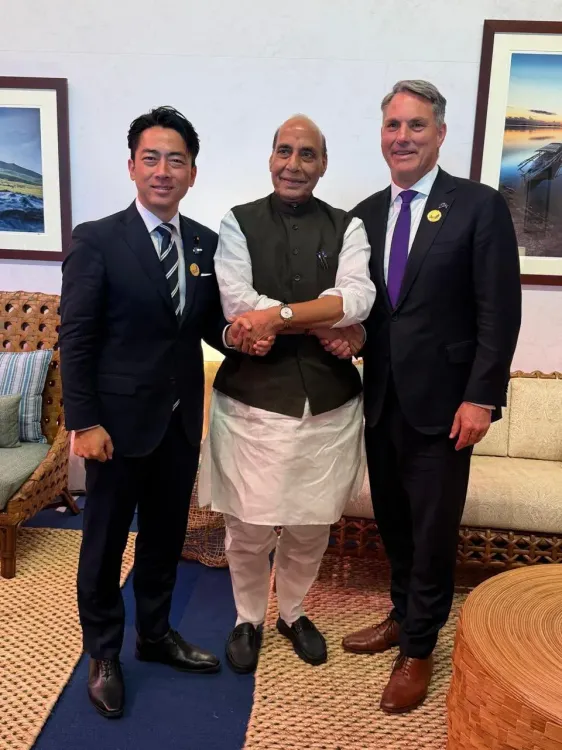
Three letters. Three democracies. One shared vision for the Indo-Pacific. Union Defence Minister Rajnath Singh on Thursday, 29 October 2026, invoked the JAI framework — standing for Japan, Australia, and India — in a pointed post on X, signalling fresh momentum behind one of the region's most consequential minilateral groupings.
What JAI Is — and Why It Matters
The JAI trilateral is not a treaty alliance or a formal bloc. It is a nimble, high-trust diplomatic architecture: three major Indo-Pacific democracies coordinating on maritime security, supply chains, and regional connectivity outside the heavy scaffolding of larger multilateral bodies. Trilateral foreign ministers' meetings under the JAI banner began taking shape on the sidelines of multilateral summits from 2019 onward, building on bilateral defence ties between India, Japan, and Australia that expanded through the 2010s.
Each leg of the triangle carries its own weight. Japan brings deep defence-industry links with India, including cooperation on advanced technologies and the Free and Open Indo-Pacific concept it originated. Australia participates in joint naval exercises with India and shares intelligence frameworks through wider groupings. Together, the three nations form a strategic arc stretching from the Indian Ocean to the Pacific — precisely the geography that regional security planners watch most closely.
Singh's Post and the Diplomatic Signal It Sends
A Defence Minister publicly amplifying the JAI acronym is not a casual gesture. Defence establishments in all three countries have increasingly aligned their exercises, technology-transfer conversations, and maritime-domain-awareness programmes. By invoking JAI — and doing so with evident warmth — Singh is speaking directly to those institutional networks, signalling India's continued appetite for deepening the minilateral architecture at the defence level, not just the diplomatic one.
The post also fits a broader pattern India has pursued in parallel with the Quad — the four-nation grouping that includes the United States. Where the Quad operates at a larger, more visible strategic scale, JAI allows New Delhi, Tokyo, and Canberra to move with greater agility on specific issues without requiring Washington's direct involvement. Both formats reinforce rather than replace each other, giving India a layered presence across the Indo-Pacific diplomatic chessboard.
The Road the Trio Has Already Travelled
India's defence relationship with Japan crossed a threshold when the two countries signed their landmark Acquisition and Cross-Servicing Agreement (ACSA), allowing mutual logistical support for military assets. With Australia, India concluded a Mutual Logistics Support Agreement (MLSA) — mirroring agreements India has signed with other key partners — enabling port calls and replenishment cooperation. These agreements are the operational plumbing beneath the political messaging that a post like Singh's represents.
The next milestone observers will watch for: a dedicated JAI defence or foreign ministers' meeting, and whether it produces a joint statement that moves from declaratory language toward concrete deliverables on maritime surveillance, humanitarian assistance, or critical minerals — a domain where all three nations have converging interests and significant leverage.
Point of View
Not social-media small talk — Defence Ministers do not casually invoke acronyms like JAI without institutional intent behind them. The move reflects New Delhi's strategy of building overlapping minilateral layers across the Indo-Pacific: the Quad for broad-spectrum deterrence, JAI for agile trilateral coordination where India, Japan, and Australia can move without requiring US alignment on every issue. Projecting this publicly also serves a domestic audience, reinforcing the BJP government's narrative of an assertive, globally networked India. The real test will be whether the ministerial signal translates into a formal trilateral meeting with concrete deliverables before the year closes.
NationPress
29 Oct 2026
Frequently Asked Questions
What does JAI stand for in foreign policy?
JAI stands for Japan, Australia, and India — a trilateral minilateral grouping of three Indo-Pacific democracies that coordinates on maritime security, connectivity, and regional stability.
When did the JAI trilateral begin?
Trilateral JAI foreign ministers' meetings began taking shape from 2019 onward, typically on the sidelines of larger multilateral summits.
How is JAI different from the Quad?
The Quad includes the United States alongside India, Japan, and Australia, while JAI is a nimbler three-nation format that allows New Delhi, Tokyo, and Canberra to coordinate on specific issues without requiring direct US involvement.
What logistics agreements does India have with Japan and Australia?
India signed an Acquisition and Cross-Servicing Agreement (ACSA) with Japan and a Mutual Logistics Support Agreement (MLSA) with Australia, enabling mutual military logistical support and port-access cooperation.
Why did Rajnath Singh post about JAI?
As Union Defence Minister, Singh's invocation of the JAI acronym signals India's continued appetite for deepening the trilateral architecture at the defence level, reinforcing bilateral agreements and multilateral Indo-Pacific strategy.