Rajnath Singh Meets Japan's Koizumi at ADMM-Plus in Cebu
Synopsis
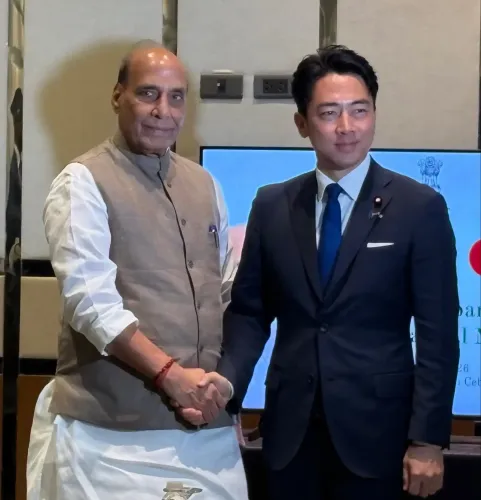
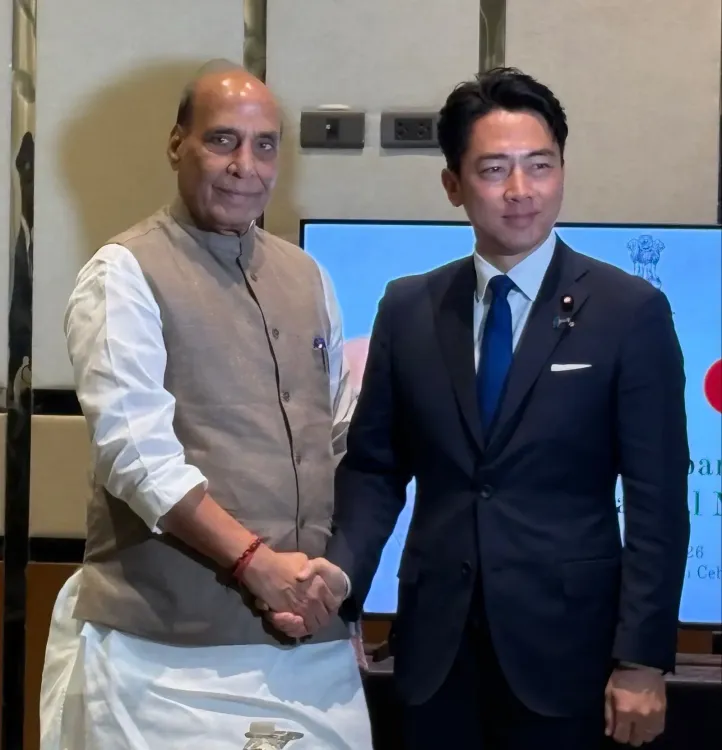
Union Defence Minister Rajnath Singh met Japanese Defence Minister Koizumi Shinjiro on the sidelines of the 13th ADMM-Plus in Cebu, Philippines on October 28, reviewing bilateral defence cooperation and reaffirming the India-Japan Special Strategic and Global Partnership for a free and open Indo-Pacific.
Key Takeaways
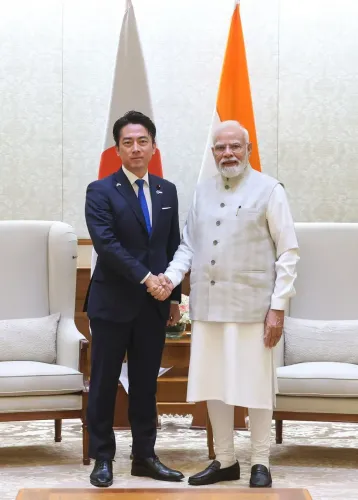
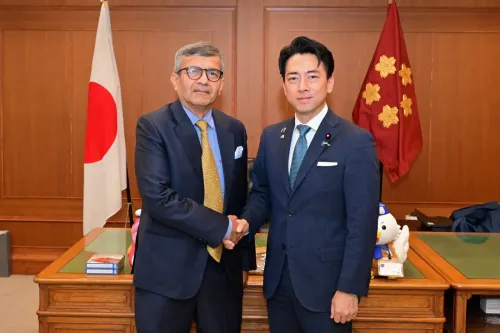
Rajnath Singh met Japanese Defence Minister Koizumi Shinjiro on October 28, 2026 at the 13th ADMM-Plus in Cebu, Philippines .
Discussions covered a review of ongoing bilateral defence cooperation and new avenues for strengthening ties under the India-Japan Special Strategic and Global Partnership .
India and Japan elevated ties to the Special Strategic and Global Partnership in 2014 , and launched the 2+2 Foreign and Defence Ministerial Dialogue in 2019 .
Bilateral defence engagement includes the Malabar naval exercise series, logistics support agreements, and technology collaboration.
Both nations are Quad partners and have consistently aligned on the goal of a free, open, and peaceful Indo-Pacific.
On the sidelines of a high-stakes multilateral defence summit in the Philippines, Union Defence Minister Rajnath Singh sat down with Japanese Defence Minister Koizumi Shinjiro on Wednesday, October 28, 2026 — a bilateral pull-aside that put India-Japan security ties squarely back in focus at the 13th ASEAN Defence Ministers' Meeting Plus (ADMM-Plus) in Cebu.
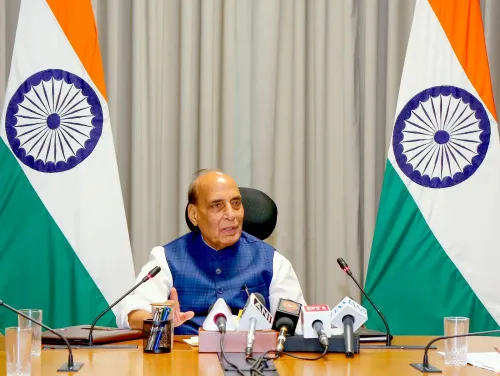
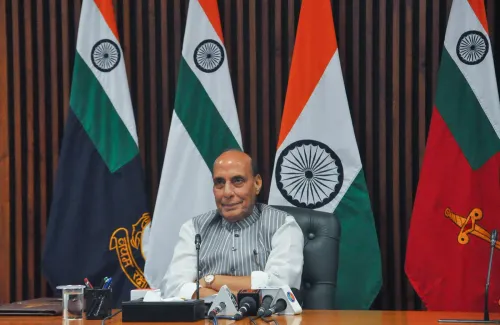
Singh described the meeting as 'productive', with both sides reviewing 'ongoing bilateral defence cooperation and exploring new avenues' under the framework of the India-Japan Special Strategic and Global Partnership — a relationship that has been building institutional muscle for over a decade.
A Partnership Elevated Since 2014
India and Japan formally elevated their bilateral ties to the Special Strategic and Global Partnership in 2014, signalling a step-change in the depth and ambition of the relationship. That upgrade was followed in 2019 by the launch of the 2+2 Foreign and Defence Ministerial Dialogue, an institutionalised forum that brings together the foreign and defence ministers of both countries to align on security priorities — a format reserved for India's most consequential partners.
On the ground, the partnership has translated into regular joint naval exercises, most visibly the Malabar exercise series, as well as logistics support agreements and expanding technology collaboration. Both nations have also been active participants in the Quad grouping alongside the United States and Australia, making their bilateral coordination a structural pillar of the wider Indo-Pacific security architecture.
What the Cebu Pull-Aside Signals
The ADMM-Plus is one of the few forums where ASEAN member states and their eight dialogue partners — including India and Japan — gather defence ministers under one roof, making its sidelines a prime venue for bilateral stock-taking. Choosing this setting to review the partnership suggests both capitals want to keep the relationship's momentum visible within the multilateral Indo-Pacific framework, not just in bilateral capitals.
Singh's closing note — that their 'shared commitment remains vital for a free, open, and peaceful Indo-Pacific region' — echoes the language both nations have used consistently to signal alignment against coercive maritime behaviour in the region, without naming any specific actor.
As defence ministers return from Cebu, the question is whether Wednesday's conversations translate into concrete new agreements — on co-production, logistics, or exercise calendars — at the next scheduled high-level engagement. Rajnath Singh has signalled the direction. The follow-through will define the distance.
Point of View
Not just in bilateral capitals. For New Delhi, deepening the Japan relationship serves a dual purpose: it strengthens the Quad's operational coherence and provides India access to advanced Japanese defence technology and maritime logistics. The use of 'Special Strategic and Global Partnership' language in a public post also signals that both sides want the relationship's elevation to register within the broader Indo-Pacific diplomatic community watching the ADMM-Plus. Follow-up deliverables — new co-production lines, expanded exercise schedules, or a formal defence roadmap — will be the real measure of how far Wednesday's 'productive discussions' actually went.
NationPress
28 Oct 2026
Frequently Asked Questions
What is the ADMM-Plus and why does it matter for India?
The ADMM-Plus (ASEAN Defence Ministers' Meeting Plus) is an annual multilateral forum that brings together defence ministers from ASEAN's ten members and eight dialogue partners, including India, Japan, and the United States. It provides India a structured platform to engage multiple Indo-Pacific partners at the ministerial level simultaneously.
What is the India-Japan Special Strategic and Global Partnership?
India and Japan elevated their bilateral relationship to the 'Special Strategic and Global Partnership' in 2014, the highest tier of their diplomatic framework. It covers defence, technology, infrastructure, and people-to-people ties, and is institutionalised through mechanisms such as the 2+2 Foreign and Defence Ministerial Dialogue launched in 2019.
Who is Koizumi Shinjiro?
Koizumi Shinjiro is a Japanese politician serving as Japan's Minister of Defense. He is a prominent figure in Japanese politics and son of former Prime Minister Junichiro Koizumi.
What defence exercises do India and Japan conduct together?
India and Japan participate in the Malabar naval exercise series, which also includes the United States and Australia. The two countries have also signed logistics support agreements and are expanding technology collaboration in the defence sector.
Why did Rajnath Singh travel to Cebu, Philippines?
Rajnath Singh travelled to Cebu to attend the 13th ADMM-Plus, the ASEAN-led multilateral defence ministers' forum. He used the summit's sidelines to hold a bilateral meeting with Japanese Defence Minister Koizumi Shinjiro to review India-Japan defence ties.