CM Chandrababu Briefs Amit Shah on Cyclone Arnab's AP Toll
Synopsis
Chief Minister Chandrababu Naidu telephoned Home Minister Amit Shah on 28 October 2026 to brief him on Cyclone Arnab's toll — over 70,000 hectares of crops submerged and 10,500 hectares of horticultural farms damaged across seven coastal Andhra Pradesh districts, triggering the formal central relief process.
Key Takeaways
CM Nara Chandrababu Naidu called Union Home Minister Amit Shah on 28 October 2026 to brief him on Cyclone Arnab 's destruction in Andhra Pradesh.
Preliminary estimates show over 70,000 hectares of crops submerged across Visakhapatnam, Konaseema, Kakinada, East Godavari, West Godavari, Eluru, and Krishna districts .
An additional 10,500 hectares of horticultural crops have been damaged by the cyclone.
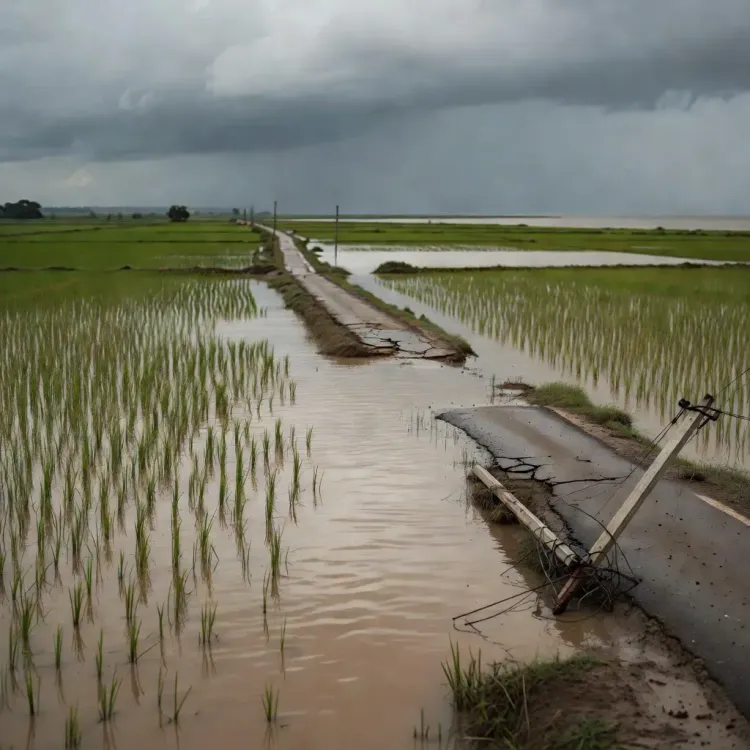
Houses, roads, and electricity poles have been damaged across the affected districts and other parts of the state.
The state-Centre briefing initiates the formal process for NDRF deployment, joint assessment teams, and National Disaster Response Fund assistance.
AP's coastal districts face recurrent Bay of Bengal cyclones; a similar protocol was followed after Cyclone Hudhud in 2014 .
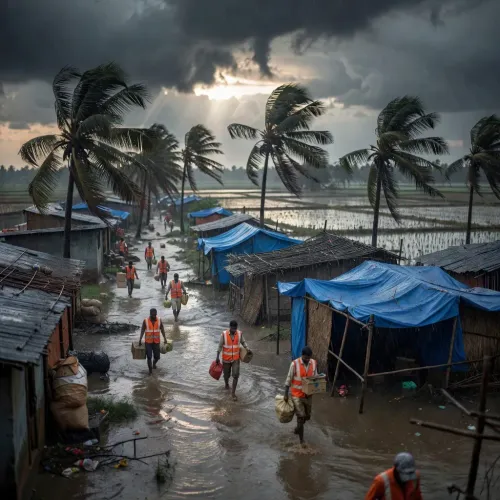
A cyclone has carved a trail of destruction across Andhra Pradesh's most fertile coastal belt — and Chief Minister Nara Chandrababu Naidu moved quickly on Wednesday, 28 October 2026, telephoning Union Home Minister Amit Shah to lay out the scale of damage caused by Cyclone Arnab and to begin the formal process of mobilising central disaster relief.
Over 70,000 Hectares of Crops Submerged Across Seven Districts
The Chief Minister's Office of Andhra Pradesh confirmed that preliminary assessments place crop submergence at over 70,000 hectares across Visakhapatnam, Konaseema, Kakinada, East Godavari, West Godavari, Eluru, and Krishna districts. An additional 10,500 hectares of horticultural crops have also been damaged — meaning orchards, plantations, and vegetable farms that take years to rebuild face near-total losses in the affected zones.
Beyond the fields, the storm ripped through the built environment: houses, roads, and electricity poles have been damaged across these districts and in other parts of the state. The breadth of infrastructure damage suggests restoration timelines that stretch well beyond the immediate emergency phase.
Why the Naidu–Shah Call Is a Critical First Move
In India's disaster-response architecture, the state-to-Centre briefing is the trigger for everything that follows — National Disaster Response Force deployments, central assessment teams, and eventually financial assistance from the National Disaster Response Fund. By calling Shah directly, Naidu has set that clock ticking. Andhra Pradesh has followed this protocol through every major Bay of Bengal cyclone, including Cyclone Hudhud in 2014, which devastated Visakhapatnam and resulted in a large-scale central relief package.
Naidu, who has served as Chief Minister in two separate stints since 2014, knows this choreography well. The phone call is simultaneously a briefing, a formal record, and a political signal that the state administration is on top of the crisis.
Coastal Farming Communities at the Sharp End
The districts worst hit — Konaseema, East and West Godavari, Krishna — form the heart of Andhra Pradesh's rice and horticulture economy. Tens of thousands of farming households whose paddy fields are now underwater are watching the calendar: delayed drainage and prolonged submergence can kill a standing crop entirely, foreclosing both yield and income for the season. For horticultural farmers — who grow bananas, coconuts, and seasonal vegetables across that 10,500-hectare affected belt — the losses compound across multiple growing cycles.
Andhra Pradesh's coastline is among the most cyclone-exposed in South Asia, sitting squarely in the path of storms that intensify over the warm waters of the Bay of Bengal each pre-winter season. The recurrence means communities here live in a cycle of rebuilding — making rapid, accurate damage reporting to New Delhi not merely procedural but existential.
What Follows the Briefing
With the preliminary numbers now formally communicated to the Home Ministry, the next steps in the standard playbook include a joint central-state rapid assessment, followed by the Union government's announcement of ex-gratia relief and infrastructure restoration funds. The speed of that response — and its quantum — will define the political narrative around Arnab's aftermath for weeks to come.
For the farmers of the Godavari delta and Krishna districts watching floodwater cover their crops, that response cannot come fast enough.
Point of View
A protocol that has defined AP's cyclone response since at least Hudhud in 2014. The sheer spread of damage — seven major coastal districts, dual hits on staple and horticultural crops — signals this is not a localised event but a state-wide agricultural emergency. Naidu's swift, visible outreach to the Home Ministry also serves a political function: it demonstrates administrative grip in the immediate aftermath, a posture critical in coastal AP where cyclone mismanagement has historically cost governments dearly. The speed and quantum of New Delhi's response will now become the defining benchmark for the Centre-state relationship in this relief cycle.
NationPress
28 Oct 2026
Frequently Asked Questions
What damage did Cyclone Arnab cause in Andhra Pradesh?
Cyclone Arnab submerged over 70,000 hectares of crops and damaged 10,500 hectares of horticultural farms across seven coastal districts including Visakhapatnam, Konaseema, Kakinada, East and West Godavari, Eluru, and Krishna. Houses, roads, and electricity poles were also damaged.
Which districts in Andhra Pradesh were affected by Cyclone Arnab?
The districts most affected include Visakhapatnam, Konaseema, Kakinada, East Godavari, West Godavari, Eluru, and Krishna , along with other parts of the state as per preliminary government assessments.
Why did CM Chandrababu Naidu call Amit Shah after the cyclone?
CM Naidu briefed Home Minister Amit Shah to formally communicate the scale of damage — a required step to trigger central disaster relief mechanisms including NDRF deployment, joint assessment teams, and financial assistance from the National Disaster Response Fund.
How many hectares of crops were damaged in Cyclone Arnab in Andhra Pradesh?
Preliminary estimates indicate over 70,000 hectares of agricultural crops and an additional 10,500 hectares of horticultural crops were damaged or submerged by Cyclone Arnab.
What central relief can Andhra Pradesh expect after Cyclone Arnab?
Following the CM's briefing to the Home Minister, the standard process involves central-state rapid assessment teams visiting the affected areas, after which the Union government typically announces ex-gratia relief and infrastructure restoration funding from the National Disaster Response Fund .