CM Chandrababu Reviews Cyclone Arnab Impact from Secretariat War Room
Synopsis
Chief Minister Chandrababu Naidu conducted four teleconferences in under 24 hours from the AP Secretariat's RTGS centre to review Cyclone Arnab's impact, with Konaseema recording nearly 33,000 uprooted coconut trees and West Godavari still under close watch.
Key Takeaways
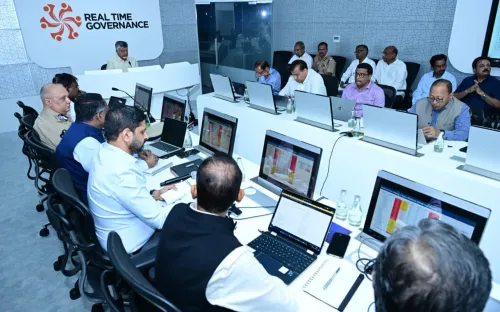
CM Nara Chandrababu Naidu held four teleconferences since Tuesday night reviewing Cyclone Arnab's impact from the RTGS centre at the Andhra Pradesh Secretariat.
IT Secretary Katamneni Bhaskar briefed the CM on district-wise rainfall in the past 24 hours across six heavily affected coastal districts.
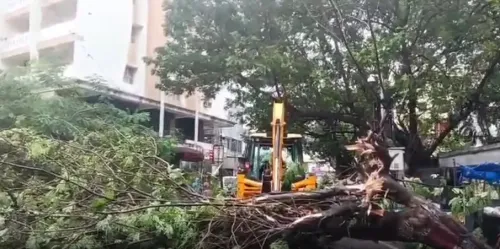
Approximately 33,000 coconut trees were uprooted in Konaseema district , posing significant agricultural losses for local farmers.
Conditions are gradually normalising in most affected districts, but Konaseema and West Godavari remain the most severely impacted zones.
CM Naidu directed officials to prevent sanitation failures and drinking water disruptions in all cyclone-affected areas.
Official damage assessments and potential relief packages for the worst-hit northern coastal districts are expected in the coming days.
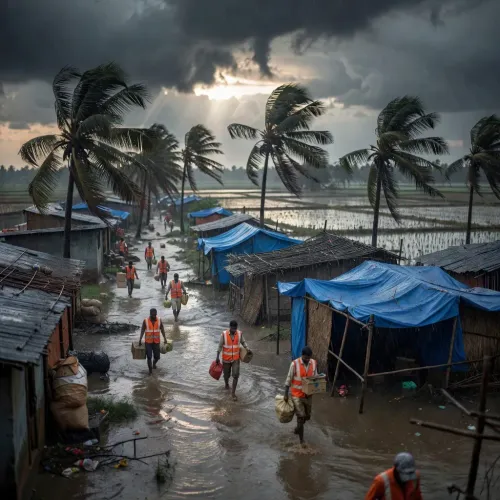
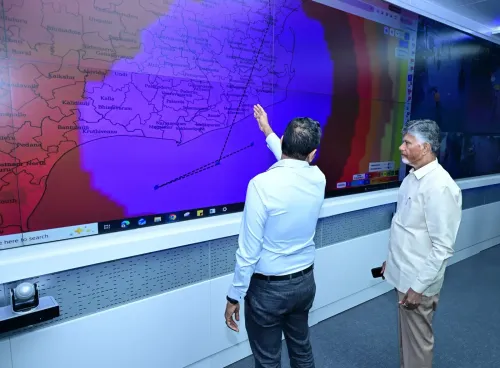
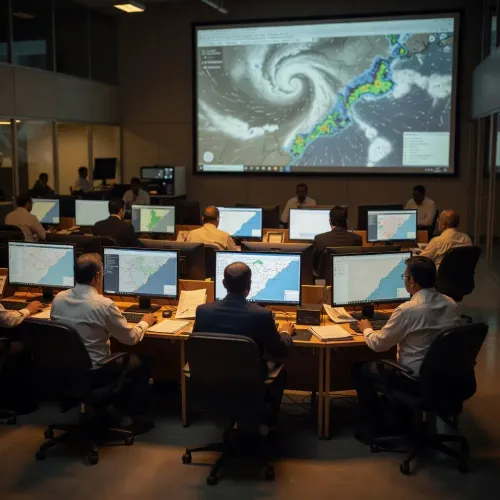
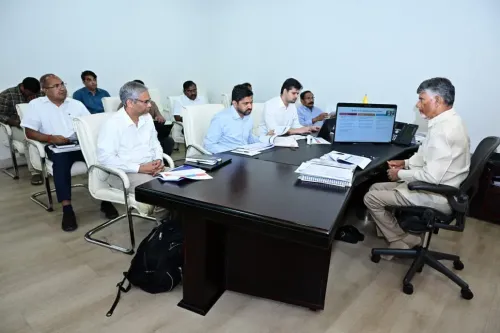
With Cyclone Arnab battering the northern coastal districts of Andhra Pradesh, Chief Minister Nara Chandrababu Naidu conducted an intensive review from the RTGS (Real-Time Governance System) centre at the state secretariat on Wednesday, 28 October 2026 — holding four teleconferences since the previous night to track damage and direct relief operations in real time.
Four Teleconferences in Under 24 Hours
The Chief Minister's Office confirmed that CM Naidu has convened a total of four teleconferences since Tuesday night, each time pulling in district collectors from the affected zones to assess on-the-ground conditions. The pace is deliberate: Andhra Pradesh has hardened its district-coordination machinery after cyclone disasters in the past, and the RTGS platform allows the Secretariat to receive live district feeds rather than waiting for periodic reports.
In the latest round, IT Secretary Katamneni Bhaskar presented a district-by-district breakdown of rainfall recorded in the preceding 24 hours. Heavy rainfall was logged across Visakhapatnam, Vizianagaram, Srikakulam, Anakapalli, Dr. B.R. Ambedkar Konaseema, and Kakinada districts — the arc of coastal Andhra most exposed to Bay of Bengal systems.
33,000 Coconut Trees Down in Konaseema Alone
The starkest number to emerge from the review: approximately 33,000 coconut trees have been uprooted in Konaseema district. For a coastal economy where coconut cultivation is a primary livelihood, the scale of agricultural damage will weigh heavily on any eventual relief calculation. Officials indicated that Konaseema and West Godavari districts remain the most severely impacted, even as the situation in other cyclone-hit districts is kramagā sādhāraṇa sthitiki cerukuntunnāyi (gradually returning to normalcy).
The distinction matters for resource allocation: normalisation in the northern districts of Visakhapatnam and Srikakulam means state machinery can concentrate heavier relief efforts on the Godavari delta zone, where recovery is slower.
CM's Direct Orders: No Sanitation or Drinking Water Breakdown
Beyond damage tallies, CM Naidu issued explicit instructions that sanitation failures and drinking water disruptions must not be allowed to occur in the affected areas. Post-cyclone contamination of water sources is a chronic secondary hazard on India's eastern coast, and the directive signals that the administration is moving from immediate rescue mode to early-recovery logistics. Municipal and panchayat bodies in affected districts have been placed on notice to prevent any public-health deterioration in the storm's wake.
Officials said the overall trajectory across most affected districts is one of gradual stabilisation — but Konaseema and West Godavari remain under close watch as assessment teams complete their ground surveys.
The coming hours will test whether the administration's pre-positioning of relief machinery translates into rapid compensation and restoration for the thousands of coconut farmers who have lost their primary crop — and the broader coastal communities still waiting for the storm's full accounting.
Point of View
Long associated with technology-driven administration, a natural stage to demonstrate command and control. The 33,000 coconut-tree figure, however, shifts the political calculus from emergency response to agricultural relief, where delays in compensation consistently generate rural discontent ahead of election cycles. How quickly the state translates its rapid monitoring into tangible payouts for Konaseema's farming households will define whether this review-room energy converts into durable governance credibility.
NationPress
28 Oct 2026
Frequently Asked Questions
What is Cyclone Arnab and which districts of Andhra Pradesh did it affect?
Cyclone Arnab is a Bay of Bengal cyclone that struck the northern coastal belt of Andhra Pradesh, bringing heavy rainfall and damage to Visakhapatnam, Vizianagaram, Srikakulam, Anakapalli, Konaseema, and Kakinada districts.
How many coconut trees were damaged by Cyclone Arnab in Konaseema?
Approximately 33,000 coconut trees were uprooted in Konaseema district during Cyclone Arnab, representing significant agricultural losses for local farmers.
What instructions did CM Chandrababu Naidu give for cyclone relief?
CM Naidu directed officials to ensure there are no sanitation failures or drinking water disruptions in cyclone-affected areas, signalling a shift from rescue operations to early-recovery management.
Which districts are still worst affected by Cyclone Arnab?
Konaseema and West Godavari districts remain the most severely affected, while conditions in other impacted districts such as Visakhapatnam and Srikakulam are gradually returning to normal.
What is the RTGS centre used by the Andhra Pradesh CM for cyclone review?
The RTGS (Real-Time Governance System) centre at the Andhra Pradesh Secretariat is a technology platform that allows the Chief Minister to receive live district-level data and conduct teleconferences with collectors during emergencies.