Cyclone Arnab makes landfall in Andhra Pradesh, heavy rain batters coastal districts
Synopsis
Cyclone Arnab is mid-landfall on the Andhra Pradesh coast — centred just 30 km from Narsapuram — with the Godavari districts worst hit, power lines down, and crops damaged. Crucially, no lives have been lost so far, a outcome Chief Minister Chandrababu Naidu attributed directly to the state's advance mobilisation of 32,000 personnel. The storm is expected to fully cross the coast by Wednesday afternoon.
Key Takeaways
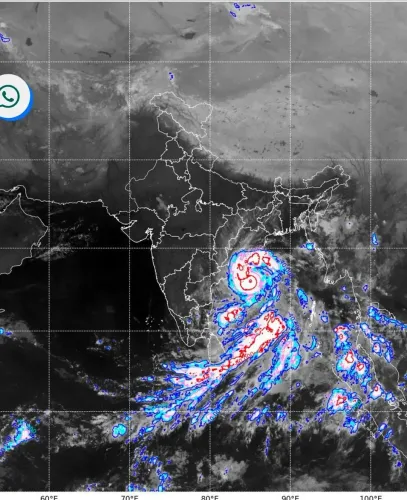
Very severe cyclonic storm Arnab began making landfall on the Andhra Pradesh coast on 28 October , centred approximately 30 km from Narsapuram .
The storm is expected to fully cross the coast by Wednesday afternoon , according to APSDMA .
No fatalities have been reported; trees and electric poles were uprooted and crop damage recorded across coastal districts.
Low-lying areas in Dr BR Ambedkar Konaseema district were inundated; Godavari districts are the worst affected.
Chandrababu Naidu coordinated relief through a teleconference with 32,000 personnel and directed NDRF and SDRF teams to remain on standby.
Officials were directed to clear roads within two hours , restore power once winds ease, and communicate damage assessments to the Central government .
Very severe cyclonic storm Arnab began making landfall along the Andhra Pradesh coast in the early hours of Wednesday, 28 October, with the Andhra Pradesh State Disaster Management Authority (APSDMA) stating that the crossing process was ongoing and expected to be fully complete by afternoon. As of Wednesday morning, the storm's centre was located approximately 30 km from Narsapuram. No fatalities have been reported so far, though significant infrastructure and crop damage has been recorded across multiple coastal districts.
Ground Situation Across Affected Districts
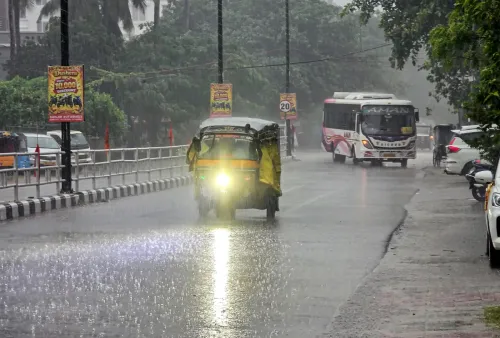
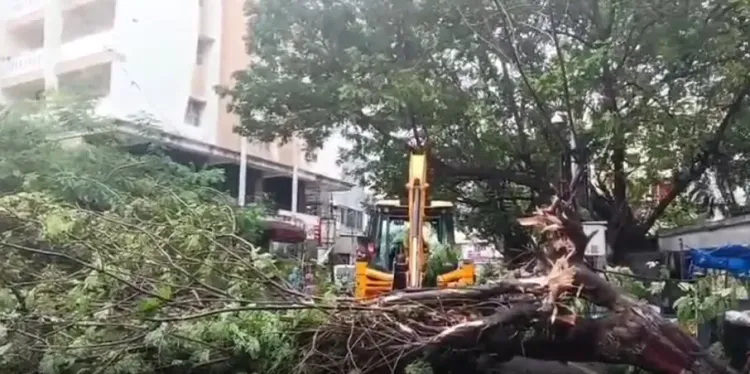
Heavy rainfall accompanied by gusty winds lashed the undivided districts of Srikakulam, Visakhapatnam, East Godavari, West Godavari, and Krishna throughout the morning. Preliminary reports indicate the Godavari districts bore the brunt of the storm's impact. Low-lying areas in Dr BR Ambedkar Konaseema district were inundated, and fallen trees disrupted electricity supply across several localities. Uprooted trees and electric poles were reported widely, alongside preliminary crop damage assessments from affected areas.
Government Response and Relief Operations
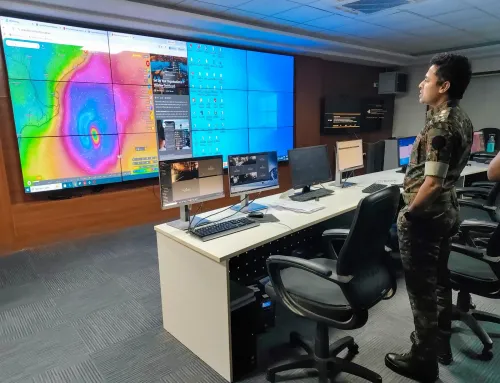
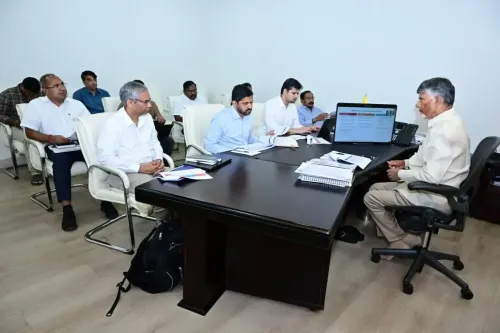
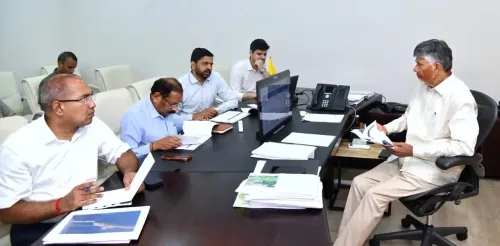
APSDMA Managing Director Prakhar Jain urged residents to remain on alert, noting that the landfall process had been ongoing for approximately two hours. Chief Minister N. Chandrababu Naidu held an extensive teleconference involving 32,000 personnel, ranging from District Collectors down to field-level staff, to assess the cyclone's impact and coordinate relief operations. He also convened a special review meeting with senior officials from the departments of Electricity, Irrigation, Roads and Buildings (R&B), Agriculture, Urban Development, and Panchayat Raj.
Chief Minister Naidu's Key Directives
Chief Minister Naidu directed officials to clear trees fallen on roads within two hours and to remove obstructions on national highways in real time. Power restoration in affected areas was ordered as soon as high-velocity winds subside. He instructed that NDRF and SDRF teams be kept on standby, and that cyclone shelters maintain adequate supplies of food, drinking water, and medical facilities without interruption.
Naidu also directed officials to prepare preliminary estimates of crop damage and to implement measures protecting horticultural crops and preventing breaches in embankments of ponds and canals. He instructed that the state government's response be formally communicated to the Central government. The Chief Minister credited advance preparedness for the absence of casualties, saying: 'It is due to the proactive measures taken by the administrative machinery that we have been able to prevent any loss of life. Efforts must be made to minimise property damage as much as possible.'
He also highlighted the 'Mana Mitra' public grievance system, urging officials to ensure it is fully utilised so cyclone-affected residents can directly flag concerns to the government.
What Happens Next
The storm is expected to complete its crossing of the Andhra Pradesh coast by Wednesday afternoon, after which wind speeds should progressively ease, allowing power restoration and road clearance to accelerate. Authorities are continuing to monitor embankment integrity across the Godavari basin, where inundation risk remains elevated. Damage assessment teams are expected to submit preliminary crop-loss reports shortly after the storm passes, which will inform any central relief request.
Point of View
Which was rebuilt after the 2014 storm killed over 60 people. Yet the emphasis on 'no loss of life' in official communication risks crowding out the economic damage story: coastal Andhra's agricultural hinterland, particularly its banana and paddy belts in the Godavari districts, is acutely vulnerable to even brief inundation. The real accountability question emerges in the coming weeks — whether preliminary crop-loss estimates translate into timely central relief disbursements, or whether farmers are left navigating a slow bureaucratic process while the news cycle moves on.
NationPress
28 Oct 2026
Frequently Asked Questions
Where did Cyclone Arnab make landfall?
Cyclone Arnab made landfall along the Andhra Pradesh coast on 28 October 2026, with its centre located approximately 30 km from Narsapuram in the West Godavari region. The storm was categorised as a very severe cyclonic storm by the Andhra Pradesh State Disaster Management Authority.
Are there any casualties from Cyclone Arnab?
No fatalities had been reported as of Wednesday morning, according to state authorities. Chief Minister N. Chandrababu Naidu attributed the zero-death outcome to proactive measures taken by the administrative machinery deployed ahead of the storm.
Which districts in Andhra Pradesh are most affected by Cyclone Arnab?
The Godavari districts — East Godavari and West Godavari — are reported to be the worst affected, with low-lying areas in Dr BR Ambedkar Konaseema district inundated. Heavy rain and gusty winds also struck Srikakulam, Visakhapatnam, and Krishna districts.
What is the government doing in response to Cyclone Arnab?
Chief Minister N. Chandrababu Naidu held a teleconference with 32,000 personnel and a special review meeting with officials from Electricity, Irrigation, Agriculture, and other departments. He directed NDRF and SDRF teams to remain on standby, ordered road clearance within two hours, and instructed that cyclone shelters be stocked with food, water, and medical supplies.
When will Cyclone Arnab fully cross the Andhra Pradesh coast?
The APSDMA said the cyclone was expected to fully cross the Andhra Pradesh coast by Wednesday afternoon, 28 October. The landfall process had already been under way for approximately two hours as of the Wednesday morning briefing.