Mahua Moitra accuses ECI of lies in SC affidavit

Synopsis
TMC MP Mahua Moitra publicly accused the Election Commission of India of 'lies and omissions' in its Supreme Court affidavit on 28 October 2026, sharing a video and urging public scrutiny of the poll body's submission — escalating a long-running opposition battle over electoral transparency.
Key Takeaways
TMC MP Mahua Moitra posted on X on 28 October 2026 accusing the Election Commission of India of 'lies and omissions' in its Supreme Court affidavit.
She shared a video urging the public to examine the poll body's court submission directly.
The Election Commission of India has filed multiple affidavits before the Supreme Court on electoral roll and EVM-related matters across previous election cycles.
Opposition challenges to ECI's court submissions form a recurring pattern in Indian electoral litigation.
The next Supreme Court hearing date on the underlying petition is being watched by legal and political observers.
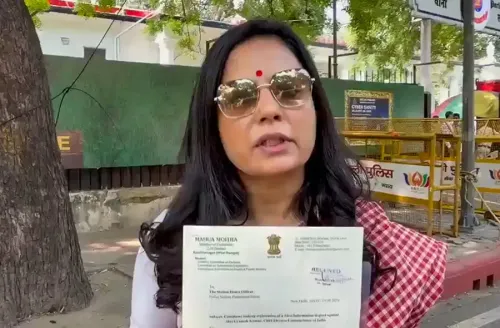
A direct challenge to the Election Commission of India landed in public view on Wednesday, 28 October 2026, when TMC MP Mahua Moitra posted a video on X urging followers to examine what she described as 'lies and omissions' in the poll body's affidavit before the Supreme Court of India.
Moitra's post read: 'Please watch this to understand the extent of @ECISVEEP's lies and omissions in its SC affidavit.' The framing was pointed — not a parliamentary question, not a press release, but a public call to scrutinise the constitutional body's own submission to the apex court.
What the ECI's Supreme Court affidavit row is about
The Election Commission of India has a long record of placing affidavits before the Supreme Court on matters ranging from electoral roll revisions to EVM-related petitions — proceedings that stretch back through multiple Lok Sabha and state assembly cycles between 2019 and 2024. Opposition parties have, in parallel, built an equally consistent record of contesting the accuracy of those submissions in court and in public.
Moitra, a Lok Sabha MP from Krishnanagar, West Bengal, has a history of raising institutional accountability questions in Parliament and on social media. Her accusation — that the commission's affidavit contains deliberate omissions — places the dispute squarely in the realm of procedural transparency, a pressure point that has animated opposition litigation against the ECI for years.
Opposition scrutiny of ECI's court submissions — a recurring flashpoint
The pattern here is familiar but the stakes are not small. When an opposition MP publicly calls a constitutional body's sworn court submission a document of 'lies,' it signals that the underlying petition — and any counter-affidavits or orders that follow — will be watched closely. The next Supreme Court hearing date on the relevant petition becomes a focal point for both legal and political observers.
What makes this moment distinct is the medium: by posting a video and directing her audience to watch it, Moitra is attempting to move the evidentiary argument out of the courtroom and into the public square — a strategy increasingly common among opposition figures navigating a media environment where legal filings rarely trend on their own.
Point of View
If it gains traction, could intensify pressure on the commission ahead of any upcoming electoral cycle. This is less a departure from precedent than an escalation of it: opposition parties have consistently challenged ECI affidavit accuracy since at least 2019, but the directness of the language here raises the political temperature. How the Supreme Court responds — or whether the ECI files a counter-affidavit — will determine whether this remains a political flashpoint or becomes a consequential legal moment.
NationPress
28 Oct 2026
Frequently Asked Questions
What did Mahua Moitra say about the Election Commission's Supreme Court affidavit?
On 28 October 2026, Mahua Moitra posted on X accusing the Election Commission of India of 'lies and omissions' in its affidavit filed before the Supreme Court, and shared a video asking the public to examine the submission.
Why is the Election Commission filing affidavits in the Supreme Court?
The Election Commission of India has regularly submitted affidavits to the Supreme Court in cases concerning electoral roll management, EVM-related petitions, and procedural transparency — a practice spanning multiple election cycles from 2019 onward.
Who is Mahua Moitra?
Mahua Moitra is a Trinamool Congress (TMC) Lok Sabha MP from Krishnanagar, West Bengal, known for raising institutional accountability questions in Parliament and on social media.
What happens next in the ECI Supreme Court case?
The next Supreme Court hearing date on the underlying petition is the key moment to watch; the court could call for additional affidavits or pass orders directing the Election Commission to respond to the specific allegations.
Has the opposition challenged ECI affidavits in the Supreme Court before?
Yes. Opposition parties have repeatedly questioned the accuracy of Election Commission submissions before the Supreme Court in electoral roll and EVM-related cases, forming a consistent pattern of litigation from 2019 through 2024.