Arunachal CMO Lauds Army's Mission Sainik School Push

Synopsis
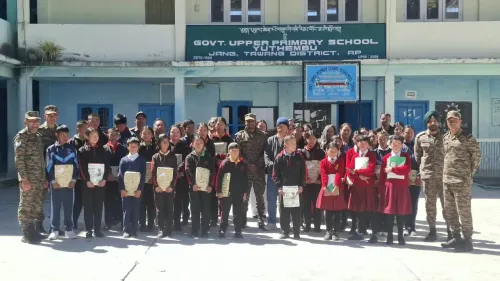
The Chief Minister's Office of Arunachal Pradesh praised the Gajraj Corps's 'Sela Warriors' batch under Mission Sainik School, with 59 tribal youth already admitted to Sainik Schools and 75 more preparing for AISSEE-2027, spotlighting the Indian Army's sustained educational outreach on the LAC frontier.
Key Takeaways
59 students from tribal communities in Arunachal Pradesh have secured Sainik School admissions through the Gajraj Corps's Mission Sainik School programme.
75 aspirants are currently being coached and prepared for the AISSEE-2027 examination under the same initiative.
The programme is branded 'Sela Warriors' , named after the Sela Pass in Tawang district, within the Gajraj Corps's operational area.
Gajraj Corps , headquartered in Tezpur, Assam, has run sustained civic-action and educational outreach in Arunachal Pradesh and Assam since the 1990s.
Sainik Schools were established from 1961 under the Ministry of Defence to provide military-oriented residential education to youth from rural and border areas.
The Chief Minister's Office of Arunachal Pradesh extended 'sincere gratitude' to the Indian Army, marking a notable public acknowledgment from the state government.
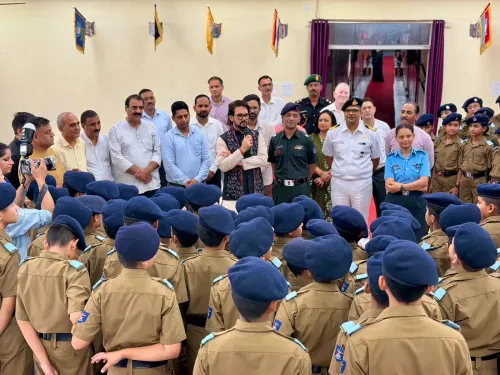
Along the high-altitude frontiers of Arunachal Pradesh, the Indian Army's Gajraj Corps is doing something that goes well beyond patrolling the Line of Actual Control — it is turning tribal youth into Sainik School aspirants. The Chief Minister's Office of Arunachal Pradesh on Wednesday, October 28, 2026, publicly commended the Corps's 'Sela Warriors' initiative under Mission Sainik School, spotlighting a quiet but consequential effort to open defence-oriented education to border-district communities.
The CMO's post flagged two concrete milestones: 59 students have already secured admissions to Sainik Schools through the programme, while 75 aspirants are currently in active preparation for the AISSEE-2027 — the All India Sainik Schools Entrance Examination. The CMO closed with 'Sincere gratitude to the Indian Army,' a rare and pointed acknowledgment from a state government to a military formation for civilian educational work.
Sela Warriors: Branding a Border-District Mission
The 'Sela Warriors' name carries unmistakable geography — a nod to the Sela Pass, the 13,700-foot high-altitude gateway in Arunachal's Tawang district that sits squarely in the Gajraj Corps's area of responsibility. By anchoring the programme to local terrain and identity, the Army has given tribal youth a brand that resonates with where they live, not a bureaucratic scheme label from a distant capital.
Gajraj Corps, headquartered in Tezpur, Assam, holds operational responsibility for the Arunachal and Assam sectors along the LAC. Its civic-action portfolio — educational outreach, medical camps, infrastructure support — has been a sustained feature of the Army's Northeast presence since the 1990s, designed to complement thin state-government infrastructure in remote frontier districts.
Sainik Schools: Six Decades of Border-Youth Policy
Sainik Schools were established from 1961 onward under the Ministry of Defence, conceived as residential institutions blending rigorous academics with a military ethos — and explicitly intended to bring boys from rural and border areas into the officer pipeline. The AISSEE is the single national gateway into that system. For tribal youth in Arunachal's remote districts, cracking AISSEE without structured coaching is a steep ask; Mission Sainik School exists precisely to close that gap.
The broader pattern is deliberate: the Indian Army has long used educational and civic-action programmes in the Northeast as a tool of national integration — building trust, building futures, and quietly building a pipeline of young people from frontier communities who carry both local identity and national institutional exposure.
With the AISSEE-2027 cycle now in view for the 75 current aspirants, the next milestone is the examination result itself — and whether the Army and the state government move to expand the Sela Warriors coaching model to additional districts across Arunachal. Frontier education, it turns out, is also a form of border management.
Point of View
A domain that sits at the intersection of defence policy, tribal welfare, and national integration. Mission Sainik School is, in effect, a quiet force-multiplier: it extends the reach of the Ministry of Defence's 1961 Sainik School framework into communities that state institutions have historically under-served. For the Army, the programme reinforces a long-standing Northeast strategy of building institutional trust along the LAC through developmental presence. The metric to watch is whether the state formalises a partnership to scale the Sela Warriors model district-by-district — converting a Corps-level initiative into a replicable border-state policy.
NationPress
28 Oct 2026
Frequently Asked Questions
What is Mission Sainik School in Arunachal Pradesh?
Mission Sainik School is an Indian Army-run preparatory coaching programme that trains tribal youth from border districts of Arunachal Pradesh for the All India Sainik Schools Entrance Examination (AISSEE), helping them gain admission to Sainik Schools under the Ministry of Defence.
Who are the Sela Warriors?
Sela Warriors is the local branding used by Gajraj Corps of the Indian Army for its Mission Sainik School coaching batches in Arunachal Pradesh, named after the Sela Pass in Tawang district.
What is the AISSEE exam?
AISSEE stands for All India Sainik Schools Entrance Examination. It is the national-level entrance test conducted annually for admission into the network of Sainik Schools, which are residential institutions established from 1961 under the Ministry of Defence.
What is Gajraj Corps and where is it based?
Gajraj Corps is an Indian Army formation headquartered in Tezpur, Assam, responsible for the Arunachal Pradesh and Assam sectors along the Line of Actual Control. It runs civic-action and educational programmes in the region.
How many students have benefited from Mission Sainik School in Arunachal?
According to the Chief Minister's Office of Arunachal Pradesh, 59 students have already secured Sainik School admissions through the programme, while 75 aspirants are currently preparing for AISSEE-2027.