Mahua Moitra files complaint against CEC Gyanesh Kumar over SIR electoral irregularities
Synopsis
Mahua Moitra has taken her fight over the Election Commission's Special Intensive Revision process to a police station — filing a complaint seeking an FIR against CEC Gyanesh Kumar himself. She invokes forgery provisions of the Bharatiya Nyaya Sanhita, alleging the CEC issued communications in the Commission's name without the other two Commissioners' approval, potentially disenfranchising genuine voters.
Key Takeaways
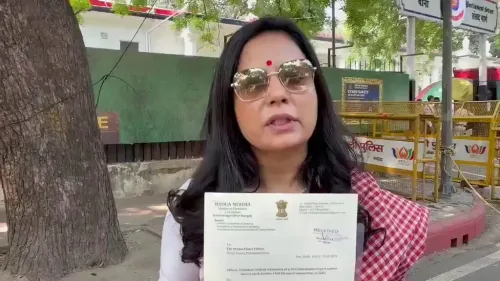
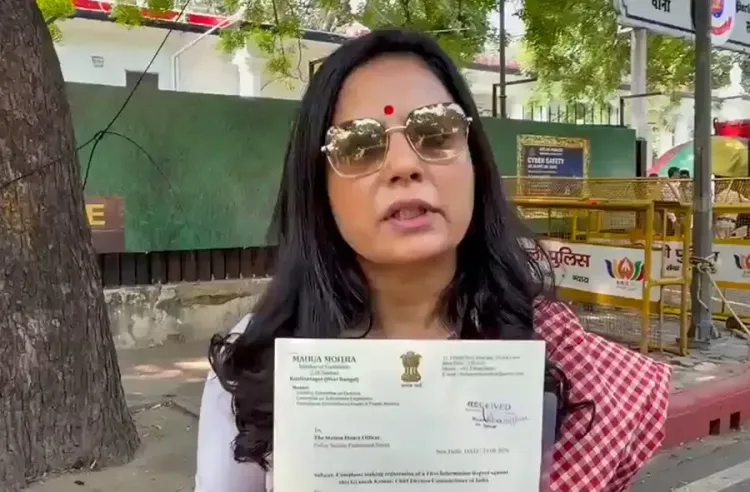
Mahua Moitra (TMC, Krishnanagar) filed a complaint at Parliament Street Police Station, New Delhi on 24 September 2026 against CEC Gyanesh Kumar .
She seeks registration of an FIR and investigation into alleged irregularities in the Special Intensive Revision (SIR) exercise.
The complaint invokes Sections 335, 336, and 340(2) of the Bharatiya Nyaya Sanhita , alleging potential forgery of Commission communications and electoral rolls.
Moitra alleged Form 6 under the Registration of Electors Rules, 1960, was altered without corresponding rule amendments.
She alleged that the two Election Commissioners were excluded from key decisions and denied oversight of electoral rolls .
The Election Commission of India had not issued an immediate response at the time of reporting.
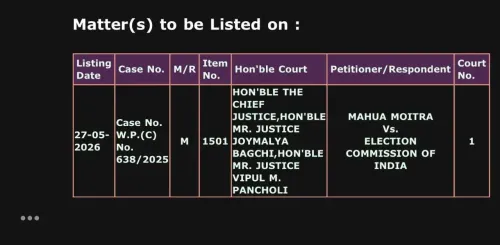
Trinamool Congress (TMC) MP Mahua Moitra on Thursday, 24 September 2026, lodged a formal complaint at Delhi's Parliament Street Police Station against Chief Election Commissioner (CEC) Gyanesh Kumar, seeking registration of an FIR and a probe into alleged irregularities tied to the Election Commission of India's Special Intensive Revision (SIR) exercise. The complaint, addressed to the Station House Officer (SHO), marks a significant escalation in opposition criticism of the poll body's functioning.
What Moitra's Complaint Alleges
In her letter, the Krishnanagar MP urged police to register a case, investigate the alleged offences, ascertain the role of all individuals involved, and examine relevant witnesses — including the two Election Commissioners — while securing evidence to prevent its alleged destruction or tampering. She also sought a free copy of the FIR upon its registration.
Moitra cited media reports claiming that the two Election Commissioners had repeatedly objected to decisions and orders allegedly being taken without their knowledge and contrary to their advice. She further alleged that the functioning of the Election Commission had deviated from constitutional and legal norms.
Core Legal Arguments in the Complaint
The complaint invokes provisions of the Bharatiya Nyaya Sanhita (BNS), arguing that communications purportedly issued in the name of the Election Commission without the full Commission's approval could constitute a false document under Section 335, forgery under Section 336, and use of a forged document as genuine under Section 340(2).
Moitra's complaint states: 'The Chief Election Commissioner has no power to act for the Commission against the recorded opinion of both his colleagues, and none whatsoever to issue communications in its name which it has never approved.'
She additionally alleged that every entry in the electoral roll deliberately marking a living and resident elector as absent, shifted or dead — without legally mandated verification — amounts to forgery of a public register and a distinct offence under Section 32 of the Representation of the People Act, 1950.
Procedural and Administrative Concerns Raised
Among the specific procedural grievances, Moitra alleged that Form 6 under the Registration of Electors Rules, 1960, had been altered to require voters to establish their parentage through earlier electoral rolls, without corresponding amendments to the rules themselves. She also claimed that state-level election officials were reportedly denied complete access to electoral rolls, and that appeals were filed against orders of judicial officers directing the inclusion of certain electors — allegedly without proper authority.
Concerns were also raised over the alleged reallocation of responsibilities within the Commission, including the removal of oversight of electoral rolls from the two Election Commissioners.
The Broader Political Context
The complaint comes amid a sustained opposition campaign questioning the independence and internal functioning of the Election Commission of India. Critics, including several Opposition-ruled state governments, have previously raised concerns about the SIR process, arguing it risks disenfranchising genuine voters. Notably, this is not the first time the TMC has raised procedural objections to electoral roll revision exercises — the party has consistently contested such drives in West Bengal.
Moitra argued that any actions resulting in the alleged disenfranchisement of genuine voters could not be considered part of the CEC's official duties, potentially exposing Gyanesh Kumar to personal legal liability. The Election Commission had not issued an immediate response to the complaint at the time of this report.
Whether Delhi Police registers the FIR or declines — citing the quasi-judicial or constitutional status of the CEC — is expected to become the next flashpoint in what is shaping up to be a prolonged legal and political battle over India's electoral machinery.
Point of View
Not just political theatre — by invoking forgery provisions of the Bharatiya Nyaya Sanhita against the CEC personally, she is attempting to pierce constitutional immunity and force Delhi Police into an uncomfortable position: register the FIR and embarrass the poll body, or decline and hand the Opposition a fresh narrative about institutional protection of power. The deeper issue being surfaced — whether the CEC can act unilaterally against the recorded opinion of both colleagues — is a genuine constitutional question that the Supreme Court has not conclusively settled. If the allegations about SIR-driven voter deletions are substantiated, the electoral consequences could be far-reaching, particularly in states heading to polls. Mainstream coverage has focused on the political drama; the real story is the structural crisis within a constitutional body that is supposed to be above this kind of fracture.
NationPress
24 Sept 2026
Frequently Asked Questions
What is the complaint Mahua Moitra filed against CEC Gyanesh Kumar?
Mahua Moitra lodged a complaint at Parliament Street Police Station in New Delhi on 24 September 2026 seeking an FIR against Chief Election Commissioner Gyanesh Kumar over alleged irregularities in the Election Commission's Special Intensive Revision (SIR) exercise. She alleges the CEC issued communications in the Commission's name without the approval of the other two Election Commissioners and that the SIR process may have resulted in unlawful deletions from electoral rolls.
What is the Special Intensive Revision (SIR) process at the centre of the controversy?
The Special Intensive Revision (SIR) is an exercise conducted by the Election Commission of India to update and clean up electoral rolls by identifying and removing entries for deceased, shifted, or absent voters. Opposition parties, including the Trinamool Congress, have alleged that the current round of SIR has led to the wrongful deletion of genuine voters from rolls without the legally mandated verification process.
Which legal provisions has Mahua Moitra invoked in her complaint?
Moitra's complaint invokes Sections 335, 336, and 340(2) of the Bharatiya Nyaya Sanhita (BNS), relating to false documents, forgery, and use of forged documents as genuine. She also cites Section 32 of the Representation of the People Act, 1950, which makes certain breaches of official duty in connection with electoral roll preparation a distinct offence.
What procedural irregularities has Moitra alleged inside the Election Commission?
Moitra alleged that decisions and orders were taken without the knowledge of the two Election Commissioners and contrary to their advice, that oversight of electoral rolls was removed from them, that Form 6 under the Registration of Electors Rules, 1960 was altered without corresponding rule amendments, and that appeals were filed against judicial orders directing voter inclusion without proper authority.
What happens next after the complaint is filed?
Delhi Police must now decide whether to register an FIR against the CEC or decline on grounds such as the constitutional status of the office. Either outcome is likely to trigger fresh legal and political battles. The Election Commission had not issued an immediate response, and the matter may eventually be tested in higher courts.