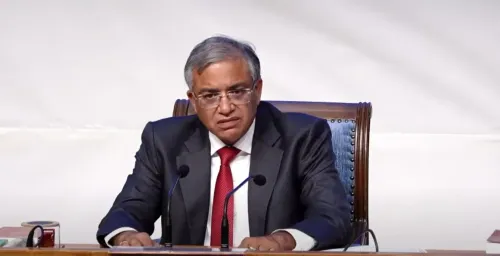
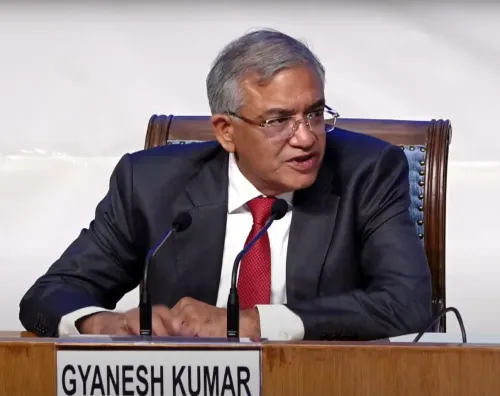
CPI(M) demands Gyanesh Kumar quit, calls for ECI reform over SIR row
Synopsis
The CPI(M) politburo has called for CEC Gyanesh Kumar's immediate resignation, citing media disclosures that two of three Election Commissioners formally objected to key SIR decisions — and that Kumar overrode them. With the Supreme Court also flagging concerns about 'mechanical' notices, the ECI faces a rare convergence of judicial scrutiny, internal dissent, and opposition pressure.
Key Takeaways
CPI(M) politburo on 23 September demanded the resignation of CEC Gyanesh Kumar over the Special Intensive Revision (SIR) of electoral rolls controversy.
Reports indicate two of the three Election Commissioners recorded formal objections to SIR-related decisions, which the CEC allegedly overrode.
The Supreme Court has separately flagged over-reliance on technology and 'mechanical' issuance of notices under the SIR process.
CPI(M) demanded an immediate halt to the SIR and scrapping of current legislation governing Election Commissioner appointments.
The party called for a new selection committee comprising the Prime Minister , Leader of the Opposition , and Chief Justice of India , in line with Supreme Court guidelines.
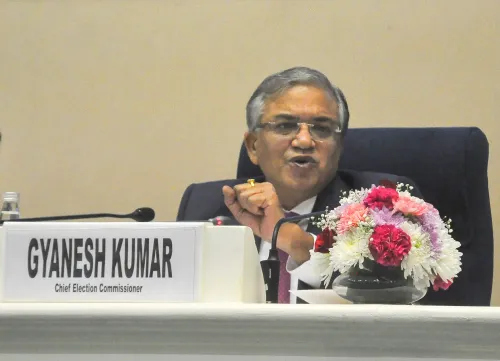
The politburo of the Communist Party of India (Marxist) [CPI(M)] on Wednesday, 23 September demanded the resignation of Chief Election Commissioner (CEC) Gyanesh Kumar, asserting that recent media disclosures surrounding the Special Intensive Revision (SIR) of electoral rolls had placed the integrity of the Election Commission of India (ECI) under serious question. The statement, issued from Kolkata, said Kumar had no moral right to continue in office.
What the Media Disclosures Revealed
According to the CPI(M) politburo, reports indicate that two of the three Election Commissioners formally recorded objections to several decisions relating to electoral-roll revision and the SIR process. The party argued that under law, all three Election Commissioners hold equal standing and that differences must be resolved by majority or unanimity. CEC Gyanesh Kumar, however, allegedly overrode his colleagues' objections and imposed his own views unilaterally — a charge the party described as a fundamental breach of institutional protocol.
The politburo further claimed that the CEC had 'falsely maintained' that the SIR process was transparent and decentralised. 'It is now clear that over the past few months the entire system has been centralised to the extent that it obscures who is actually taking decisions,' the statement read.
Supreme Court Has Also Flagged Concerns
Notably, the CPI(M)'s criticism arrived alongside the Supreme Court independently flagging what it described as an 'over-reliance on technology' and the 'mechanical' issuance of notices under the SIR framework. The party cited this judicial observation as further validation of its longstanding concerns about the process — concerns it said were shared by other opposition parties and civil society organisations since the SIR was first initiated.
The issues raised by the two dissenting Election Commissioners, the politburo argued, go well beyond the SIR exercise itself, touching on institutional integrity, democratic functioning of the ECI, transparency in the electoral process, over-centralisation, and the protection of universal adult franchise.
CPI(M)'s Demands: Halt, Reform, Restructure
The CPI(M) called for an immediate halt to the SIR process and laid out a broader reform agenda for the ECI. It demanded that existing legislation governing the appointment of Election Commissioners be scrapped and replaced with a new law incorporating the Supreme Court's guidelines for a selection committee comprising the Prime Minister, the Leader of the Opposition, and the Chief Justice of India.
'Transparency in the appointment of Election Commissioners has to be ensured by scrapping the concerned legislation and enacting a new one by accepting the Supreme Court guidelines,' the statement stated.
Accountability and Institutional Credibility at Stake
'The credibility of the Election Commission as an unbiased institution is at stake. People have lost confidence in a compromised Election Commission, for which CEC Gyanesh Kumar should be held accountable. He cannot continue in office any longer,' the politburo declared.
This is not the first time opposition parties have raised concerns about the ECI's functioning under the current leadership — critics argue that the institution's perceived independence has been eroding steadily. With the Supreme Court itself weighing in and internal dissent now reportedly documented, pressure on the commission is likely to intensify in the days ahead.
Point of View
It is the reported internal dissent within the ECI itself. If two of three Election Commissioners did formally object to SIR decisions and were overridden, that is an institutional rupture that goes far beyond partisan noise. The Supreme Court's independent flagging of the same process adds judicial weight that is harder to dismiss as opposition rhetoric. India's electoral credibility rests substantially on the perceived independence of the ECI; a perception of centralisation at the top, compounded by internal dissent, is corrosive in ways that a single election result cannot easily repair. The demand to revive the Supreme Court's selection-committee framework — rejected by the government through legislation — is likely to resurface in court if the pressure escalates.
NationPress
23 Sept 2026
Frequently Asked Questions
Why is CPI(M) demanding Gyanesh Kumar's resignation?
The CPI(M) politburo says media disclosures revealed that CEC Gyanesh Kumar overrode formal objections by two of the three Election Commissioners on key SIR decisions, violating the principle of equal standing among commissioners. The party argues this makes him unfit to continue in office.
What is the Special Intensive Revision (SIR) of electoral rolls?
The SIR is a process initiated by the Election Commission of India to revise and update electoral rolls, including adding or removing voters. It has drawn controversy over allegations of centralised decision-making, lack of transparency, and the 'mechanical' issuance of notices, a concern also flagged by the Supreme Court.
What reforms has CPI(M) demanded for the Election Commission?
The party has demanded an immediate halt to the SIR process, scrapping of the current legislation on Election Commissioner appointments, and enactment of a new law that adopts the Supreme Court's guidelines for a selection committee comprising the Prime Minister, Leader of the Opposition, and Chief Justice of India.
Has the Supreme Court weighed in on the SIR controversy?
Yes. The Supreme Court has flagged concerns about the ECI's over-reliance on technology and the 'mechanical' issuance of notices under the SIR framework, lending judicial weight to the broader criticism of the process.
Is this the first time opposition parties have questioned the ECI's functioning?
No. According to the CPI(M), multiple opposition parties and civil society organisations have raised concerns about the SIR process since it was first initiated. The latest media disclosures, however, have sharpened these concerns by surfacing reported internal dissent within the ECI itself.