CPI protest demands CEC Gyanesh Kumar's resignation and SIR rollback
Synopsis
The CPI took its fight against the Special Intensive Revision of electoral rolls to the streets of New Delhi on 27 October, forming a human chain and demanding CEC Gyanesh Kumar's resignation. With the INDIA bloc, student bodies, and women's organisations joining in, and a Supreme Court petition still pending, the battle over the SIR exercise is widening into a broader democratic accountability challenge.
Key Takeaways
CPI held a human chain protest in New Delhi on 27 October against CEC Gyanesh Kumar .
Primary demands: cancellation of the Special Intensive Revision (SIR) of electoral rolls and Kumar's resignation.
Raja alleged nearly 14 crore voters had been removed from electoral rolls.
The party has already filed a petition in the Supreme Court and approached the President of India , with no resolution yet.
Organisations including AISF , AIYF , and NFIW are participating in the nationwide campaign.
Sandosh Kumar alleged the SIR process violated the Electoral Registration Rules, 1960 through mandatory use of Form 6 .
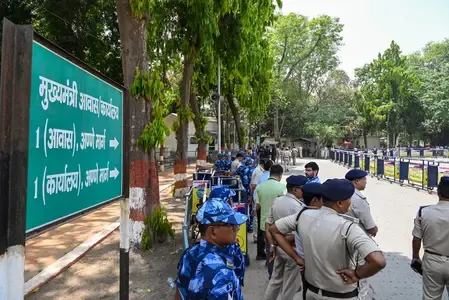
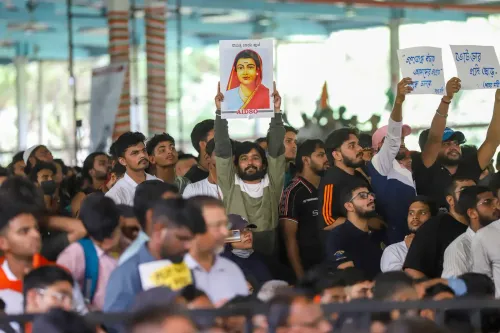
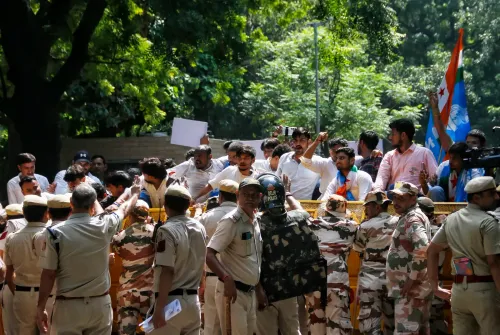
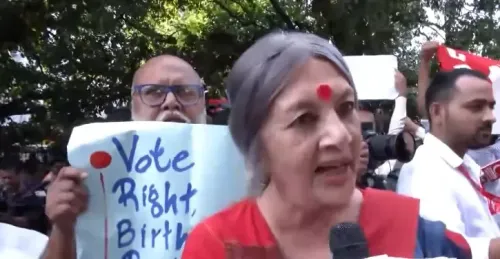
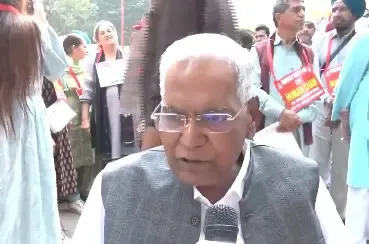
Members of the Communist Party of India (CPI) staged a protest in New Delhi on Tuesday, 27 October, forming a human chain against Chief Election Commissioner (CEC) Gyanesh Kumar and demanding both his resignation and the immediate cancellation of the Special Intensive Revision (SIR) of electoral rolls. The demonstration marks an escalation in the CPI-led campaign that has drawn in multiple constituents of the INDIA bloc and several mass and class organisations across the country.
Key Demands and CPI's Stand
CPI National General Secretary D. Raja stated that the party had been intensifying its campaign nationwide, alleging that genuine concerns over voter deletions remained unaddressed by the Election Commission. 'Our party, as one of the constituents of the INDIA bloc, has been intensifying the campaign all over the country. Our party and other mass organisations and class organisations are also holding protests and organising campaigns across the country, because genuine issues are there,' Raja said.
Raja alleged that Kumar should have resigned but had refused to do so, and confirmed the party had already approached both the President of India and the Supreme Court without seeing any resolution. 'We approached Rashtrapati, we went to the Supreme Court and filed a petition, but nothing is happening. So the only way is to go to the people, mobilise the people, and intensify the campaign and struggle,' he said.
Allegations Against the Election Commission
Raja further alleged that nearly 14 crore voters had been removed from electoral rolls, accusing the Election Commission of India (ECI) of failing to uphold its constitutional mandate. The CPI's decision to form a human chain in the national capital was described as a deliberate escalation in protest strategy, while the party said it would continue to await the Supreme Court's response.
CPI National Secretary Girish Chandra Sharma echoed the same demands, calling for the cancellation of the SIR exercise and the removal of Kumar. 'Cancel SIR and oust Gyanesh Kumar. Based on these two major demands, along with other issues concerning farmers, workers, youth, unemployment, education, and health, these remain the two primary demands causing unrest across the country,' Sharma said. He questioned why Kumar had not resigned despite what he described as widespread public dissatisfaction.
Organisations Joining the Protest
Sharma confirmed that several democratic and Left organisations were participating in the protests, specifically naming the All India Students' Federation (AISF), the All India Youth Federation (AIYF), and the National Federation of Indian Women (NFIW). The breadth of organisational participation signals that the campaign is being coordinated well beyond the CPI's own membership base.
Form 6 Controversy
CPI MP P. Sandosh Kumar raised additional concerns over the use of Form 6 in the electoral roll revision process, arguing that its prescribed fields were mandatory for applications to proceed. 'Form 6 was mandatory because without fulfilling those columns, one cannot proceed forward. So there is no point in saying that it was not mandatory,' he said.
Kumar further argued that whether the decision was taken unanimously or by majority did not alter what he alleged was a violation of the Electoral Registration Rules, 1960. 'So they may have taken this decision unanimously or by majority, but that does not absolve them,' he added. This comes amid broader opposition pressure on the Election Commission over the SIR exercise, which critics argue could disenfranchise genuine voters at scale. All three allegations — voter deletions, Form 6 misuse, and the CEC's conduct — remain contested and have not been adjudicated by the Supreme Court as yet.
With the matter now pending before the apex court and street protests intensifying, the pressure on the Election Commission is set to grow in the days ahead.
Point of View
Not just political rhetoric. The Supreme Court petition, if it proceeds to substantive hearing, will be the real test of whether the SIR exercise violated the Electoral Registration Rules, 1960 — something street protests alone cannot resolve. The Election Commission's silence on the specific Form 6 objections raised by CPI MP Sandosh Kumar is a gap that neither side should allow to remain unaddressed.
NationPress
27 Oct 2026
Frequently Asked Questions
What is the Special Intensive Revision (SIR) of electoral rolls?
The Special Intensive Revision (SIR) is an exercise conducted by the Election Commission of India to update voter lists, involving fresh verification of voter registrations. The CPI and other opposition parties allege it has led to the wrongful deletion of genuine voters from electoral rolls.
Why is the CPI demanding CEC Gyanesh Kumar's resignation?
The CPI alleges that Chief Election Commissioner Gyanesh Kumar has failed to uphold the Election Commission's constitutional mandate, citing what it describes as the removal of nearly 14 crore voters from electoral rolls during the SIR process. The party contends he should have resigned but has refused to do so.
Has the CPI approached any constitutional authority over the SIR issue?
Yes. The CPI has both approached the President of India and filed a petition in the Supreme Court over the SIR exercise. According to party leaders, neither avenue has yet produced a resolution, prompting the shift to street-level protests.
What is the controversy around Form 6 in the SIR process?
CPI MP P. Sandosh Kumar alleges that Form 6, used for new voter registrations, was made mandatory in the SIR process in a manner that violates the Electoral Registration Rules, 1960. He argues that the compulsory nature of its fields effectively blocked applications from proceeding, regardless of whether the decision was taken unanimously or by majority within the Commission.
Which organisations are participating in the CPI-led protests?
Beyond CPI's own membership, the campaign includes other INDIA bloc constituents, the All India Students' Federation (AISF), the All India Youth Federation (AIYF), and the National Federation of Indian Women (NFIW), alongside various other mass and class organisations holding protests across the country.