Odisha CMO calls for corruption-free governance on Vigilance Week

Synopsis
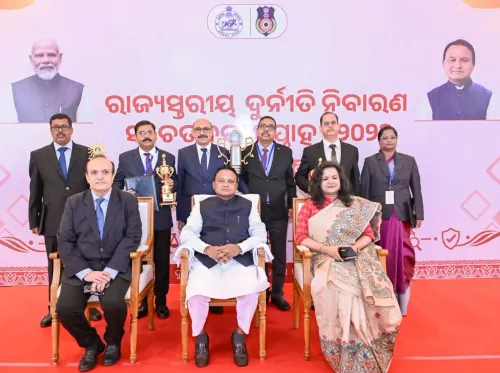
On Vigilance Awareness Week, the Chief Minister's Office of Odisha called on citizens and public servants to embrace integrity, transparency, and accountability as guiding principles, reaffirming the state's commitment to corruption-free governance.
Key Takeaways
The Chief Minister's Office of Odisha posted a Vigilance Awareness Week message on October 27, 2026 .
Vigilance Awareness Week is an annual observance coordinated by India's Central Vigilance Commission to promote integrity in public administration.
The message was issued in both Odia and English , broadening its reach beyond officials to the general public.
The CMO called on all stakeholders to make 'honesty and accountability' guiding principles — framing anti-corruption as a civic value, not just a bureaucratic obligation.
Follow-up state-level vigilance programmes or anti-corruption workshops, if announced, will indicate the depth of the government's commitment.
Integrity does not just happen — it is built, daily, in every office, every transaction, every decision. On the occasion of Vigilance Awareness Week, the Chief Minister's Office of Odisha on Tuesday, October 27, 2026, called on citizens and public servants alike to make honesty and accountability the guiding principles of their lives — and to work together toward a prosperous, transparent, and corruption-free Odisha.
The message, posted in both Odia and English, was unambiguous: 'ଦୁର୍ନୀତିମୁକ୍ତ ଶାସନ ପାଇଁ ନୈତିକତା, ସ୍ୱଚ୍ଛତା ଓ ସାଧୁତା ଅପରିହାର୍ଯ୍ୟ' — 'Integrity, transparency and probity are essential for corruption-free governance.' It is a message that lands with particular weight in a state that has, in recent years, positioned good governance as a political and administrative priority.
Vigilance Awareness Week and its national mandate
Vigilance Awareness Week is an annual observance coordinated by India's Central Vigilance Commission (CVC) — the apex body overseeing vigilance and anti-corruption administration across central and state government offices. The CVC has anchored this week since the early 2000s, using it to push integrity messaging into every tier of public administration, from union ministries down to district offices. The week is designed not merely as a symbolic exercise, but as a trigger for workshops, pledges, and institutional self-audits.
Odisha's CMO participating in this national observance reflects a pattern seen across Indian state governments — using the week to publicly reaffirm their commitment to ethical administration. But the dual-language framing of this message, reaching citizens in Odia as much as English-speaking officials, signals an intent to widen the audience beyond the bureaucracy.
Accountability as a 'guiding principle,' not a policy footnote
The language chosen is deliberate. The CMO's post asks citizens to 'embrace honesty and accountability as our guiding principles' — not just procedural obligations. That framing positions anti-corruption not as a legal compliance issue but as a civic value, one that every resident of Odisha is invited to own. The call to 'work together' broadens responsibility beyond government employees to the public at large.
Indian state governments have increasingly leaned into this participatory framing of anti-corruption governance — recognising that vigilance mechanisms work best when citizens feel empowered to demand transparency, not just wait for the state to deliver it.
Whether Odisha follows this week's messaging with concrete vigilance programmes, anti-corruption workshops, or institutional announcements in the days ahead will be the real test of the commitment on display today.
Point of View
Citizen-facing framing — extending the call beyond the bureaucracy to the broader public. In the context of Odisha's governance trajectory under its current administration, the emphasis on 'probity' and 'accountability as guiding principles' reflects an attempt to embed anti-corruption as a political brand, not merely an administrative exercise. The durability of that commitment will be judged by what institutional action follows the week's close.
NationPress
27 Oct 2026
Frequently Asked Questions
What is Vigilance Awareness Week in India?
Vigilance Awareness Week is an annual observance coordinated by India's Central Vigilance Commission to foster integrity and awareness against corruption across central and state government offices. It has been observed since the early 2000s.
Why did the Odisha CMO post about Vigilance Awareness Week?
The Chief Minister's Office of Odisha used Vigilance Awareness Week to publicly reaffirm the state government's commitment to corruption-free governance and to call on both officials and citizens to embrace honesty and accountability.
What does the Central Vigilance Commission do?
The Central Vigilance Commission (CVC) is India's apex body overseeing vigilance and anti-corruption administration. It coordinates Vigilance Awareness Week annually and advises central government organisations on maintaining integrity in public service.
What is the significance of the message being in both Odia and English?
Posting in both Odia and English signals that the message is directed at the broader Odisha public, not just English-reading bureaucrats or officials — widening the call for civic participation in anti-corruption efforts.
What should I watch for after Vigilance Awareness Week in Odisha?
Any follow-up announcements of state-level vigilance programmes, anti-corruption workshops, or institutional reforms by the Odisha government in the days after the week concludes will indicate how substantive the commitment is beyond the symbolic messaging.