CM Majhi Leads Integrity Oath at Odisha Vigilance Week
Synopsis
Odisha Chief Minister Mohan Charan Majhi administered a corruption-integrity oath at the State-Level Vigilance Awareness Week on 27 October 2026, highlighting record enforcement actions and the launch of an AI-powered Preventive Vigilance Research Wing under the theme 'Probity for Prosperity'.
Key Takeaways
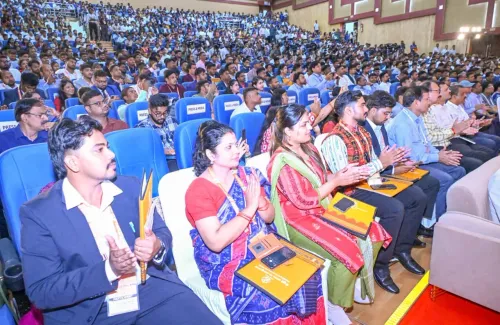
CM Mohan Charan Majhi led an integrity oath for officials and citizens at Lok Seva Bhavan Convention Centre on 27 October 2026 .
The government cited swift investigation timelines, an all-time high conviction rate, and dismissals with pension forfeiture as enforcement milestones — specific figures are pending official data release.
A Preventive Vigilance Research Wing has been established, integrating AI and cyber forensics into Odisha's anti-corruption architecture.
The Janasunani (public grievance hearing) mechanism is positioned as a citizen-facing pillar alongside punitive enforcement.
The 2026 Vigilance Awareness Week theme is 'Probity for Prosperity' , part of a nationwide annual programme run by the Central Vigilance Commission since 1999 .
Staffing and operational outputs of the new Vigilance Wing will be a key indicator of the initiative's long-term impact.
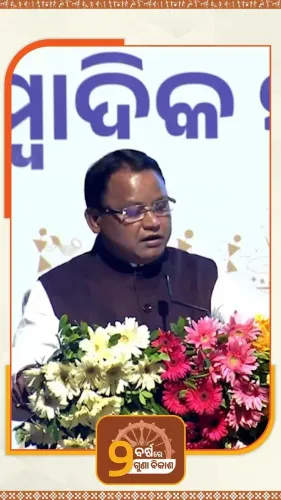
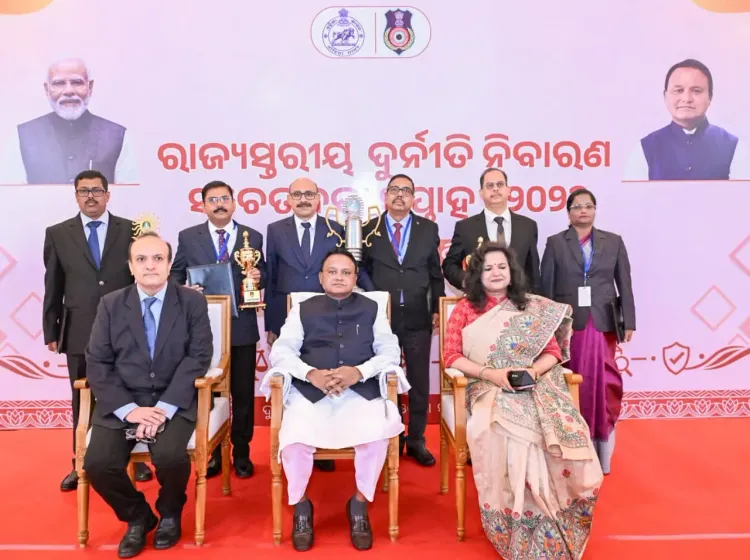
An oath against corruption, administered by Odisha Chief Minister Mohan Charan Majhi to a hall full of officials and citizens — that was the opening act at the State-Level Vigilance Awareness Week programme held at Lok Seva Bhavan Convention Centre on Tuesday, 27 October 2026.
The oath and what it signals
Posting in Odia and English, CM Majhi declared that his government's zero-tolerance policy has moved from slogan to reality. 'ଶୂନ୍ୟ ସହନଶୀଳତା ନୀତି' ('zero-tolerance policy') — the phrase he anchored his remarks on — sets an unambiguous administrative standard: welfare benefits must reach every eligible beneficiary without leakage, and those who obstruct that pipeline face the full force of the law. The integrity oath administered on the floor of the convention centre was designed to make that standard personal, not procedural.
Odisha Vigilance's record enforcement claims
The Chief Minister cited a cluster of enforcement milestones: swift investigation-to-resolution timelines, an all-time high conviction rate, dismissals of corrupt employees alongside pension forfeiture, and active prosecution of offenders. He credited these measures with pushing Odisha Vigilance — the state's dedicated anti-corruption agency — to a leading position nationally. The research background flags that specific figures for conviction rates and dismissal counts cannot be independently verified from public records, so those numbers should be watched for official data releases.
AI, cyber forensics and the new Preventive Vigilance Research Wing
The more forward-looking announcement embedded in Majhi's post is structural. The government says it has approved new posts and established a Preventive Vigilance Research Wing, integrating AI and cyber forensics into the state's anti-graft toolkit. Several Indian states have moved in this direction — deploying algorithmic pattern detection to flag anomalies in procurement and asset declarations — but creating a dedicated research wing institutionalises the capability rather than treating it as a pilot. The staffing and operational scope of that wing will be the thing to watch in the next assembly session.
'Probity for Prosperity' — the year's governing theme
This year's Vigilance Awareness Week carries the theme 'Probity for Prosperity', a phrase Majhi explicitly asked citizens to adopt as a way of life, not just a bureaucratic watchword. The Central Vigilance Commission has run this nationwide programme every year since 1999, but state governments set their own programmatic flavour. Majhi's framing — that clean governance is the prerequisite for prosperity, not a moral add-on — mirrors the broader messaging of BJP-led state administrations that have tied administrative transparency to economic growth narratives. The 'Janasunani' (public grievance hearing) mechanism he mentioned is presented as the citizen-facing complement to enforcement: governance driven by people's voices, not from an ivory tower.
If the Preventive Vigilance Research Wing gets full staffing and its outputs feed into prosecution decisions, Odisha may be offering a replicable template for tech-enabled anti-corruption governance in India. The proof, as always, will be in the case files.
Point of View
The credibility of the zero-tolerance pitch takes a hit. The 'Probity for Prosperity' linkage is strategically shrewd — it makes clean governance a precondition for development, not a separate moral exercise, which is harder for opponents to oppose.
NationPress
27 Oct 2026
Frequently Asked Questions
What is Vigilance Awareness Week in India?
Vigilance Awareness Week is an annual nationwide programme coordinated by the Central Vigilance Commission, observed every year since 1999, to promote integrity and reduce corruption in public administration. States organise their own events under the common national theme.
What is the theme of Vigilance Awareness Week 2026?
The theme for 2026 is 'Probity for Prosperity', which links ethical governance directly to economic and social advancement, asking citizens and officials to adopt integrity as a way of life.
What is the Preventive Vigilance Research Wing in Odisha?
The Preventive Vigilance Research Wing is a newly established unit within the Odisha Vigilance framework, designed to use AI and cyber forensics to detect and prevent corruption proactively, rather than acting only after complaints are filed.
What actions has Odisha taken against corrupt officials?
According to CM Majhi's statement, the measures include dismissal from service, forfeiture of pensions, and active prosecution of corrupt employees and officers, alongside faster resolution of cases. Specific figures have not yet been independently verified.
What is Janasunani in Odisha governance?
'Janasunani' refers to public grievance hearings where citizens can directly raise concerns with officials, a mechanism the Majhi government has positioned as a transparency tool to move decision-making out of bureaucratic silos and closer to communities.