Jal Shakti Minister Paatil chairs key Narmada review meet
Synopsis
Union Jal Shakti Minister C. R. Paatil chaired the 15th RCNCA meeting in New Delhi on 27 October 2026, where chief ministers of Gujarat, Madhya Pradesh, Maharashtra and Rajasthan finalised a resolution of decades-old financial dues linked to the Sardar Sarovar Project, marking a milestone in cooperative federalism.
Key Takeaways
The 15th meeting of the Review Committee of the Narmada Control Authority (RCNCA) was chaired by Union Jal Shakti Minister C.
Paatil in New Delhi on 27 October 2026 .
Chief ministers of all four riparian states — Gujarat, Madhya Pradesh, Maharashtra and Rajasthan — were present and formally agreed to the settlement.
The settlement finalises long-pending financial dues linked to the Sardar Sarovar Project , a dispute tracing back to the 1979 Narmada Water Disputes Tribunal award .
The political groundwork was laid at a 7 July 2026 meeting chaired by Union Home Minister Amit Shah , which produced the initial consensus among the four states.
The agreement includes a mandate for time-bound disbursement of pending payments and effective implementation monitoring through the NCA.
The resolution is framed within the government's 'Viksit Bharat 2047' agenda as a model for resolving complex inter-state disputes through cooperative federalism.
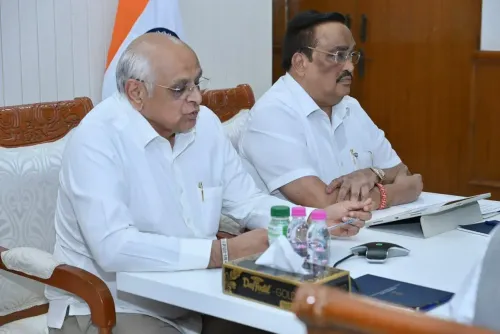
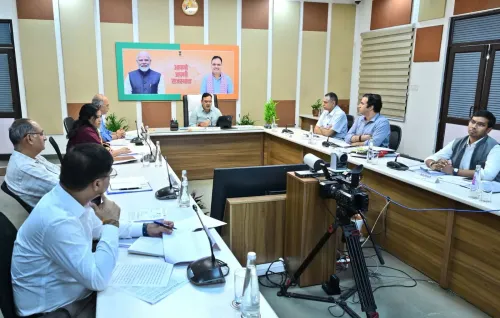
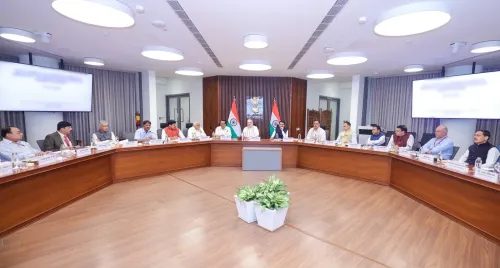
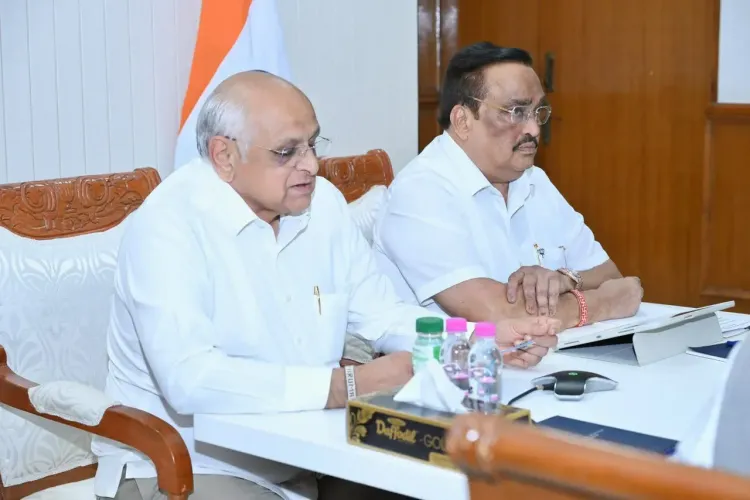
Decades of financial deadlock over India's most ambitious inter-state water project cracked open on Tuesday, 27 October 2026, when Union Jal Shakti Minister C. R. Paatil chaired the 15th meeting of the Review Committee of the Narmada Control Authority (RCNCA) in New Delhi — and walked out with a finalised resolution of long-pending dues tied to the Sardar Sarovar Project.
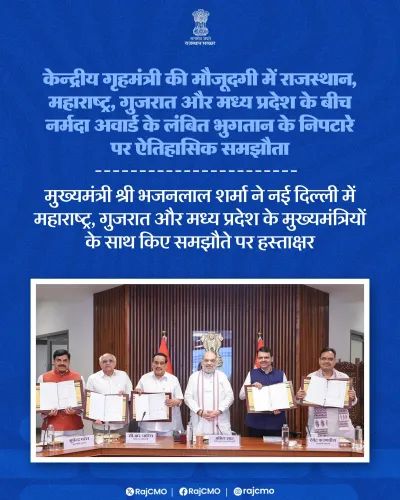
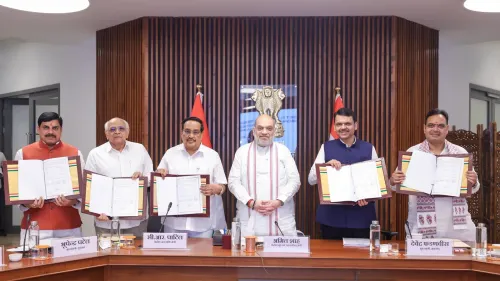
Seated around the same table were the chief ministers of all four riparian states: Gujarat's Bhupendra Patel, Madhya Pradesh's Dr. Mohan Yadav, Maharashtra's Devendra Fadnavis, and Rajasthan's Bhajanlal Sharma. That four state governments — each with its own budget pressures and political calculus — reached a common position on the same day is itself the headline.
From the 1979 tribunal award to a 2026 settlement
The roots of this dispute stretch back to 1969, when the Narmada Water Disputes Tribunal was constituted to arbitrate water shares among the four states. Its final award came in 1979, establishing water allocations and project-implementation obligations — but the financial accounting between states dragged on, unresolved, for decades. The Narmada Control Authority (NCA), the statutory body charged with implementing the tribunal's award, held review committee meetings over the years without fully closing the dues question.
The political unlock came on 7 July 2026, when Union Home and Cooperation Minister Amit Shah convened a meeting of all four chief ministers and brokered a consensus. Today's RCNCA session translated that political agreement into a finalised financial settlement — with an emphasis, Paatil said, on time-bound disbursement and effective implementation of the agreed terms.
Why the Sardar Sarovar Project makes this consequential
The Sardar Sarovar Dam on the Narmada river in Gujarat is not just a structure of steel and concrete. It is the backbone of irrigation, drinking water supply, and hydropower for western India. The Supreme Court cleared the dam's construction to proceed in 2000, enabling subsequent height increases and reservoir filling — but the inter-state cost-sharing arithmetic that underpins the project's operations never fully settled. An unresolved dues ledger meant that project governance always carried a low-grade political fever. That fever, at least on the financial side, appears to have broken today.
Paatil framed the moment in expansive terms on X: 'यह केवल लंबित भुगतान का समाधान नहीं, बल्कि दशकों पुराने मतभेदों को पीछे छोड़कर आपसी विश्वास, सहयोग और साझा विकास के एक नए युग की शुरुआत है' ('This is not merely a resolution of pending payments, but the beginning of a new era of mutual trust, cooperation and shared development, leaving behind decades of differences'). He also invoked the government's 'Viksit Bharat 2047' development agenda, positioning the settlement as proof that persistent inter-state disputes can be permanently resolved through dialogue and cooperative federalism.
Narmada water as instrument of prosperity, not dispute
The minister closed with a declaration of intent that doubles as a political commitment: that the waters of the Maa Narmada should be a vehicle for the prosperity of all four states, for farmers' welfare, and for national development — not a source of litigation. With payments now on a time-bound schedule and all four chief ministers publicly aligned, the immediate test will be whether the treasury transfers actually flow on schedule and whether the NCA's follow-up meetings translate agreement into operational change on the ground.
Four states. One table. One ledger finally closed. The real work of delivery starts now.
Point of View
It demonstrates that shared party affiliation can be leveraged to cut through institutional inertia that purely technocratic mechanisms could not. The framing around 'Viksit Bharat 2047' is deliberate — it converts a legacy infrastructure liability into a forward-looking development narrative ahead of Gujarat assembly politics and national water-policy debates. The real test, however, is execution: time-bound payment schedules have been agreed before and slipped; sustained NCA oversight will determine whether today's headlines translate into actual project-level change. This also sets a template — and a pressure point — for other unresolved inter-state water disputes, notably on the Cauvery and Mahanadi, where the Centre has been more cautious.
NationPress
27 Oct 2026
Frequently Asked Questions
What was decided at the 15th RCNCA meeting on 27 October 2026?
The meeting, chaired by Union Jal Shakti Minister C. R. Paatil in New Delhi, finalised the resolution of decades-old pending financial dues related to the Sardar Sarovar Project, with the chief ministers of Gujarat, Madhya Pradesh, Maharashtra and Rajasthan all present and agreeing to the settlement terms.
What is the Narmada Control Authority and what does it do?
The Narmada Control Authority (NCA) is a statutory body set up to implement the Narmada Water Disputes Tribunal's 1979 award. It coordinates water allocation, project operations and cost-sharing obligations among the four riparian states: Gujarat, Madhya Pradesh, Maharashtra and Rajasthan.
Why have Sardar Sarovar Project dues been pending for so long?
The Narmada Water Disputes Tribunal delivered its final award in 1979 establishing how project costs and water shares would be divided among the four states, but the detailed financial accounting between governments dragged on unresolved for decades due to differing state-level interpretations and changing political equations.
What role did Amit Shah play in resolving the Narmada dispute?
Union Home and Cooperation Minister Amit Shah chaired a critical meeting on 7 July 2026 with the chief ministers of all four riparian states, where a political consensus was reached. Today's RCNCA meeting built on that agreement to give the financial settlement its final form.
How does the Sardar Sarovar settlement connect to 'Viksit Bharat 2047'?
The central government has positioned the resolution as evidence that cooperative federalism and political will can unlock long-stalled development infrastructure. Closing the Sardar Sarovar dues question is meant to free up the project's full operational potential — irrigation, hydropower and drinking water — contributing to the government's broader 2047 development goals.