Fadnavis defends Karjat pumped storage project amid green backlash
Synopsis
Maharashtra CM Fadnavis is staking his government's green credentials on a project that requires felling trees in the ecologically sensitive Western Ghats. His argument: a 3,000 MW pumped storage facility that lasts 80 years and offsets 40 million vehicles worth of emissions is a far better trade-off than the coal plants it replaces — but critics aren't convinced.
Key Takeaways
CM Devendra Fadnavis defended the 3,000 MW Pumped Storage Hydro Project in Karjat, Raigad on 27 October , calling it eco-friendly and grid-critical.
The project offsets thermal generation that would otherwise require planting 28 crore trees to neutralise coal pollution, according to Fadnavis.
Running equivalent coal capacity would produce emissions comparable to 40 million vehicles , he said.
As compensation, 90,000 trees will be planted by the forest department and 60,000 more on the project site itself.
The project falls outside the Bhimashankar Wildlife Sanctuary and was selected via strict feasibility assessments, the government says.
Fadnavis compared the opposition's stance to the Aarey Car Shed dispute, which was eventually cleared by the Supreme Court .
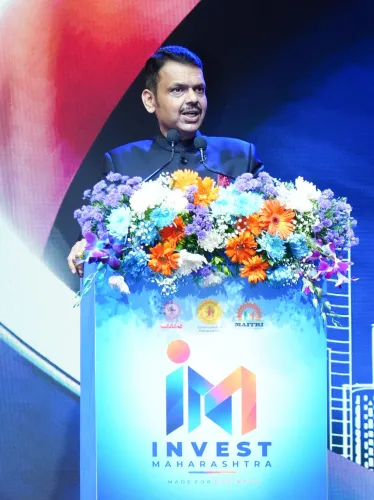
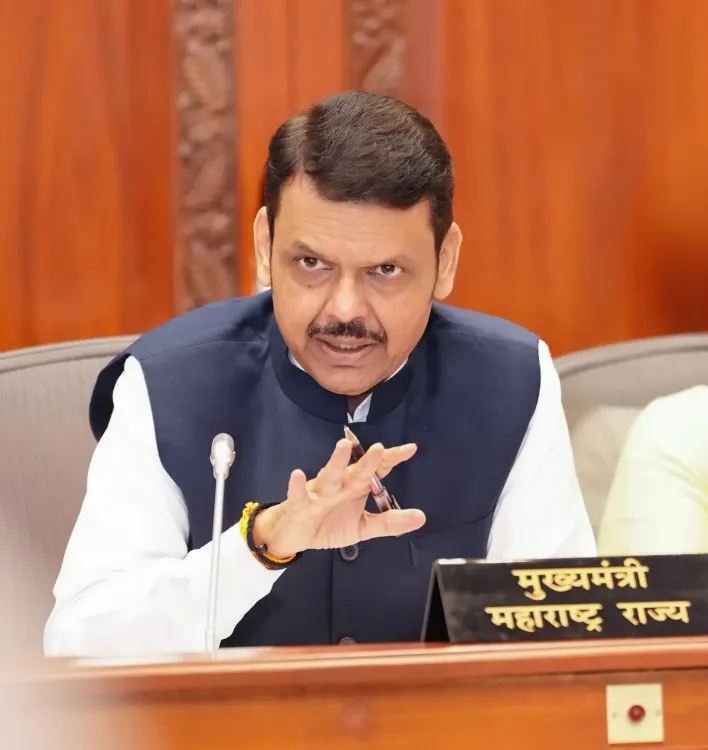
Maharashtra Chief Minister Devendra Fadnavis on Tuesday, 27 October strongly defended the proposed 3,000 MW Pumped Storage Hydro Project in Karjat, Raigad district, calling it an eco-friendly and technically irreplaceable component of the state's clean energy infrastructure. His remarks came in direct response to mounting opposition from environmental groups and political rivals who have raised alarms over large-scale tree felling required to execute the project.
Why Fadnavis Is Backing the Project
The Chief Minister framed pumped storage as the missing link in Maharashtra's renewable energy mix. 'While solar and wind power generate clean energy, they cannot operate 24/7,' Fadnavis said, adding that pumped storage provides a non-polluting mechanism to balance intermittent renewables and guarantee round-the-clock supply. He argued that the 3,000 MW facility offsets thermal power generation that would otherwise require the planting of 28 crore trees to neutralise coal pollution — and that running an equivalent coal-based capacity would produce emissions comparable to those of 40 million vehicles.
Fadnavis also cited the technology's longevity as a key differentiator: unlike conventional battery storage systems that last roughly 25 years, pumped storage infrastructure can operate effectively for up to 80 years, he noted, describing it as a generational investment in clean power.
Environmental Mitigation Plan
Acknowledging that tree clearing is unavoidable, Fadnavis characterised the impact as temporary and proportionate. As part of compensatory measures, the state's forest department will plant 90,000 trees, with an additional 60,000 trees to be planted directly on the Karjat project site. He stressed that establishing a durable clean energy storage system now prevents 'thousands of times more environmental degradation' in the future. The state government maintains that the project falls entirely outside the boundaries of the Bhimashankar Wildlife Sanctuary.
Responding to Opposition and Relocation Demands
Fadnavis accused critics of politicising a vital green energy initiative without adequate technical understanding. Drawing a parallel with the Aarey Car Shed dispute — which was eventually cleared by the Supreme Court — he indicated that the government remains open to genuine concerns but will not be deterred by what he called politically motivated resistance. On demands to relocate the project to Marathwada or Vidarbha, he was categorical: pumped storage requires very specific geographical terrain and topography, making Karjat a technically assessed, optimal site that cannot simply be replicated elsewhere.
Notably, Fadnavis pointed to China's development of over 60,000 MW of similar pumped storage infrastructure as evidence of the technology's global mainstream acceptance, and said Karjat was selected through rigorous feasibility assessments.
Broader Context: Maharashtra's Energy Transition
This comes amid Maharashtra's broader push to reduce dependence on coal-based power and integrate larger shares of solar and wind into its grid — a transition that grid engineers widely acknowledge requires large-scale storage solutions. Critics argue, however, that the environmental cost of forest clearance in ecologically sensitive Western Ghats terrain demands far more scrutiny before approvals proceed. The project represents a flashpoint in a national debate over whether green energy infrastructure itself can carry an unacceptable ecological price tag. How the state balances these competing imperatives will be closely watched by energy planners and conservationists alike.
Point of View
While substantial, have not been independently verified for ecological equivalence. Until the state publishes a credible, audited environmental impact assessment, the green credentials it claims for this project will remain contested.
NationPress
27 Oct 2026
Frequently Asked Questions
What is the Karjat Pumped Storage Hydro Project?
It is a proposed 3,000 MW pumped storage hydroelectric facility in Karjat, Raigad district , Maharashtra, designed to store surplus renewable energy and release it when solar and wind generation is unavailable. The Maharashtra government describes it as critical infrastructure for grid stability and clean energy transition.
Why is the Karjat project controversial?
The project has triggered backlash from environmentalists and opposition politicians due to the large-scale tree felling required in the region, which lies near the ecologically sensitive Western Ghats. Critics have also questioned whether the site's ecological value outweighs its energy benefits, and some have demanded relocation to Marathwada or Vidarbha.
What environmental mitigation has the state government promised?
The state has committed to planting 90,000 trees through the forest department and an additional 60,000 trees directly on the Karjat project site. CM Fadnavis has stated the project is situated outside the boundaries of the Bhimashankar Wildlife Sanctuary .
Why can't the project be relocated to Marathwada or Vidarbha?
CM Fadnavis has clarified that pumped storage infrastructure requires specific geographical terrain and topography — reservoirs at different elevations connected by tunnels — which cannot be replicated in every region. Karjat was selected after strict feasibility assessments that confirmed its terrain meets those technical requirements.
How does pumped storage compare to battery storage?
According to Fadnavis, conventional battery storage systems have an operational lifespan of around 25 years , while pumped storage infrastructure can function effectively for up to 80 years . He also cited China's development of over 60,000 MW of pumped storage as evidence of the technology's proven scale globally.