4 cops suspended over lapses in Kerala judge's son fatal crash probe
Synopsis
Four Kerala Police officers have been suspended after a public outcry over their handling of a fatal Cheranalloor accident allegedly caused by the teenage son of an Additional Sessions Judge. The case has reignited a sharp debate: are India's law enforcement and judicial systems structurally prone to going soft when the accused is connected to power?
Key Takeaways
Four Kerala Police personnel — CI Shyam Kumar , SHO Viswajith , Grade SI Manoj , and CPO Arunjith — suspended for probe lapses on 27 October 2026 .
The accident occurred at 2.20 am on 25 October on Container Road, Cheranalloor , near Kochi ; victim Jayabalakrishnan, 55 , died after his scooter was struck.
The alleged driver is the 17-year-old son of an Additional Sessions Judge posted in Irinjalakuda, Thrissur .
Charges upgraded to include Section 105 BNS (culpable homicide not amounting to murder) after public pressure.
The judge has been booked under Section 199A of the Motor Vehicles Act as the car's registered owner.
The Juvenile Justice Board, Ernakulam , granted bail to the minor on Monday ; the Kerala High Court is to be informed.
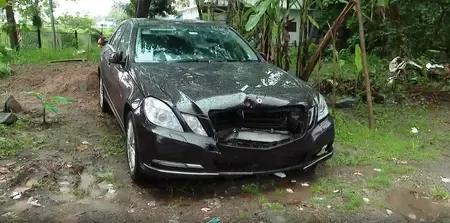
Four Kerala Police personnel have been suspended for serious lapses in the investigation into the fatal Cheranalloor road accident on 25 October 2026, in which a 17-year-old — the son of an Additional Sessions Judge — allegedly drove a Mercedes-Benz into a scooter, killing Jayabalakrishnan, 55, a roadside eatery owner returning home in the early hours. The suspensions follow a wave of public outrage, protests, and political pressure over what critics called differential treatment in a case involving the family of a judicial officer.
Who Was Suspended and Why
The four suspended personnel are Circle Inspector Shyam Kumar, Station House Officer Viswajith, Grade Sub-Inspector Manoj, and Civil Police Officer Arunjith. The action came hours after Additional Director General of Police P. Vijayan arrived in Kochi, inspected the accident site, and visited the home of the deceased before holding consultations with the probe team.
Home Minister Ramesh Chennithala had on Tuesday publicly acknowledged in the Kerala Assembly that the police made mistakes in handling the case — a rare official admission that effectively set the clock ticking on accountability measures.
What Happened on Container Road
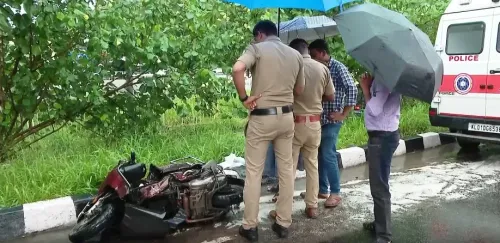
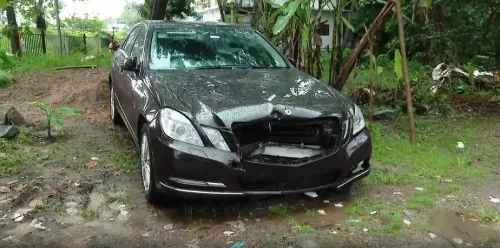
The crash occurred at around 2.20 am on 25 October on Container Road in Cheranalloor, near Kochi. According to police, the Mercedes-Benz allegedly driven by the judge's minor son struck Jayabalakrishnan's scooter as he was heading home after shutting his roadside eatery. Jayabalakrishnan died as a result of the collision.
Police initially registered a case of rash driving and causing death by negligence under the Bharatiya Nyaya Sanhita (BNS). Under pressure, investigators subsequently added Section 105 of the BNS, which deals with culpable homicide not amounting to murder — a significantly more serious charge.
Judge Booked, Minor Gets Bail
The Kochi City Police have also booked the Additional Sessions Judge — posted at a court in Irinjalakuda in Thrissur district — as an accused under Section 199A of the Motor Vehicles Act, which holds a vehicle owner or guardian accountable when a minor commits a motor vehicle offence, subject to statutory exceptions. He is the registered owner of the car. Police said the proceedings against the judicial officer are being carried out in accordance with Supreme Court guidelines, and that both the District Judiciary and the Kerala High Court would be informed.
The Juvenile Justice Board in Ernakulam granted bail to the 17-year-old on Monday. The victim's family, along with several political and youth organisations, had demanded accountability, questioning whether the probe would have moved as slowly had the accused not belonged to an influential household.
Broader Questions on Police Accountability
This case has drawn considerable public attention — and not just for the tragedy at its core. Critics argue it exposes a persistent pattern in which investigations involving influential accused move more slowly, charges are diluted, and procedural safeguards are applied inconsistently. Notably, the charges were upgraded and suspensions ordered only after sustained political and public pressure, not as a matter of routine investigative diligence.
The case is expected to be closely watched by the Kerala High Court, legal observers, and civil society groups as it progresses through the juvenile justice system and the courts. How the state handles accountability — for both the accused and the investigators — will likely define its legacy.
Point of View
The initial diluted charge of rash driving might well have stood. The addition of Section 105 BNS and the booking of the judge under the Motor Vehicles Act are legally significant, but they arrived under duress. Kerala's judiciary and police leadership must now demonstrate that the accountability being applied is systemic — not theatrical — or this becomes yet another episode where pressure produces optics rather than reform.
NationPress
27 Oct 2026
Frequently Asked Questions
Why were four Kerala Police officers suspended in the Cheranalloor accident case?
The four officers were suspended for lapses in the investigation into the fatal Cheranalloor road accident of 25 October 2026, in which a 17-year-old — son of an Additional Sessions Judge — allegedly drove a Mercedes-Benz into a scooter, killing Jayabalakrishnan, 55. Home Minister Ramesh Chennithala publicly admitted in the Kerala Assembly that police had made mistakes in the case.
Who was killed in the Cheranalloor road accident?
The victim was Jayabalakrishnan, 55, a roadside eatery owner who was returning home after closing his shop. He was struck by a Mercedes-Benz on Container Road in Cheranalloor, near Kochi, at around 2.20 am on 25 October 2026.
What charges have been filed in the Kerala judge's son accident case?
Police initially registered a case of rash driving and causing death by negligence under the Bharatiya Nyaya Sanhita. Section 105 of the BNS — culpable homicide not amounting to murder — was subsequently added. The judge, as the car's registered owner, has also been booked under Section 199A of the Motor Vehicles Act.
Has the judge's minor son been arrested or granted bail?
The 17-year-old was produced before the Juvenile Justice Board in Ernakulam, which granted him bail on Monday. Proceedings against the minor are being handled through the juvenile justice system.
What happens next in the Cheranalloor accident case?
Both the District Judiciary and the Kerala High Court are to be informed of the proceedings against the judicial officer. The case is expected to be closely monitored by the High Court and civil society groups, with questions about consistent application of the law still at the centre of public debate.