Why Did the Court Call Kerala a 'Banana Republic' Over a 10 ml Liquor Arrest?
Synopsis
In a striking commentary, the Manjeri District Principal Sessions Court condemned Kerala Police for arresting a man for possessing only 10 ml of liquor. This incident raises serious questions about law enforcement's overreach and the implications for individual liberty in India’s democratic fabric.
Key Takeaways
Kerala Police faced criticism for arresting a man for 10 ml of liquor.
The court highlighted issues of police authority misuse .
There are set limits for liquor possession in Kerala.
The incident reflects a broader pattern of excise law enforcement overreach.
Discretionary handling of minor offenses is advised under the Abkari Act .
Malappuram, Nov 4 (NationPress) The Manjeri District Principal Sessions Court has criticized the Kerala Police for detaining a 32-year-old man due to the possession of merely 10 millilitres of liquor.
“This is not occurring in a banana republic but within the world’s largest democracy,” the court remarked.
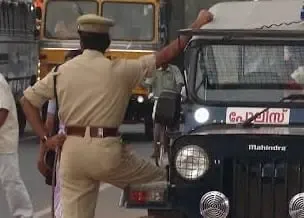
The court's rebuke, aimed at the Sub-Inspector of Valanchery Police Station, highlighted what it deemed a significant abuse of police authority and a violation of personal freedom.
The judge pointed out that the accused, Dhanesh from Painkannur near Tirur, was compelled to spend a week behind bars for an offense that did not justify arrest or custody.
The court raised concerns over the rationale for detaining someone for holding such a trivial amount of Indian-made foreign liquor.
It also cautioned that this kind of arbitrary use of power diminishes public confidence in law enforcement and threatens the foundations of justice.
Dhanesh was apprehended on October 25 under the provisions of the Kerala Abkari Act after police reportedly discovered him carrying a small bottle containing 10 ml of liquor.
He was subsequently remanded to judicial custody before being granted bail.
Legal experts and advocates for rights have indicated that this incident showcases a broader trend of overreach in the enforcement of excise laws in Kerala, where even minimal quantities of liquor can lead to arrest.
Lawyers highlighted that the Abkari Act allows for a discretionary approach to minor offenses, indicating that detention in such cases contravenes the principle of proportionality recognized by Indian courts.
The Sessions Court's comments have ignited discussions within legal communities regarding the necessity to reassess police procedures concerning arrests under the Abkari Act.
As of Tuesday evening, there had been no statement from the State Police Department regarding the court's remarks.
In Kerala, individuals are permitted to legally possess up to 3 liters of Indian Made Foreign Liquor (IMFL) without a permit, provided it is acquired from an authorized source.
Exceeding this limit, or possessing liquor not bought from a licensed vendor, constitutes an offense under the Abkari Act and may result in penalties such as fines and/or imprisonment.
Point of View
We stand with the nation in advocating for justice and accountability. This incident reflects a troubling trend of police overreach, urging a critical examination of enforcement practices and safeguarding individual liberties in our democracy.
NationPress
26 Sept 2026
Frequently Asked Questions
What law was invoked for the arrest?
The arrest was made under the Kerala Abkari Act , which governs the possession and sale of alcohol in the state.
What was the quantity of liquor involved?
The individual was arrested for possessing just 10 millilitres of liquor.
What did the court say about the arrest?
The court criticized the police for misusing their authority and emphasized that such actions undermine public trust.
How long was the accused held in custody?
The accused was held in jail for a week before being granted bail.
Are there legal limits on liquor possession in Kerala?
Yes, individuals can possess up to 3 liters of Indian Made Foreign Liquor without a permit, as long as it is purchased from a licensed source.