Siddaramaiah demands removal of CEC Gyanesh Kumar over internal EC disputes
Synopsis
Former Karnataka CM Siddaramaiah has escalated a brewing storm inside the Election Commission, alleging that two Commissioners formally objected at least 14 times in 10 months to CEC Gyanesh Kumar's decisions — from voter-roll changes to the West Bengal SIR process. His demand for presidential intervention puts India's premier electoral body under intense public scrutiny.
Key Takeaways
Siddaramaiah on 23 September 2026 called for the removal of CEC Gyanesh Kumar , urging President Droupadi Murmu to act.
Election Commissioners Sukhbir Singh Sandhu and Vivek Joshi allegedly lodged written objections at least 14 times in 10 months .
Objections reportedly cover voter registration ( Form 6 changes), electoral-roll additions and deletions, database control, and the SIR process .
Nearly 16 lakh appeals seeking voter deletions in West Bengal — filed after judicial officers ordered inclusions — are at the centre of the controversy.
Siddaramaiah alleged decisions were issued in the Commission's name without approval of all three members.
The Election Commission of India had not issued a formal response at the time of reporting.
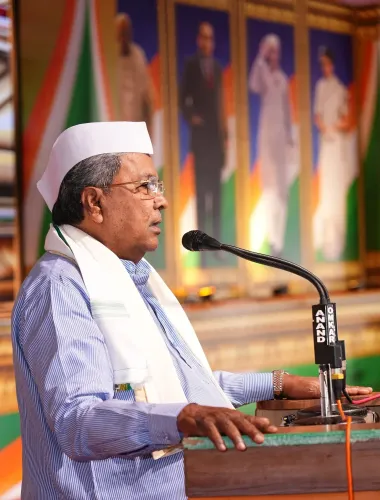
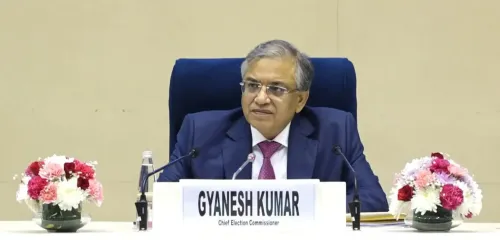
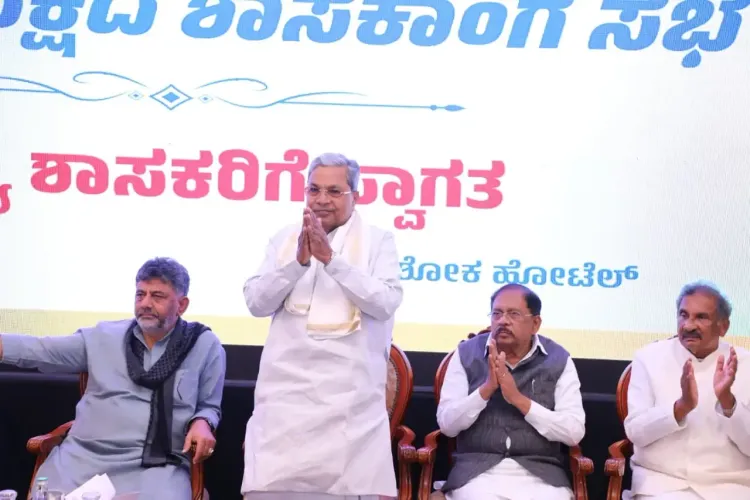
Former Karnataka Chief Minister Siddaramaiah on Wednesday, 23 September 2026, called for the removal of Chief Election Commissioner (CEC) Gyanesh Kumar, citing what he described as 'deeply alarming' divisions within the Election Commission of India (ECI). He alleged that two sitting Election Commissioners had formally lodged written objections to decisions made by the three-member panel on at least 14 occasions in the past 10 months.
What Siddaramaiah Alleged
In a detailed media statement, Siddaramaiah claimed that Election Commissioners Sukhbir Singh Sandhu and Vivek Joshi had recorded written dissent against multiple decisions by the Commission headed by CEC Gyanesh Kumar. According to him, the objections cover a range of sensitive electoral functions — including the registration of new voters, additions and deletions from electoral rolls, control over the electoral-roll database, and the conduct of the Special Intensive Revision (SIR) process.
Siddaramaiah referred to an investigative report published in an English newspaper, which reportedly noted that one Election Commissioner had objected to the insertion of a new question in Form 6 — the form used to register fresh voters — without the mandatory legal amendment. The modification was, according to the report, described as 'unauthorised and illegal.'
Centralisation of Electoral-Roll Database
The former Chief Minister also raised concern over what he characterised as the 'gradual centralisation' of the electoral-roll database. He alleged that local election officials — who are legally authorised to manage electoral rolls — have faced restrictions on accessing the system. Siddaramaiah questioned who controls the database, under whose authority changes are being made, and why state-level officials do not have complete access.
West Bengal SIR Process Under Scrutiny
Siddaramaiah trained his focus on the SIR process in West Bengal, questioning the filing of nearly 16 lakh appeals seeking deletion of voters whose inclusion had already been ordered by judicial officers. He asked who filed these appeals and under whose authority they were admitted. He claimed that Election Commissioner Sandhu had raised questions about the process, and that neither Sandhu, Joshi, nor the Chief Electoral Officer of West Bengal had been informed of its basis.
He further alleged that communications and decisions were being issued in the name of the full Commission without the approval of the other two members — a charge that, if substantiated, would represent a significant departure from collegial institutional functioning.
Call for Presidential Intervention
Framing the matter as one directly affecting citizens' voting rights, Siddaramaiah urged President Droupadi Murmu to remove CEC Gyanesh Kumar from office and direct the Union Government to initiate a formal investigation. He asserted that free, fair, and transparent elections are the bedrock of democracy and that the Election Commission must remain both autonomous and accountable.
He also called for complete public transparency on the SIR process, changes to electoral rolls, and the reported internal disagreements — warning that repeated objections by Commission members risk eroding public confidence in the electoral process. As the controversy intensifies, the Election Commission of India has not yet issued a formal response to the allegations.
Point of View
If corroborated, point to a structural fracture inside the Election Commission — not merely a policy disagreement. A three-member body where two commissioners are repeatedly outvoted or bypassed is, in effect, a one-person commission, which is precisely what the Supreme Court's 2023 ruling on appointment reforms sought to guard against. The West Bengal SIR episode is the sharpest edge of this story: 16 lakh voter-deletion appeals filed after judicial inclusion orders is not a clerical anomaly — it demands a paper trail and a named authority. Mainstream coverage has treated this as a Congress attack on the ECI, but the underlying question — who controls the electoral-roll database and on whose orders — is an institutional one that transcends partisan framing.
NationPress
23 Sept 2026
Frequently Asked Questions
Why is Siddaramaiah demanding the removal of CEC Gyanesh Kumar?
Siddaramaiah alleges that Election Commissioners Sukhbir Singh Sandhu and Vivek Joshi lodged written objections at least 14 times in 10 months against decisions taken by CEC Gyanesh Kumar's Commission, covering voter registration, electoral-roll changes, and the SIR process. He argues this pattern of internal dissent signals institutional dysfunction that warrants presidential intervention.
What is the Special Intensive Revision (SIR) process controversy?
The SIR process is a mechanism for revising electoral rolls. Siddaramaiah has questioned why nearly 16 lakh appeals seeking voter deletions were filed in West Bengal after judicial officers had already ordered those voters' inclusion, and claims that neither Election Commissioner Sandhu, Commissioner Joshi, nor the Chief Electoral Officer of West Bengal were informed of the basis for those appeals.
What change to Form 6 has been flagged as 'unauthorised and illegal'?
According to an investigative report cited by Siddaramaiah, a new question was inserted into Form 6 — the form used to register new voters — without the legally required amendment to the underlying rules. One Election Commissioner reportedly described the change as 'unauthorised and illegal.'
Who has Siddaramaiah urged to act, and what action has he sought?
Siddaramaiah has urged President Droupadi Murmu to remove Gyanesh Kumar from the post of CEC and direct the Union Government to investigate him. He has also called for full public transparency on the electoral-roll changes and the internal disagreements within the Commission.
Has the Election Commission of India responded to these allegations?
As of the time of reporting, the Election Commission of India had not issued a formal public response to Siddaramaiah's allegations or the investigative report he cited.