Siddaramaiah Demands CEC Gyanesh Kumar's Dismissal, Criminal Case
Synopsis
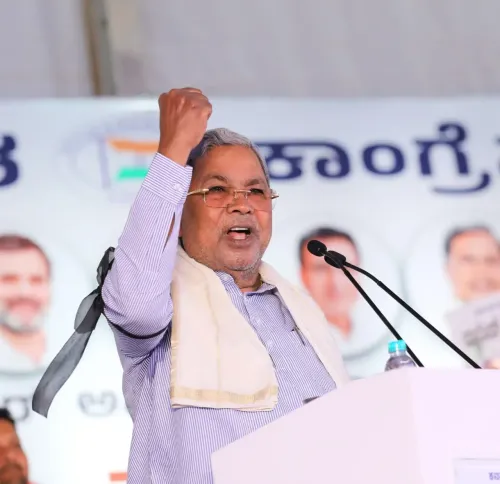
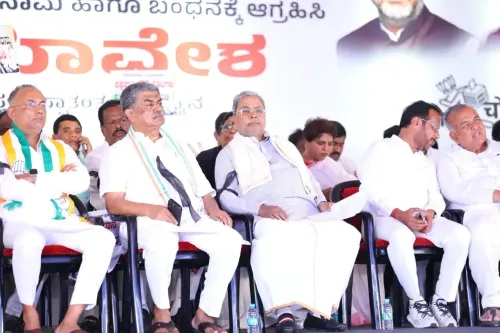
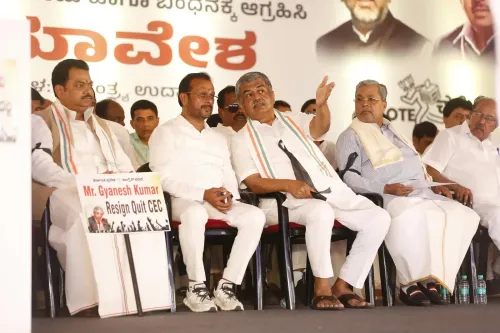
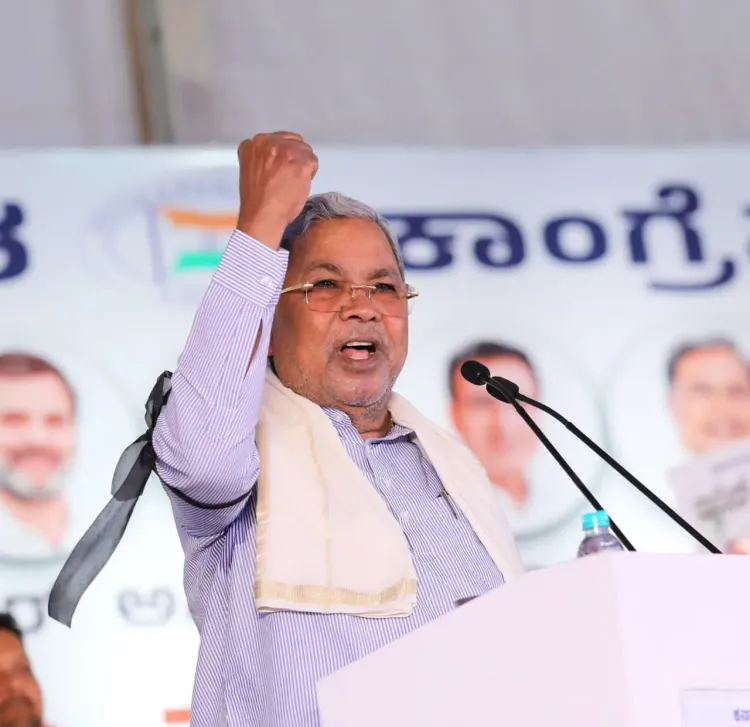
Karnataka CM Siddaramaiah addressed a KPCC protest at Freedom Park, Bengaluru on September 26, 2026, demanding CEC Gyanesh Kumar's immediate removal and criminal prosecution, citing reported internal dissents by two Election Commissioners and alleging the body has lost its constitutional independence.
Key Takeaways
Karnataka CM Siddaramaiah demanded the immediate dismissal of Chief Election Commissioner Gyanesh Kumar and criminal prosecution against him at a KPCC protest at Freedom Park, Bengaluru on September 26, 2026 .
He cited media reports claiming Election Commissioners Sukhbir Singh Sandhu and Vivek Joshi filed written objections to Commission decisions on at least 14 occasions in ten months , covering voter additions, deletions, Form-6 changes, and data management.
Siddaramaiah invoked Article 324 of the Constitution and called on the President of India to intervene, arguing the ECI must be loyal only to the Constitution, not to any government.
He declared solidarity with Rahul Gandhi , who had raised voter-roll manipulation allegations with the ECI as far back as 2025 .
The CM alleged Prime Minister Narendra Modi , now 75 , came to power through 'vote theft' — a political allegation, not a legal finding — and lacks the moral authority to continue in office.
The Election Commission had not issued a public response as of the time of this report.
At a protest that drew sharp political lines around India's constitutional architecture, Karnataka Chief Minister Siddaramaiah on Saturday, September 26, 2026, called for the immediate dismissal of Chief Election Commissioner Gyanesh Kumar and demanded that criminal proceedings be initiated against him — framing the row not as ordinary politics but as a question of democracy's survival.
Speaking at a demonstration organised by the Karnataka Pradesh Congress Committee (KPCC) at Freedom Park, Bengaluru, Siddaramaiah did not mince words. 'The Election Commission is a constitutional body,' he said. 'If it does not function independently, democracy itself will not survive. This is a question of democracy's existence.'
Fourteen Dissents Inside the Commission
The flashpoint for the protest, Siddaramaiah argued, is a pattern of internal dissent inside the Election Commission of India that has now become public. Citing media reports, he claimed that Election Commissioners Sukhbir Singh Sandhu and Vivek Joshi had, over the past ten months, filed written objections to Commission decisions and orders on at least 14 separate occasions. Some of those objections, he stated, concern voter additions, deletions of names from electoral rolls, changes to Form-6, and voter data management — the very mechanisms that determine who gets to vote.
The research bloc flags these specific counts and the names of the dissenting commissioners as unverified from established public record. Siddaramaiah, however, presented them as established fact at the protest and called them 'deeply serious' for a constitutional institution. 'Such developments should not happen inside a constitutional body,' he said.
Rahul Gandhi's Allegations and Siddaramaiah's Solidarity
The Karnataka CM explicitly aligned himself with Congress leader Rahul Gandhi, who has alleged large-scale electoral roll manipulation since the BJP came to power at the Centre and reportedly wrote to the Election Commission on the matter in 2025. When Gandhi raised allegations of vote theft, Siddaramaiah noted, the CEC had reportedly suggested Gandhi should apologise to the public — a response the CM called inappropriate for a constitutional functionary. 'I stand with Rahul Gandhi and support this fight,' Siddaramaiah declared.
Article 324, the President, and the Constitutional Argument
Siddaramaiah grounded his demand in constitutional text. Article 324 of the Indian Constitution, he said, provides that the Chief Election Commissioner can be removed only in the same manner and on the same grounds as a Supreme Court judge — that is, through a parliamentary address process. While that makes unilateral executive dismissal constitutionally impossible, he argued that the President of India — as guardian of the Constitution — must intervene and initiate action where Commissioners are found to have acted contrary to their constitutional duty.
Invoking Dr B.R. Ambedkar, who designed the ECI as a body loyal solely to the Constitution, Siddaramaiah said the Commission 'must not dance to the tune of the Central government' and cannot owe allegiance to any party or regime. 'Babasaheb gave us a constitution. The Election Commission must be faithful only to that constitution.'
The Modi Retirement Remark and the Political Stakes
In one of his sharpest lines, Siddaramaiah noted that Prime Minister Narendra Modi has turned 75 — the age at which others in public life are asked to step aside — yet Modi, he alleged, enjoys an exception. He went further, asserting that Modi 'came to power through vote theft' and therefore lacks the moral right to remain in office 'for even a minute'. These are opposition political allegations, not established legal findings.
The broader opposition argument — that successive BJP-era Election Commissions have been pliant rather than independent — has been a recurring Congress charge since 2014, and this protest at Freedom Park is the latest escalation of that campaign.
The Election Commission has not, as of this writing, issued a public response to Siddaramaiah's demands. Whether opposition parties pursue Supreme Court petitions on ECI functioning, or whether the President's office acknowledges the demand, will determine whether this protest is the beginning of a sustained institutional confrontation — or a powerful political salvo ahead of the next electoral cycle.
Point of View
Deploying Article 324 language and a presidential-intervention demand to raise the institutional stakes far beyond routine opposition criticism. The framing — 'democracy's survival' — is a deliberate escalation designed to recast the ECI row as a civic emergency rather than a partisan dispute. Whether the opposition can sustain this framing will depend heavily on whether internal Commission dissents receive independent judicial or parliamentary scrutiny. For the BJP, the episode tests how robustly it defends the Commission's record without appearing to shield it from legitimate constitutional accountability.
NationPress
26 Sept 2026
Frequently Asked Questions
Why is Siddaramaiah demanding the dismissal of Chief Election Commissioner Gyanesh Kumar?
Siddaramaiah alleges that CEC Gyanesh Kumar has been functioning in an 'autocratic' manner and that two other Election Commissioners have filed written objections to at least 14 Commission decisions over ten months, including on voter roll management — raising, in his view, serious doubts about the body's constitutional independence.
Can the Chief Election Commissioner be dismissed by the government?
No. Under Article 324 of the Indian Constitution, the Chief Election Commissioner can only be removed in the same manner and on the same grounds as a Supreme Court judge — through a formal parliamentary address — making unilateral executive dismissal constitutionally impermissible.
What role can the President of India play in this controversy?
Siddaramaiah argues that the President, as constitutional guardian, should intervene and initiate action if Election Commissioners are found to have acted contrary to the Constitution. The President holds formal authority under Article 324 in relation to the Commission's functioning.
What is Rahul Gandhi's connection to the Election Commission row?
Rahul Gandhi has repeatedly alleged large-scale manipulation of voter lists since the BJP came to power and reportedly wrote to the Election Commission about it in 2025. Siddaramaiah declared solidarity with Gandhi's campaign at the Freedom Park protest.
What is Freedom Park and why was the protest held there?
Freedom Park in Bengaluru is a designated public protest venue frequently used for major political demonstrations in Karnataka. The KPCC chose it for Saturday's rally against the Election Commission's functioning and the CEC specifically.