Opposition demands CEC Gyanesh Kumar's ouster, SC intervention over poll panel rift
Synopsis
A media report claiming two Election Commissioners objected on record to decisions taken without their knowledge has triggered a full-scale Opposition offensive — with demands ranging from CEC Gyanesh Kumar's resignation to the Supreme Court dissolving the Commission altogether. The ECI has denied the report, but the episode has reignited the sharpest institutional challenge to the poll panel in recent memory.
Key Takeaways
Opposition parties on 23 September 2026 demanded the resignation of CEC Gyanesh Kumar and sought Supreme Court intervention over a media report alleging internal dissent at the Election Commission of India .
The report claimed two Election Commissioners — Sukhbir Singh Sandhu and Vivek Joshi — had 'objected on record' to poll panel decisions taken allegedly without their knowledge; the ECI denied the report.
The Special Intensive Revision (SIR) of electoral rolls was cited as a central grievance, with multiple parties alleging voter additions and deletions based on political affiliation.
Leaders from Samajwadi Party , Congress , AAP , CPI-M , TMC , PDP , and Shiv Sena (UBT) all condemned the CEC, with some using language such as 'murdering democracy.' Former Maharashtra CM Prithviraj Chavan and others formally called for the Supreme Court to take suo motu cognisance and summon all Election Commissioners.
Opposition parties on Wednesday, 23 September launched a coordinated attack on Chief Election Commissioner (CEC) Gyanesh Kumar and the BJP-led Central government, alleging that the country's electoral process has been systematically 'undermined,' and called for the Supreme Court's immediate intervention. The backlash followed a media report claiming that two Election Commissioners had 'objected on record' to several decisions taken by the poll panel, allegedly without their knowledge. The Election Commission of India (ECI) has denied the report.
Key Demands and Allegations
Samajwadi Party President Akhilesh Yadav accused the ECI of attempting to 'weaken' democracy, saying at a press conference: 'An institution meant to be impartial has ceased to be so... Who is tampering with a constitutional body in this manner just to cling to power? This implies that the governments formed during this period are unconstitutional.'
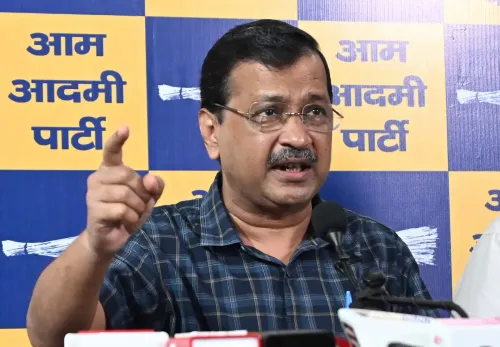
CPI-M General Secretary M.A. Baby went further, demanding the resignation of CEC Gyanesh Kumar outright: 'He has no right to continue now.' Aam Aadmi Party (AAP) chief Arvind Kejriwal echoed the resignation demand and additionally sought the cancellation of polls conducted over the last few years.
The SIR Controversy
Several Opposition leaders zeroed in on the Special Intensive Revision (SIR) of electoral rolls as the immediate flashpoint. All India Trinamool Congress (TMC) MP Saugata Roy called the SIR a 'bad thing,' alleging that many genuine voters are being removed through the process. Peoples Democratic Party (PDP) chief Mehbooba Mufti alleged that additions and deletions from electoral rolls were being made 'according to the BJP's will,' warning: 'If this continues, there is a danger that at some point our country, which is the world's largest democracy, could come to resemble a banana republic.'
Congress leader and former Uttarakhand Chief Minister Harish Rawat alleged that voter deletions and additions were happening 'at the direction of those in power,' targeting voters based on their political leanings. Congress leader T.S. Singh Deo said the Election Commission appeared to be 'working with its eyes closed or in a very calculated manner to destroy the entire system.'
Sharpest Attacks on the CEC
Congress leader Sandeep Dikshit alleged that the CEC was 'working absolutely like an emperor, in total dictatorship,' adding that the electoral process 'under him has been completely undermined.' Samajwadi Party MP Rajeev Kumar Rai claimed the media report 'proves right' what the Opposition had been saying — that the CEC is 'murdering democracy.' Purnia MP Pappu Yadav urged the Supreme Court to immediately dissolve the Election Commission.
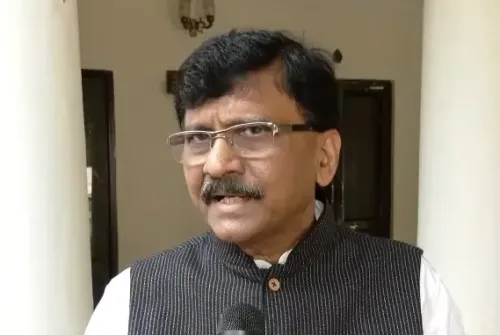
Shiv Sena (UBT) MP Sanjay Raut praised Election Commissioners Sukhbir Singh Sandhu and Vivek Joshi for 'the biggest work to save democracy,' while alleging that CEC Gyanesh Kumar had engaged in 'illegal work' within and outside the Commission. Raut also alleged that the BJP's recent election victories in West Bengal and Bihar came 'with the help of Gyanesh Kumar's criminal activities' — an allegation that remains unverified.
Supreme Court Intervention Sought
Multiple Opposition leaders formally urged the Supreme Court to act. Former Maharashtra Chief Minister and Congress leader Prithviraj Chavan appealed to the court to take suo motu cognisance of the matter, saying: 'All the Election Commissioners should be called before the Court.' Congress MP Imran Masood questioned the ECI's denial, asking: 'If the decisions were taken unanimously, then how is it that two out of three people are saying something which is different from the third?'
ECI Denial and What Comes Next
The Election Commission of India has categorically denied the media report alleging internal dissent among Commissioners. No official response had been issued by the Central government as of Wednesday evening. The Opposition's call for Supreme Court intervention is unlikely to translate automatically into a hearing, as the court would need to either receive a formal petition or decide independently to take cognisance. Whether any party formally files a petition in the days ahead will shape the next chapter of this institutional standoff.
Point of View
But it rests on a single unverified media report that the ECI has denied — a foundational ambiguity that could undercut the legal case for Supreme Court intervention. The more substantive issue lurking beneath the noise is the SIR of electoral rolls: if credible evidence emerges that voter deletions are systematic and politically targeted, that would be a constitutional crisis, not merely a political row. Notably, demands to cancel past elections — made by Kejriwal and others — have no realistic legal pathway and risk trivialising the genuinely serious structural questions about the Commission's functioning. The real test is whether any Opposition party converts rhetoric into a well-documented petition before the Supreme Court, one that forces judicial scrutiny on the SIR process with verifiable data rather than allegations.
NationPress
23 Sept 2026
Frequently Asked Questions
What triggered the Opposition's attack on the Election Commission on 23 September 2026?
A media report claimed that two Election Commissioners — Sukhbir Singh Sandhu and Vivek Joshi — had objected on record to multiple decisions taken by the poll panel, allegedly without their knowledge. The report prompted Opposition parties to demand CEC Gyanesh Kumar's resignation and Supreme Court intervention. The ECI denied the report.
What is the Special Intensive Revision (SIR) of electoral rolls, and why is it controversial?
The Special Intensive Revision (SIR) is a process undertaken by the Election Commission to update and clean up voter rolls. Opposition parties allege it is being misused to delete genuine voters — particularly those perceived as Opposition supporters — and add others, effectively skewing the electoral process in favour of the ruling party. The ECI has not publicly responded to these specific allegations.
Who are the Election Commissioners said to have raised objections?
According to the media report, Election Commissioners Sukhbir Singh Sandhu and Vivek Joshi objected on record to several decisions. Shiv Sena (UBT) MP Sanjay Raut praised both for 'the biggest work to save democracy.' The Election Commission of India has denied the report's characterisation of internal dissent.
What has the Supreme Court been asked to do?
Multiple Opposition leaders, including former Maharashtra Chief Minister Prithviraj Chavan and Purnia MP Pappu Yadav, have urged the Supreme Court to take suo motu cognisance of the matter and summon all Election Commissioners. No formal petition had been confirmed as filed as of Wednesday evening.
How has the Election Commission responded to the allegations?
The Election Commission of India has categorically denied the media report claiming internal disagreement among Commissioners. The Central government had not issued an official statement on the matter as of 23 September 2026.