ECI dissent row: Shiv Sena (UBT) calls CEC's SIR actions 'illegal'; BJP defends process
Synopsis
A leaked dissent report alleging that two Election Commissioners formally objected to CEC Gyanesh Kumar's decisions — including voter roll changes under the SIR process — has blown up into a full-scale political confrontation. Shiv Sena (UBT)'s Raut is calling it proof of 'criminal activities'; the BJP is turning the attack around, asking why anyone would oppose removing fake voters. The ECI, meanwhile, insists the dissent was routine internal deliberation.
Key Takeaways
A leading daily reported that two Election Commissioners objected 'on record' to CEC Gyanesh Kumar's decisions on 14 occasions over 10 months .
Shiv Sena (UBT) MP Sanjay Raut accused Kumar of conducting 'illegal work' inside and outside the Commission, naming Sukhbir Singh Sandhu and Vivek Joshi as those who tried to protect democracy.
Raut alleged the changes to Form 6 under the Special Intensive Revision (SIR) process were unlawful, with unverified claims about electoral outcomes in West Bengal and Bihar .
BJP MLA Ram Kadam defended the SIR as a transparent exercise to remove duplicate and deceased voters from electoral rolls.
The ECI rejected the report, stating differing views are normal and that around 40 new initiatives , including the SIR, were undertaken with unanimous officer agreement.
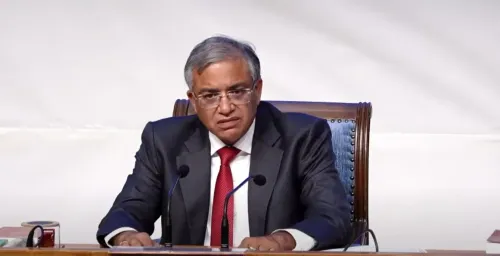
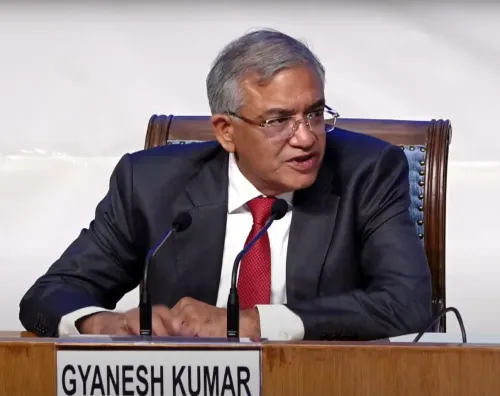
A reported wave of internal dissent within the Election Commission of India (ECI) escalated into a sharp political confrontation on 23 September 2026, with Shiv Sena (UBT) Rajya Sabha member Sanjay Raut accusing Chief Election Commissioner (CEC) Gyanesh Kumar of conducting 'illegal' operations inside the poll body, while the Bharatiya Janata Party (BJP) defended the Commission's Special Intensive Revision (SIR) process as fully transparent.
The Dissent Report: What Was Alleged
The controversy was triggered by an investigative report in a leading national daily, which claimed that on 14 separate occasions over a period of 10 months, two Election Commissioners had formally objected 'on record' to steps taken by the Commission. According to the report, the objections spanned a range of decisions, including allegations that the two commissioners were kept uninformed about certain matters, as well as concerns over the addition of new voters and deletion of names from electoral rolls.
The ECI has since rejected the report's framing, stating that every officer within the institution is 'fully authorised' to offer suggestions for improving the electoral system and that 'differing views, observations, and suggestions are a normal part of deliberations within any institution.'
Raut Levels Charges Against CEC
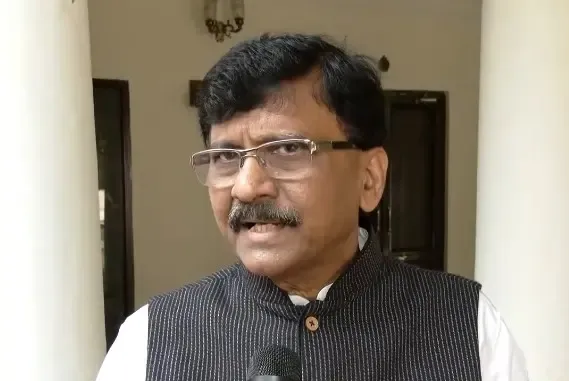
Raut did not hold back, naming the two dissenting commissioners — Sukhbir Singh Sandhu and Vivek Joshi — and describing their alleged objections as 'the biggest work to save democracy.' He charged that Gyanesh Kumar is 'doing illegal work within the Election Commission and outside as well.'
'This is a big revelation. We have been repeatedly saying these things on public platforms. Now, this has been exposed,' Raut said. He further alleged that changes made to Form 6 in connection with the SIR process were 'illegal' — a claim, he said, the two Election Commissioners themselves had raised. He also alleged, without providing documentary evidence, that electoral outcomes in West Bengal and Bihar were influenced through what he termed 'Gyanesh Kumar's criminal activities.' These are allegations and have not been independently verified.
Raut added that the Opposition had tried to raise these concerns on multiple occasions but found 'no one was ready to listen.'
BJP Hits Back: Calls SIR a Necessary Clean-Up
BJP MLA Ram Kadam rejected Raut's characterisation and framed the SIR as a routine, essential exercise to purge the voter rolls of duplicates and deceased individuals. 'The Election Commission is a constitutional institution. We have to understand the importance of SIR. Similar names are mentioned 10 times in the list; fake names should be removed, and genuine voter names shall be included,' Kadam said.
Kadam challenged the Opposition directly: 'Does Sanjay Raut want the bogus voters to continue to remain in the voter list? Every person can vote once — isn't that the rule? Then why do they want the fake names to remain?' He asserted that any opposition to removing duplicate entries reflected 'wrong intention' rather than democratic principle.
ECI's Official Position
The poll panel pushed back firmly against the media report. The Commission said it has introduced around 40 new initiatives and undertaken several electoral reforms — including the Special Intensive Revision (SIR) across the country — with the agreement of all authorised officers. It stressed that several 'unanimous decisions' have been taken by the poll body in recent months and that the decision-making process involves not only the three Election Commissioners but also officials across the broader organisation.
Why This Matters
The ECI's institutional credibility has become a sustained battleground between the ruling coalition and the Opposition in recent years. This is not the first time questions have been raised about internal processes at the Commission — the SIR itself has previously drawn scrutiny from civil society groups who argue large-scale deletions from voter rolls risk disenfranchising legitimate voters, particularly in marginalised communities. The BJP's defence, conversely, frames any pushback against voter-roll cleaning as an attempt to protect fraudulent entries. Both positions reflect a deeper, unresolved tension about electoral integrity that will likely intensify ahead of upcoming state elections.
Point of View
The Commission's own claim of 'unanimous decision-making' becomes hard to reconcile. The BJP's framing of the SIR as a straightforward clean-up ignores legitimate concerns from civil society about large-scale deletions disenfranchising genuine voters — concerns that predate this controversy. Conversely, Raut's leap from a dissent report to allegations of 'criminal activities' influencing state election outcomes requires far more evidence than a media report provides. What India actually needs — and is not getting — is a transparent, independently audited account of exactly who was removed from voter rolls, where, and why.
NationPress
23 Sept 2026
Frequently Asked Questions
What is the ECI dissent row about?
The row centres on an investigative report claiming that two Election Commissioners — Sukhbir Singh Sandhu and Vivek Joshi — formally objected to decisions made by CEC Gyanesh Kumar on 14 occasions over 10 months, including concerns about voter additions and deletions under the Special Intensive Revision (SIR) process. The ECI has rejected the report's framing, calling internal dissent a routine part of deliberations.
What did Sanjay Raut accuse CEC Gyanesh Kumar of?
Raut accused Gyanesh Kumar of conducting 'illegal work' within and outside the Election Commission, alleging changes to Form 6 under the SIR process were unlawful. He also claimed, without verified evidence, that electoral outcomes in West Bengal and Bihar were influenced through Kumar's actions — allegations the ECI has not addressed directly.
What is the Special Intensive Revision (SIR) at the heart of the row?
The SIR is an electoral roll revision exercise conducted by the ECI to update voter lists — removing duplicate entries, deceased voters, and adding new eligible voters. The BJP defends it as a necessary clean-up; the Opposition argues the process has led to the illegitimate deletion of genuine voters' names.
How did the BJP respond to the controversy?
BJP MLA Ram Kadam defended the SIR as a transparent, constitutional process and challenged Sanjay Raut to explain why the Opposition would want duplicate or deceased names retained on voter rolls. He argued that opposing the removal of fake names reflected 'wrong intentions' rather than democratic concerns.
What is the ECI's official response to the dissent report?
The ECI rejected the report, stating that all officers are authorised to offer suggestions and that differing views are a normal part of institutional deliberation. It pointed out that several unanimous decisions have been taken recently and that the SIR and around 40 other new initiatives were undertaken with the agreement of all authorised officers.