Congress accuses CEC Gyanesh Kumar of BJP bias over 13 crore SIR voter deletions
Synopsis
Congress has directly accused Chief Election Commissioner Gyanesh Kumar of acting as a 'servant of the BJP,' pointing to the deletion of 13 crore voter names under the SIR process and internal dissent from two Election Commissioners as evidence of institutional compromise — a charge that strikes at the heart of India's electoral credibility ahead of key state polls.
Key Takeaways
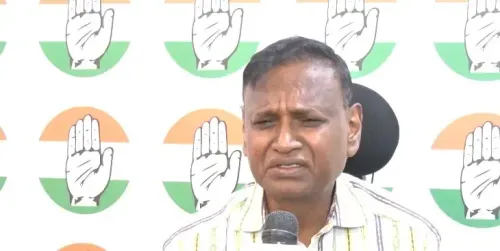
AICC spokesperson Dr Ajay Upadhyay accused CEC Gyanesh Kumar of BJP bias in Guwahati on 27 October 2026 .
Congress alleged 13 crore voters' names were deleted under the Special Intensive Revision (SIR) of electoral rolls.
Upadhyay claimed two Election Commissioners raised internal objections, citing this as proof of irregularities.
The spokesperson linked the controversy to broader government failures including unemployment , rising prices , and paper leaks .
Congress alleged heavy police deployment was used to suppress public protests against the government.
The ECI had not publicly responded to the allegations at the time of this report.
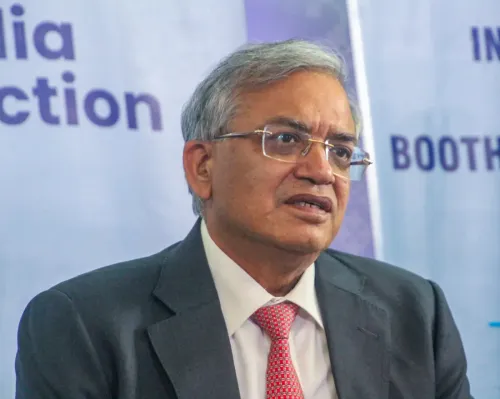
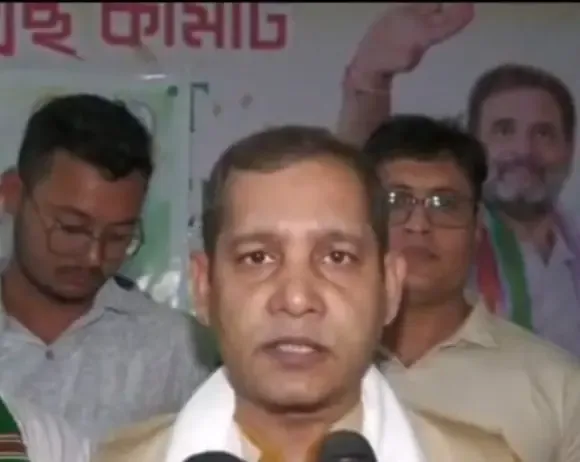
All India Congress Committee (AICC) spokesperson Dr Ajay Upadhyay on Tuesday, 27 October launched a sharp broadside against Chief Election Commissioner (CEC) Gyanesh Kumar in Guwahati, alleging that the deletion of 13 crore voters' names under the Special Intensive Revision (SIR) of electoral rolls had gravely undermined the Election Commission of India's (ECI) constitutional impartiality. The Congress accused Kumar of functioning as a political instrument of the Bharatiya Janata Party (BJP) rather than as an independent constitutional authority.
The Core Allegation
Upadhyay claimed that objections raised internally by two Election Commissioners over the SIR exercise had exposed what he called systemic irregularities in the voter revision process. He argued that dissent from within the Commission itself was the clearest evidence of institutional compromise.
'The way two Commissioners inside the Election Commission have raised objections that in the name of SIR, names of 13 crore voters have been deleted, this itself proves that Chief Election Commissioner Gyanesh Kumar is a servant of the BJP,' Upadhyay said, speaking to reporters.
Broader Political Context
The Congress spokesperson broadened his attack beyond the electoral rolls, linking the controversy to what he described as the ruling government's wider failures — including unemployment, rising prices, and examination paper leaks. He alleged that young people had been driven onto the streets in protest, reflecting deepening public frustration.
'If a government is formed by stealing votes, that government does nothing good for the people,' Upadhyay alleged. He further claimed that authorities had deployed a heavy police presence to suppress ongoing protests across multiple locations.
What the SIR Controversy Is About
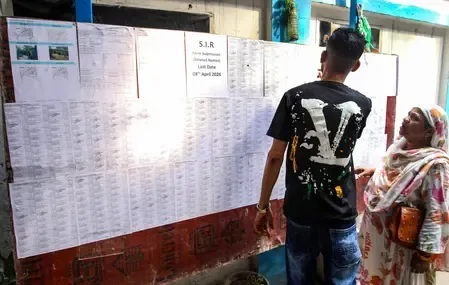
The Special Intensive Revision is a periodic exercise by the ECI to update electoral rolls — adding new eligible voters and removing those who have died, migrated, or are otherwise ineligible. Critics argue the current round has been conducted with insufficient transparency and has disproportionately affected certain voter demographics. The ECI has not publicly responded to the Congress allegations as of the time of this report.
Notably, this is not the first time the SIR process has drawn political fire. Opposition parties have previously raised concerns about the pace and methodology of such revisions, particularly ahead of state assembly elections.
What Happens Next
The Congress's remarks are likely to intensify pressure on the ECI to publicly account for the scale of deletions and the nature of the internal dissent reportedly raised by two commissioners. Civil society organisations monitoring electoral processes are also expected to seek formal clarification from the Commission. The political debate over the ECI's independence is set to persist as multiple state elections approach.
Point of View
And how many were genuinely disenfranchised eligible citizens? That distinction matters enormously, and neither Congress nor the ECI has so far provided a granular breakdown. What is clear is that the ECI's public credibility is under pressure at a sensitive moment, and its silence in the face of specific, named allegations only deepens the trust deficit.
NationPress
27 Oct 2026
Frequently Asked Questions
What is the Special Intensive Revision (SIR) of electoral rolls?
The Special Intensive Revision is a periodic exercise conducted by the Election Commission of India to update voter lists by adding newly eligible voters and removing those who are deceased, have migrated, or no longer qualify. Critics allege the current round has lacked transparency and led to the deletion of 13 crore voters' names.
What has Congress alleged against CEC Gyanesh Kumar?
Congress spokesperson Dr Ajay Upadhyay alleged that CEC Gyanesh Kumar has been functioning in the BJP's interests rather than as an impartial constitutional authority, pointing to the deletion of 13 crore voter names under SIR and internal objections reportedly raised by two Election Commissioners as evidence.
Why does the internal dissent within the ECI matter?
Upadhyay cited objections reportedly raised by two Election Commissioners as corroboration of his party's allegations, arguing that disagreement from within the Commission itself lends credibility to concerns about the SIR process. The ECI has not publicly confirmed or denied the nature of this internal dissent.
How has the government responded to the Congress allegations?
Neither the Election Commission of India nor the government had publicly responded to the Congress allegations at the time of this report. The ECI's silence on the specific charge of 13 crore deletions is likely to prolong the controversy.
What broader issues did Congress link to the electoral roll controversy?
Dr Upadhyay connected the SIR controversy to what he described as the government's wider failures — unemployment, rising prices, and examination paper leaks — and alleged that heavy police deployment was being used to suppress public protests against these issues.