CM Rekha Gupta Meets 1984 Sikh Riot Families, Vows Jobs
Synopsis
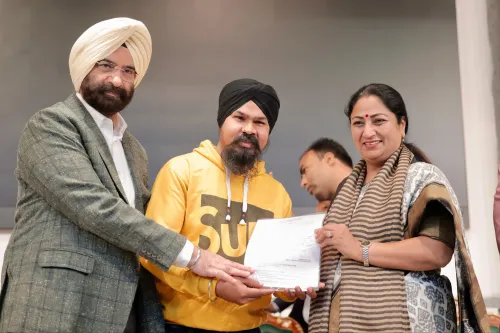
Delhi Chief Minister Rekha Gupta met families of 1984 anti-Sikh riot victims alongside Union Minister Hardeep Singh Puri on 7 November 2026, condemned Congress rule for the violence, and pledged that the Delhi government would provide employment to all remaining eligible dependants.
Key Takeaways
Delhi CM Rekha Gupta and Union Minister Hardeep Singh Puri jointly met families of 1984 anti-Sikh riot survivors on 7 November 2026 .
Phoolka , a leading legal champion for riot victims, attended the meeting alongside Lakshmi Puri and MLA Tarvinder Singh Marwah .
CM Gupta called the 1984 riots an indelible stain on Congress rule, citing decades of denied justice for victim families.
The Delhi government has already given government jobs to some dependants of victims and is committed to providing employment to all remaining eligible families.
The Nanavati Commission , set up in 2000 and reporting in 2005 , had recommended further action on 1984 cases — prosecutorial progress has been widely criticised as slow.
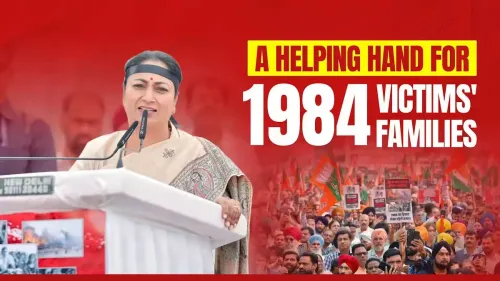
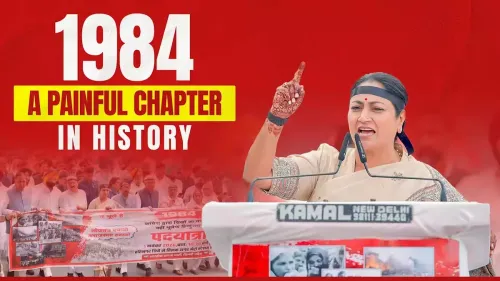
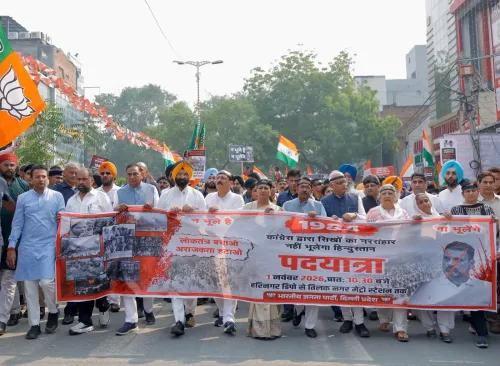
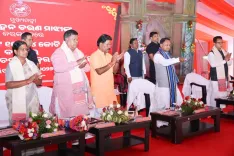
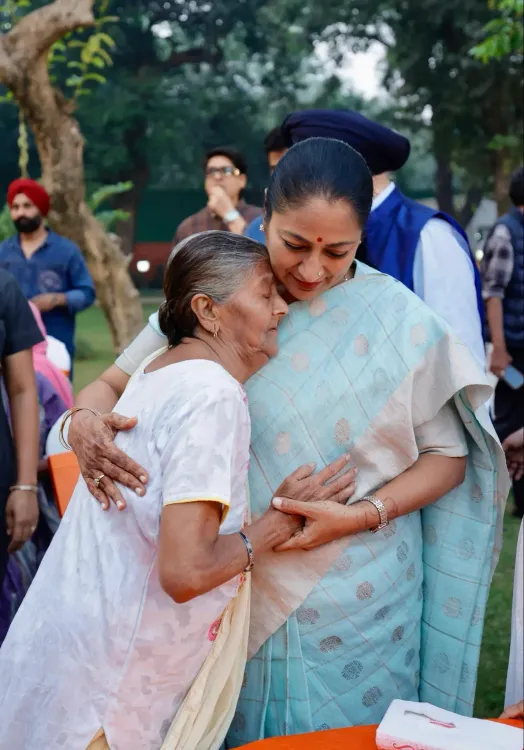
Forty-two years after one of independent India's darkest chapters, the wounds of 1984 remain raw — and on Saturday, 7 November 2026, Delhi Chief Minister Rekha Gupta sat across from families who lost everything in the anti-Sikh riots, listened to their accounts, and committed the Delhi government to standing firmly beside them.
A meeting that moved the Chief Minister to grief
Joining Union Minister Hardeep Singh Puri for the meeting, CM Gupta described the survivors' testimonies as deeply unsettling. 'Having heard their personal accounts, my heart was shaken to its core,' she wrote in Hindi, adding: '1984 ka Sikh narasanhar Congress ke shaasan par laga woh kalank hai, jise na itihas bhula sakta hai, na desh maaf kar sakta hai' ('The 1984 Sikh massacre is a stain on Congress rule that neither history can forget nor the country forgive').
Also present at the meeting were Lakshmi Puri, former senior UN official and spouse of Hardeep Singh Puri; Delhi BJP MLA Tarvinder Singh Marwah; and senior advocate H. S. Phoolka, who has spent decades litigating cases on behalf of riot victims and is widely recognised as one of the most tenacious legal voices for justice in the 1984 cases.
The 1984 riots: a wound with no statute of limitations
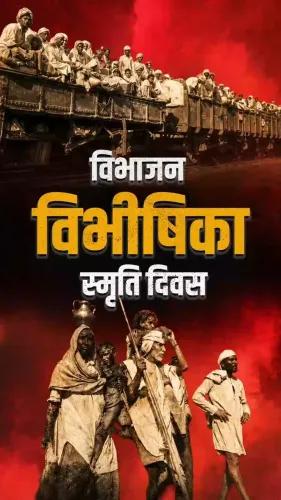
The violence erupted in the wake of Prime Minister Indira Gandhi's assassination on 31 October 1984, and over the days that followed, thousands of Sikhs were killed across India — the worst carnage unfolding in Delhi. Decades of inquiries followed, most notably the Nanavati Commission, which was constituted in 2000 and submitted its report in 2005, recommending further prosecutorial action. Justice, for most families, remained painfully slow and partial.
CM Gupta did not spare the Congress party. 'Innocent Sikhs' blood was shed under Congress rule and the victim families kept wandering from door to door for justice,' she said, calling it the greatest political and moral failure imaginable. The framing is familiar in BJP political rhetoric, but the platform — a direct meeting with survivors — gives the charge a sharper, more personal edge.
Delhi government's promise on jobs for dependants
Moving beyond condemnation, the Chief Minister offered a concrete commitment: government jobs have already been provided to a number of dependants of riot victims, and the Delhi government is committed to ensuring employment for the remaining eligible families. The post did not specify how many positions have been filled or how many applicants remain in the queue — figures that advocates like Phoolka will almost certainly press the government to disclose formally.
What is clear is the signal: a BJP-led Delhi administration is positioning itself as the administration that will act where, it argues, Congress never did. With H. S. Phoolka in the room — a figure who has built his life's work around accountability for 1984 — the meeting carries institutional weight beyond political optics.
Forty-two years is a long time to wait for justice. The families in that room know that better than anyone. What they will watch now is whether the Delhi government's pledge translates into documented job offers, transparent timelines, and follow-through — not just the warmth of a single afternoon meeting.
Point of View
The party is attempting to shift the story from remembrance to accountability and delivery. The presence of H. S. Phoolka — who has no partisan alignment and an unimpeachable record of legal advocacy for victims — lends credibility that goes beyond optics. The critical test will be whether Delhi's jobs promise is documented, time-bound, and independently verifiable, or whether it joins the long list of unfulfilled assurances that have haunted these families for more than four decades.
NationPress
7 Nov 2026
Frequently Asked Questions
What happened at the 1984 anti-Sikh riots?
The 1984 anti-Sikh riots were widespread violence against Sikhs that erupted following the assassination of Prime Minister Indira Gandhi on 31 October 1984. Thousands of Sikhs were killed across India, with the most severe violence occurring in Delhi. The Nanavati Commission, constituted in 2000 and reporting in 2005, examined the events and recommended further prosecutorial action.
What did Delhi CM Rekha Gupta promise to 1984 riot victim families?
CM Rekha Gupta promised that the Delhi government would provide government employment to all remaining eligible dependants of 1984 riot victims, stating that jobs had already been given to a number of survivors' family members.
Who is H. S. Phoolka and why was he at the meeting?
H. S. Phoolka is a senior advocate who has spent decades fighting legal cases on behalf of victims of the 1984 anti-Sikh riots. His presence at the 7 November 2026 meeting with CM Gupta and Union Minister Hardeep Singh Puri lent independent, non-partisan credibility to the engagement with survivor families.
Why does the BJP blame Congress for the 1984 Sikh riots?
The Congress party was in power at the Centre when the 1984 anti-Sikh riots occurred, and successive BJP leaders have argued that the Congress government failed to protect Sikhs, allowed perpetrators to go unpunished for decades, and was slow to offer rehabilitation. This has been a recurring BJP political charge across election cycles.
What is the current status of justice for 1984 riot victims?
Justice for 1984 riot victims has been slow and partial over four decades. The Nanavati Commission's 2005 report called for further action, some convictions have occurred over the years, and state governments have offered compensation and limited rehabilitation — but many families continue to pursue cases and await full accountability.