Sonia Gandhi sidesteps nepotism question in Guardian interview ahead of memoir
Synopsis
In a rare sit-down interview with The Guardian, Sonia Gandhi deflected nepotism questions with a terse 'you would have to ask the party', called the 1975 Emergency a 'mistake' and revealed family divisions over it, and offered a harrowing firsthand account of cradling Indira Gandhi's bleeding body after the assassination — all timed to the release of her memoir next week.
Key Takeaways
Sonia Gandhi was interviewed by British daily The Guardian at her residence in New Delhi , with the piece published on 7 November 2026 .
She deflected questions on nepotism, saying 'You would have to ask the party' when asked about the Gandhi family's unquestioned control of Congress.
She called the Emergency of 1975 a 'mistake', saying Indira Gandhi was never comfortable with it; she attributed the decision partly to Sanjay Gandhi's forceful pressure.
Her memoir quotes: 'Keeping Sanjay in check could have prevented much of the damage that followed.' She gave a harrowing eyewitness account of holding Indira Gandhi's bleeding body in the car racing to the hospital after the assassination.
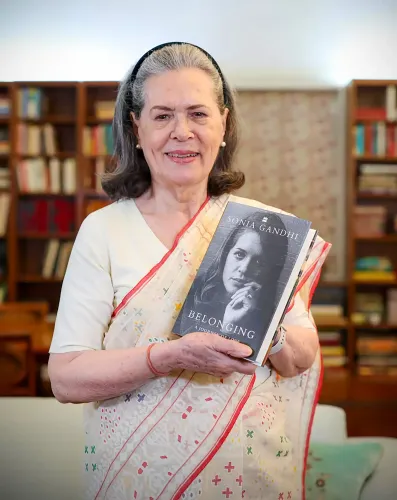
Her memoir, Belonging: A Journey of Love , is set for release early next week.
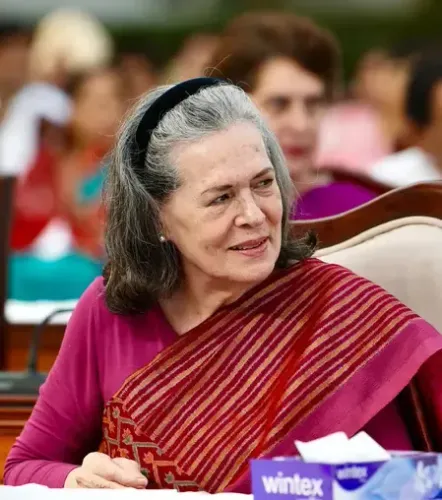
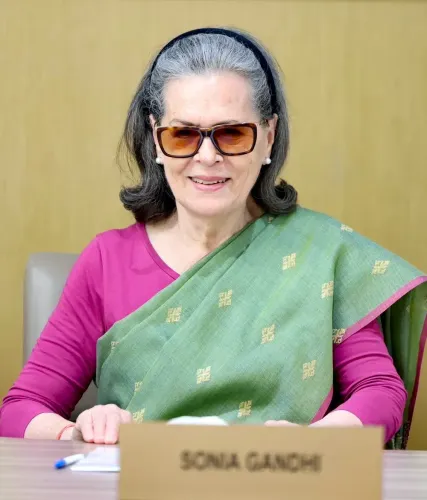
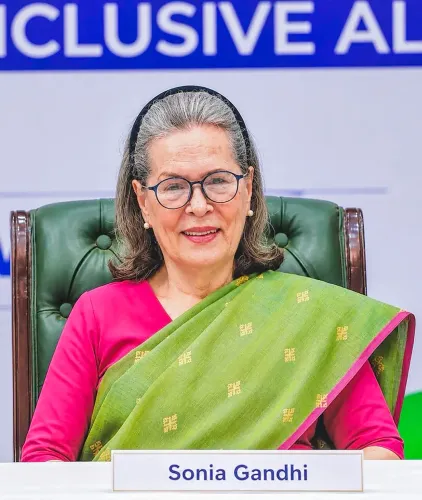
Congress leader Sonia Gandhi deflected questions about nepotism and her family's stranglehold over the Indian National Congress (INC) in an interview with British daily The Guardian, conducted at her residence in New Delhi. The interview, published on Saturday, 7 November, appeared alongside an edited extract from her forthcoming memoirs, Belonging: A Journey of Love, set for release early next week.
Nepotism question draws a pointed non-answer
When pressed on why Congress cannot free itself from her family's leadership, Sonia Gandhi was described by The Guardian as 'dismissive, perhaps a nerve touched.' Her response to the interviewer was terse: 'You would have to ask the party.' On the follow-up regarding electoral losses under her son Rahul Gandhi, she offered only: 'We all fight elections: we win them, we lose them. All of us have.'
The newspaper observed that she 'skates over the question of nepotism' rather than engaging it directly. The article noted that after taking over from his mother, Rahul Gandhi lost the last three general elections to Prime Minister Narendra Modi, with Congress now holding power in only a handful of states. 'As the family has maintained its control, Congress has been unable to shake off allegations that it is nepotistic and run by political elites,' the article stated.
UPA era and ministerial resignations
Sonia Gandhi was also described as defensive when the Congress-led United Progressive Alliance (UPA) government — which remained in power for a decade until 2014 — was raised. When questions about that period were put to her, she said: 'In almost every single instance, the ministers resigned.' She offered no further elaboration on the broader governance legacy of the UPA years.
Emergency of 1975: 'A mistake', says Sonia
One of the more candid passages in the interview concerned the Emergency of 1975, declared by then-Prime Minister Indira Gandhi. Sonia Gandhi called it 'a mistake' and said she believes Indira eventually came to feel the same. 'I know that many would laugh at this, but I believe she was never comfortable in the course of the emergency. I think it was sitting heavy on her,' she said.
According to The Guardian's account drawn from her memoirs, the Gandhi family was 'split on the decision.' While her husband Rajiv Gandhi urged his mother to wait for the next election, his younger brother Sanjay Gandhi reportedly pushed forcefully for the Emergency, arguing at a family dinner that the Opposition 'must be stopped' or they would destroy his mother. The article noted that Sanjay's influence over Indira Gandhi 'was a great source of public controversy at the time.'
Sonia Gandhi recalled that the debate 'inflamed tensions' within the family, and that Rajiv attempted to confront his mother, 'but she refused to listen.' Her memoir reportedly states: 'Keeping Sanjay in check could have prevented much of the damage that followed.'
Witness to Indira Gandhi's assassination
In a deeply personal section of the interview, Sonia Gandhi recounted witnessing the aftermath of Indira Gandhi's assassination by her own bodyguards. She described hearing what 'sounded like fireworks going off' before seeing Indira's bullet-ridden, blood-covered body. 'After Indira was put into a car, she held her bleeding body and tried to revive her mother-in-law as they raced to the hospital,' the article narrated.
'There was blood everywhere, and I realised she wasn't replying to my questions. It seemed as if she had already gone,' Sonia Gandhi is quoted as saying. She described the drive to the hospital as 'excruciating' — even with minimal traffic — adding, 'I also knew that because she wasn't speaking, it must be over.'
She also spoke of the deep trauma that followed Rajiv Gandhi's assassination, describing life thereafter as living 'like a ghost.' Her daughter Priyanka Gandhi Vadra, seated nearby during the interview, joined parts of the conversation. Belonging: A Journey of Love is expected to offer a fuller account of these defining personal and political chapters when it releases next week.
Point of View
Or at least the dynasty that has defined it for decades. The Emergency admission is significant but carefully framed: by attributing the decision primarily to Sanjay Gandhi's 'hothotheadedness', the memoir arguably repackages a constitutional crisis as a family tragedy, softening political accountability into personal grief. Coming weeks before the memoir's release, the interview reads as much as a managed publicity exercise as a genuine reckoning — which may explain why the most uncomfortable questions got the least honest answers.
NationPress
7 Nov 2026
Frequently Asked Questions
What did Sonia Gandhi say about nepotism in The Guardian interview?
Sonia Gandhi effectively sidestepped the question, responding 'You would have to ask the party' when asked about the Gandhi family's unquestioned hold on Congress leadership. The Guardian noted she 'skates over the question of nepotism', adding only: 'We all fight elections: we win them, we lose them.'
What does Sonia Gandhi say about the 1975 Emergency in her memoir?
Sonia Gandhi calls the Emergency of 1975 a 'mistake' and says she believes Indira Gandhi came to feel the same. She attributes much of the push for the Emergency to Sanjay Gandhi, noting in her memoir: 'Keeping Sanjay in check could have prevented much of the damage that followed.'
What is Sonia Gandhi's new memoir about?
Her memoir, titled Belonging: A Journey of Love, covers her personal and political life within the Gandhi family, including her experiences around the assassinations of Indira Gandhi and Rajiv Gandhi, the Emergency, and the Congress party's trajectory. It is set for release early next week.
What did Sonia Gandhi reveal about Indira Gandhi's assassination?
Sonia Gandhi gave a firsthand account of holding Indira Gandhi's bleeding body in the car rushing to the hospital after the assassination, saying: 'There was blood everywhere, and I realised she wasn't replying to my questions. It seemed as if she had already gone.' She described the drive as 'excruciating'.
How has the Gandhi family's leadership affected the Congress party?
According to The Guardian's report, Rahul Gandhi lost the last three general elections to PM Narendra Modi after taking over Congress leadership from his mother, with the party now in power in only a few states. The article notes Congress has been 'unable to shake off allegations that it is nepotistic and run by political elites' as the family has maintained its control.