CM Mohan Yadav Launches ₹81 Cr Road, Plans Ram Lok in Chitrakoot

Synopsis
On Deepotsav, MP CM Dr. Mohan Yadav broke ground on the ₹81.17 crore Gupt Godavari four-lane road in Chitrakoot and announced plans to build Ramraja Lok in Orchha and Vanvasi Ram Lok in Chitrakoot, extending the Mahakal Lok model to Ramayana pilgrimage sites.
Key Takeaways
₹81.17 crore Gupt Godavari Four-Lane Road bhoomipoojan held in Chitrakoot on 7 November 2026 .
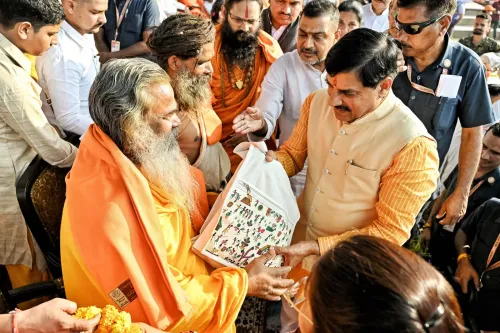
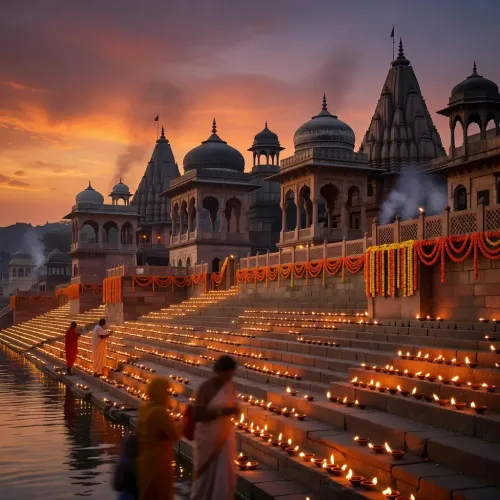
Mohan Yadav performed deepdan on the banks of the Mandakini river and distributed Diwali gifts to children.
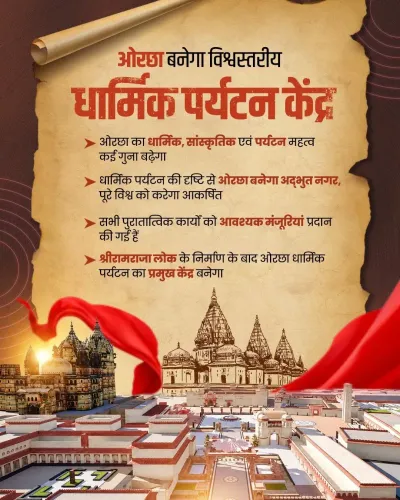
A Ramraja Lok cultural complex is planned for Orchha , home to the Ram Raja Temple.
A Vanvasi Ram Lok is planned for Chitrakoot , modelled on Ujjain's Mahakal Lok.
Madhya Pradesh is building a circuit of upgraded Ramayana-linked pilgrimage destinations across the state.
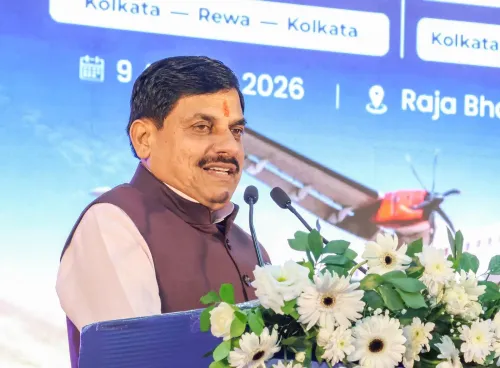
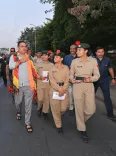
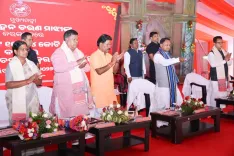
On the festival of Deepotsav, Madhya Pradesh Chief Minister Dr. Mohan Yadav turned a sacred pilgrimage town into a stage for both devotion and development — laying the foundation stone for a ₹81.17 crore four-lane highway in Chitrakoot and announcing two new large-scale cultural complexes modelled on Ujjain's Mahakal Lok.
A Four-Lane Road to Gupt Godavari
The centrepiece of Saturday's programme was the bhoomipoojan (ground-breaking) of the Gupt Godavari Four-Lane Road, to be built at a cost of ₹81.17 crore. The project will improve access to the Gupt Godavari cave complex — one of Chitrakoot's most visited sacred sites, believed to be the spot where Lord Rama rested during his exile — which currently draws large volumes of pilgrims along narrow, congested routes. Better connectivity directly translates to safer, faster movement for the lakhs of devotees who visit the region every year.
Posting on X, Dr. Yadav wrote: 'हमारे पर्व सांस्कृतिक राष्ट्रवाद की पहचान' — 'Our festivals are the identity of cultural nationalism' — framing the infrastructure push explicitly within a heritage-led governance philosophy. He added that he performed deepdan (offering of lamps) on the banks of the holy Mandakini river, praying for the continuous progress of the state and happiness and prosperity of its citizens.
Ramraja Lok and Vanvasi Ram Lok: The Mahakal Lok Blueprint Expands
The larger announcement of the evening was the state government's intent to replicate the Mahakal Lok model — the sprawling, illuminated pilgrim corridor built around the Mahakaleshwar Jyotirlinga in Ujjain — at two more Ramayana-linked sites. Orchha, home to the celebrated Ram Raja Temple where Lord Rama is worshipped as a king, will get a Ramraja Lok; and Chitrakoot itself will receive a Vanvasi Ram Lok, a grand complex honouring Ram's forest years.
Ujjain's Mahakal Lok, inaugurated in phases between 2021 and 2022, transformed the city's pilgrim economy and became a benchmark for religious tourism infrastructure in the state. Applying that template to Orchha and Chitrakoot — both deeply woven into the Ramayana geography — signals a deliberate strategy to build a circuit of upgraded pilgrimage destinations across Madhya Pradesh.
Deepotsav as a Policy Platform
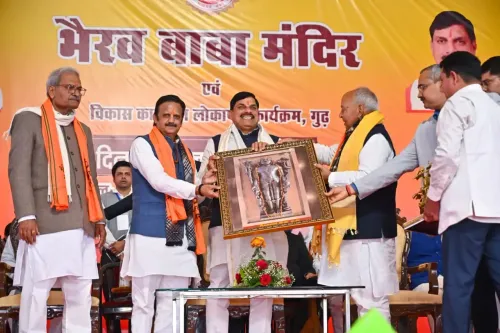
Dr. Yadav also distributed Diwali gifts to children during the event and received blessings from saints and spiritual leaders gathered for the festival. The choice of Deepotsav as the moment to lay the foundation stone is itself part of an established pattern: successive Madhya Pradesh governments have used major Hindu festivals as launchpads for capital announcements at religious sites, fusing cultural celebration with governance optics in a way that amplifies both reach and sentiment.
The pilgrim towns of Chitrakoot and Orchha have historically received less infrastructure investment than Ujjain or Bhopal. If the announced projects move from bhoomipoojan to brick-and-mortar at pace, they could meaningfully shift footfall — and local livelihoods — along the Bundelkhand pilgrimage belt.
Point of View
Creating a durable association between governance and religious identity. The Mahakal Lok template, having demonstrated measurable tourism uplift in Ujjain, now becomes a scalable political and economic asset as the state eyes the Bundelkhand pilgrim circuit. For the BJP in Madhya Pradesh, Ramayana geography is not just heritage — it is a mapped electoral and developmental strategy. The key test will be whether project execution matches the ambition of the announcements.
NationPress
7 Nov 2026
Frequently Asked Questions
What is the Gupt Godavari four-lane road project in Chitrakoot?
It is a four-lane road to be built at a cost of ₹81.17 crore to improve access to the sacred Gupt Godavari cave site in Chitrakoot, MP. MP CM Dr. Mohan Yadav performed the ground-breaking on 7 November 2026.
What is Vanvasi Ram Lok in Chitrakoot?
Vanvasi Ram Lok is a planned grand cultural complex in Chitrakoot honouring Lord Rama's forest exile years. It is modelled on the Mahakal Lok corridor in Ujjain and was announced by CM Dr. Mohan Yadav on Deepotsav 2026.
What is Ramraja Lok in Orchha?
Ramraja Lok is a proposed cultural and pilgrim complex in Orchha, Madhya Pradesh, built around the famous Ram Raja Temple. The Madhya Pradesh government announced it on 7 November 2026 as part of a religious tourism expansion plan.
What is Mahakal Lok in Ujjain and why is it significant?
Mahakal Lok is a large pilgrim corridor built around the Mahakaleshwar Jyotirlinga temple in Ujjain, inaugurated in phases between 2021 and 2022. It transformed Ujjain's pilgrimage economy and is now the blueprint for similar complexes at Orchha and Chitrakoot.
What did CM Mohan Yadav do at the Mandakini river on Deepotsav?
CM Dr. Mohan Yadav performed deepdan — offering of lamps — on the banks of the holy Mandakini river in Chitrakoot, praying for the continuous progress of Madhya Pradesh and happiness and prosperity of its citizens.