CM Bhupendra Patel: Amit Shah Reviews Gujarat Security
Synopsis
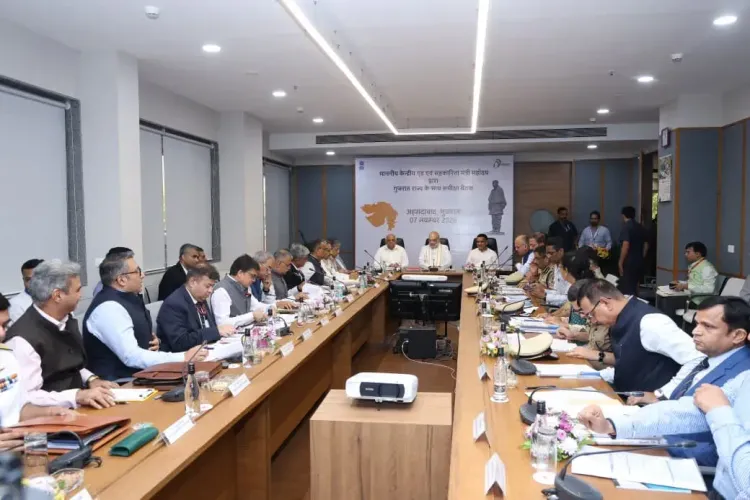
Union Home Minister Amit Shah held a comprehensive law-and-order review in Ahmedabad on November 7, directing Gujarat toward a 2029 drug-free target, expanded cyber-fraud response under Mission Prabodh, tighter coastal and border security, and a faster criminal justice system.
Key Takeaways
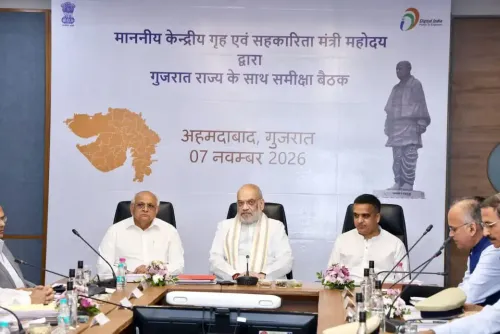
Amit Shah chaired a wide-ranging security review in Ahmedabad on November 7, 2026 , covering law and order, borders, and cyber crime.
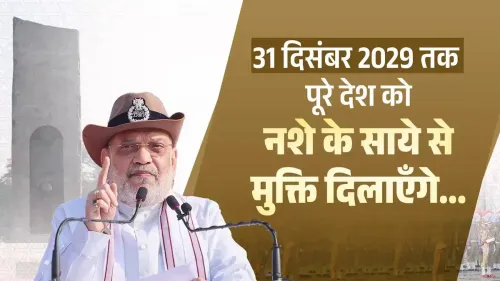
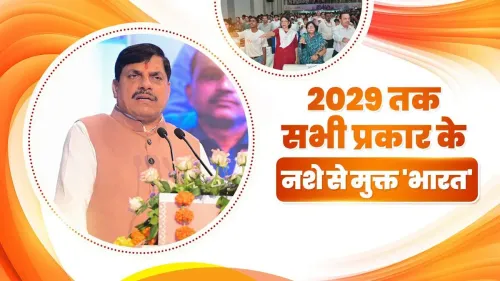
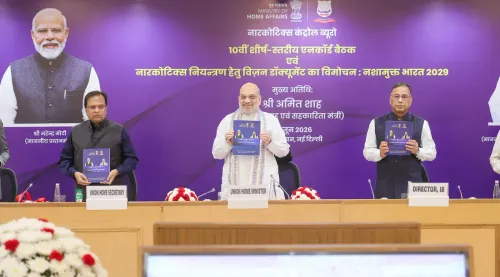
An intensive anti-drug drive and expansion of the 1933 Control Room network were directed toward achieving a Nasha Mukt Bharat by 2029 .
Coastal and border security, infiltration control, and the Vibrant Village Programme were reviewed for Gujarat's frontier districts.
Mission Prabodh and the national 1930 cyber helpline are to be strengthened to combat digital fraud and 'digital arrest' scams.
Directives were issued to accelerate Gujarat's criminal justice system through technology-enabled projects.
CM Bhupendra Patel reaffirmed the government's commitment to peace, security, and rule of law across the state.
Union Home Minister Amit Shah descended on Ahmedabad on Saturday, November 7, 2026, for a sweeping security audit — covering everything from Gujarat's coastline to its cyberspace — in a high-level review that Gujarat Chief Minister Bhupendra Patel described as anchored around a firm target: a 'Nasha Mukt Bharat' (drug-free India) by 2029.
A 2029 Deadline and an Anti-Drug Action Plan
At the centre of the meeting was a sharp directive on narcotics. Shah called for an intensive anti-drug drive and laid out an action plan that includes expanding the reach of the 1933 Control Room network — a Gujarat-specific drug-reporting mechanism — as the state's operational spine in the fight against substance abuse.
The Nasha Mukt Bharat Abhiyaan, launched nationally in 2020, coordinates central and state enforcement, awareness campaigns, and rehabilitation programmes. The 2029 deadline attached to Saturday's directives signals a push to convert that broader national mission into a measurable state-level deadline, with Gujarat expected to demonstrate quantifiable progress.
Coastline, Borders, and the Vibrant Village Push
Gujarat's geography makes it one of India's most security-sensitive states: it shares an international border with Pakistan and carries one of the country's longest coastlines. Shah reviewed infiltration-control protocols, coastal surveillance, and the rollout of the Vibrant Village Programme — the central scheme announced in the 2022–23 Union Budget to build infrastructure in border villages, check out-migration, and tighten frontier security.
The dual focus on land borders and the coast reflects the integrated security framework that the Union Home Ministry has pushed BJP-governed states to adopt, ensuring that frontier policing and community development move in tandem rather than in separate silos.
Mission Prabodh and the 1930 Cyber Helpline
Cyber fraud and the increasingly reported phenomenon of 'digital arrests' — where scammers impersonate law-enforcement officers to extort victims over video calls — received dedicated attention. Shah directed strengthening of Mission Prabodh, Gujarat's awareness initiative against digital fraud, alongside consolidation of the national 1930 helpline, the Ministry of Home Affairs' primary cyber-crime reporting channel that has been progressively scaled since 2020.
These are not abstract concerns: cyber fraud losses across India have accelerated sharply, and states with high smartphone penetration, like Gujarat, have seen a proportional surge in complaints. Getting the 1930 line and state-level awareness programmes working in tighter coordination is the practical ask behind Saturday's directive.
Faster Justice: Criminal Justice System Reforms on the Table
Shah also issued instructions aimed at speeding up Gujarat's criminal justice system through technology-led projects — an agenda that tracks the Centre's broader ambition, following the enactment of the new criminal codes, to reduce pendency and compress trial timelines.
CM Patel framed the government's overall posture clearly: 'The government is committed to maintaining peace, security, law and order in the state.' Regular high-level reviews between the Home Ministry and BJP-ruled states have been a recurring governance feature since 2014, but the convergence of anti-narcotics deadlines, cyber-fraud escalation, and border-development imperatives gives Saturday's Ahmedabad session unusual breadth.
What Shah set in motion on Saturday isn't just a checklist — it's a ticking clock. The 2029 drug-free target, the cyber helpline expansion, and the border-village programme all now have Gujarat's machinery formally aligned behind them, with accountability running straight back to South Block.
Point of View
Election-adjacent benchmark that the BJP can either claim or be held accountable for. The bundling of coastal security, the Vibrant Village Programme, and cyber-fraud response under one session also signals a deliberate 'whole-of-government' framing that makes internal security harder to compartmentalise — and harder for opposition critics to pick apart piece by piece.
NationPress
7 Nov 2026
Frequently Asked Questions
What was the purpose of Amit Shah's visit to Ahmedabad on November 7 2026?
Union Home Minister Amit Shah visited Ahmedabad on November 7, 2026 to chair a comprehensive review of Gujarat's law and order, border and coastal security, anti-drug measures, and cyber-crime response frameworks.
What is the Nasha Mukt Bharat Abhiyaan and what is its 2029 target?
Nasha Mukt Bharat Abhiyaan is a national programme launched in 2020 to combat substance abuse through enforcement, awareness, and rehabilitation. Amit Shah directed Gujarat to intensify its anti-drug drive to achieve the drug-free India goal by 2029.
What is Mission Prabodh in Gujarat?
Mission Prabodh is a Gujarat government initiative to protect citizens from cyber fraud and 'digital arrest' scams, working alongside the national 1930 cyber-crime helpline operated by the Ministry of Home Affairs.
What is the Vibrant Village Programme and why is it relevant to Gujarat's security?
The Vibrant Village Programme is a central government scheme announced in the 2022-23 Union Budget to develop infrastructure in border villages, reduce out-migration, and strengthen frontier security — directly relevant to Gujarat's border with Pakistan.
What is the 1933 Control Room in the context of Gujarat's anti-drug efforts?
The 1933 Control Room is a drug-reporting mechanism in Gujarat; Amit Shah directed expansion of its reach as part of the state's intensified action plan to meet the 2029 Nasha Mukt Bharat target.