CM Bhupendra Patel Hails Operation Trident as Blow to Narco-Terror

Synopsis
Gujarat Chief Minister Bhupendra Patel hailed Operation Trident on 25 October 2026 as a decisive strike against narco-terrorism under PM Modi and HM Amit Shah, vowing complete eradication of the menace by 2029 and reinforcing the BJP's zero-tolerance security posture.
Key Takeaways
Operation Trident has been described by Gujarat CM Bhupendra Patel as a 'lethal blow' to narco-terrorism in India.
Patel attributed the operation's success to the leadership of PM Narendra Modi and HM Amit Shah .
The post sets a public eradication deadline of 2029 — a rare, specific political commitment on counter-narcotics.
Gujarat's 1,600-km coastline makes it a key front in India's drug interdiction efforts, lending Patel's endorsement added significance.
India's counter-narcotics framework was significantly strengthened after the NDPS Act amendments of 2014 and inter-agency coordination has expanded under the Ministry of Home Affairs since 2019 .
Official operational details from the NCB or MHA on Operation Trident's scope and outcomes are yet to be publicly confirmed.
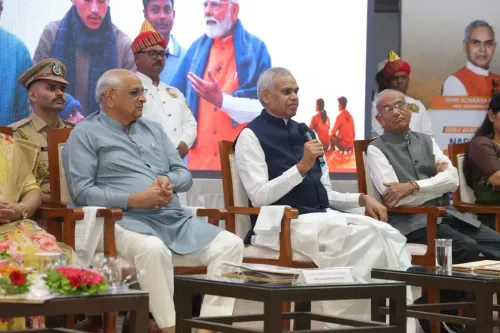
Narco-terrorism just got a reckoning — and Gujarat Chief Minister Bhupendra Patel wants the country to know it. On Sunday, 25 October 2026, Patel took to X to celebrate what he called a 'lethal blow' dealt to narco-terrorism, crediting the operation to the leadership of Prime Minister Narendra Modi and Union Home Minister Amit Shah.
What Patel Said About Operation Trident
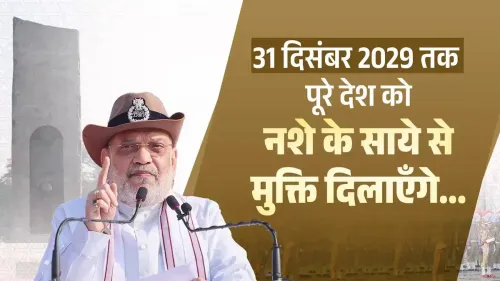
Patel's post specifically invokes Operation Trident, describing it as 'a clear testament to our zero-tolerance policy.' He declared that the government stands 'united to completely eradicate this menace by 2029' — a rare, public deadline attached to counter-narcotics ambitions. The framing is deliberate: this is not just a law-enforcement bust, it is a national-security statement.
Why Gujarat's Voice Carries Weight on This File
Gujarat, with one of India's longest coastlines stretching over 1,600 kilometres, has long been a pressure point in India's narco-terrorism map. Maritime and land routes through the state have historically featured in central-state coordination for drug interdiction, making Gujarat's Chief Minister a natural and credible voice on this file. Patel's amplification of the operation signals tight alignment between Gandhinagar and New Delhi on the security agenda.
The Policy Architecture Behind the Push
India's enforcement posture on narco-terrorism has hardened steadily. The Narcotic Drugs and Psychotropic Substances Act was strengthened with stiffer penalties in 2014, the same year Narendra Modi came to power. Since Amit Shah took charge of the Ministry of Home Affairs in 2019, inter-agency coordination — spanning the Narcotics Control Bureau, state police forces, and border security agencies — has been publicly framed as a unified national enterprise rather than a patchwork of state efforts. Operation Trident, as described by Patel, sits squarely within that architecture.
The 2029 Target and What It Signals
The 2029 deadline for eradication is the sharpest number in Patel's post — and the one that will be watched most closely. Successive governments have treated the drug-terror nexus, particularly along India's western and northern borders, as a threat that finances insurgency and destabilises border states. Putting a year on its elimination raises the political stakes considerably. Whether the Ministry of Home Affairs or the NCB follows with a detailed operational briefing will determine how much weight the timeline carries beyond the announcement cycle.
One operation, one deadline, one very loud signal: the BJP's anti-narco-terrorism machinery is moving — and it wants the country counting down to 2029.
Point of View
Nationally unified mission rather than a routine agency operation. The 2029 deadline is politically calculated: it coincides with the next general election cycle, turning counter-narcotics into an accountability benchmark. Gujarat's geographic exposure to drug smuggling routes gives Patel legitimate standing to speak on this file, but the absence of verified operational specifics means the announcement functions as political signalling until the MHA or NCB provides a ground-level briefing. The broader pattern — successive BJP communications linking narco-trafficking to terrorism and attaching eradication timelines — reinforces the party's 'strong state' identity ahead of future electoral cycles.
NationPress
25 Oct 2026
Frequently Asked Questions
What is Operation Trident in India?
Operation Trident is a counter-narcotics operation referenced by Gujarat Chief Minister Bhupendra Patel on 25 October 2026 as a major strike against narco-terrorism. Official details from the Ministry of Home Affairs or the Narcotics Control Bureau have not yet been publicly confirmed.
What is India's 2029 narco-terrorism eradication target?
CM Bhupendra Patel's post on 25 October 2026 stated that India stands united to 'completely eradicate' narco-terrorism by 2029. This is a public political commitment, though no official policy document with the specific 2029 target has been independently verified.
What role does Gujarat play in India's anti-drug operations?
Gujarat's coastline of over 1,600 kilometres has historically made it a key entry point for drug smuggling, placing it at the centre of central-state coordination for maritime and land-based narcotics interdiction.
What is the NDPS Act and how was it strengthened?
The Narcotic Drugs and Psychotropic Substances Act governs India's counter-narcotics enforcement. It was amended in 2014 to impose stronger penalties and improve enforcement mechanisms against drug trafficking.
What is Amit Shah's role in India's counter-narcotics policy?
As Union Home Minister since 2019, Amit Shah oversees internal security and has driven expanded inter-agency coordination between the Narcotics Control Bureau, state police, and border security forces as part of India's counter-narcotics strategy.