CM Fadnavis Launches NAINA Projects, Bridges in Navi Mumbai

Synopsis
Chief Minister Devendra Fadnavis inaugurated three connectivity bridges and the Uran Bypass in Navi Mumbai on 25 October 2026, while performing groundbreaking ceremonies for NAINA TPS infrastructure and distributing property cards to landholders — advancing the airport-linked urban corridor.
Key Takeaways
CM Devendra Fadnavis led the inauguration event at Panvel, Raigad on 25 October 2026 .
Three bridges — SBR-9 (Stilt Bridge), BR-4, and BR-5 — were inaugurated to improve connectivity around Navi Mumbai International Airport .
The Uran Bypass Bridge was formally opened, providing an alternate route in the Uran peninsula.
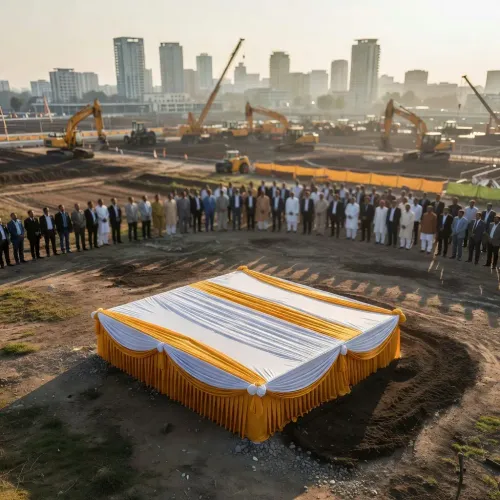
Bhoomipujan (groundbreaking) was performed for multiple infrastructure projects within the NAINA TPS .
Property cards were distributed to landholders in the NAINA region, formalising their land ownership rights.
Both Deputy Chief Ministers — Eknath Shinde and Sunetra Ajit Pawar — attended alongside senior MPs and ministers.
Three bridges inaugurated, a bypass opened, foundation stones laid for infrastructure across a high-stakes urban corridor — and thousands of landholders finally receiving formal property titles. Chief Minister Devendra Fadnavis triggered a significant infrastructure push in Navi Mumbai on Sunday, 25 October 2026, anchoring the state's ambitious NAINA development programme to the ground with physical steel and concrete.
What launched at Panvel on Sunday
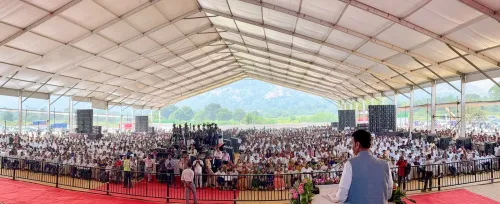
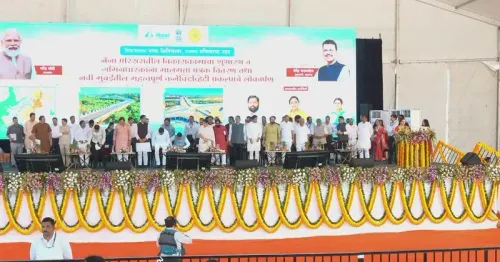
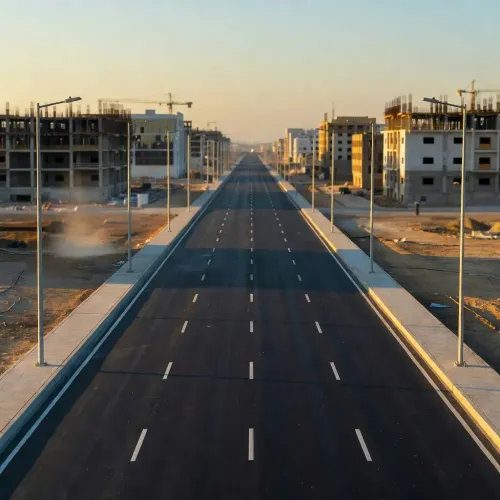
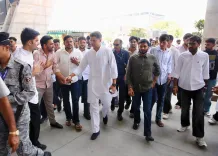
The ceremony, held at Panvel, Raigad at 11:40 am, packed multiple milestones into a single event. CM Fadnavis performed the bhoomipujan (groundbreaking) for various infrastructure project works under NAINA Town Planning Schemes (TPS). He simultaneously inaugurated three bridges designed to ease movement around the upcoming Navi Mumbai International Airport — SBR-9 (a stilt bridge), BR-4, and BR-5 — and formally opened the Uran Bypass Bridge, which offers an alternative route for traffic in the Uran area.
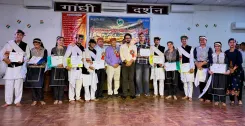
Alongside the infrastructure inaugurations, the government distributed property cards to landholders within the NAINA region — a step that formalises land ownership for residents whose holdings fall inside the notified development zone. Attending the event were Deputy Chief Minister Eknath Shinde, Deputy Chief Minister Sunetra Ajit Pawar, Minister Bharat Gogawale, MP Sunil Tatkare, MP Shrirang Appa Barne, members of the state legislature, and other dignitaries.
What NAINA is — and why it matters
NAINA — Navi Mumbai Airport Influence Notified Area — was designated in the mid-2010s as a planned urban zone to manage and channel growth around the greenfield Navi Mumbai airport. The airport itself is designed to relieve pressure on the existing Chhatrapati Shivaji Maharaj International Airport in Mumbai, one of the most congested aviation hubs in the country.
The NAINA region spans several nodes across Raigad district, bringing in villages and agricultural land that were, until recently, outside the formal urban planning net. Town Planning Schemes under NAINA are the mechanism through which raw land gets reconstituted into plotted, serviced urban parcels — roads, utilities, and land titles flowing through a single administrative process. For landholders, a property card is not just a piece of paper; it is the legal foundation for selling, mortgaging, or developing their plots.
Bridges that stitch the airport corridor together
The three connectivity bridges — SBR-9, BR-4, and BR-5 — sit in the immediate airport-influence zone and are intended to ensure that the road network serving the new terminal can handle the anticipated surge in freight and passenger traffic once the airport becomes operational. The Uran Bypass Bridge addresses a separate but related bottleneck: the Uran peninsula, home to industrial estates and the Jawaharlal Nehru Port hinterland, has long needed an alternative arterial connection to reduce congestion on its single main artery.
Taken together, Sunday's inaugurations signal that the Maharashtra government is no longer merely planning the airport's surrounding ecosystem — it is building it, bridge by bridge and scheme by scheme.
A government arriving in force
The presence of both Deputy Chief Ministers — Shinde and Sunetra Ajit Pawar — alongside senior MPs and ministers from the ruling Mahayuti coalition underlines the political weight the government is placing on the NAINA-airport corridor. Infrastructure of this scale, combining land titling with physical connectivity upgrades, tends to generate visible electoral dividends in the constituencies it touches.
With phased NAINA town planning schemes still to be implemented and the airport's own operationalisation timeline watched closely, Panvel's Sunday ceremony is best read as an accelerator — not a finish line.
Point of View
Voter-legible infrastructure — a strategic move ahead of the ongoing cycle of civic and assembly-level politics in the Mumbai Metropolitan Region. Distributing property cards alongside bridge inaugurations is a deliberate bundling of rights-based governance with physical development, giving the ruling Mahayuti coalition a tangible deliverable for Raigad's landholding communities. The clustering of both Deputy CMs at a sub-district ceremony signals that the coalition treats the airport corridor as a shared political asset worth publicly owning together. The real test will be whether the phased NAINA TPS rollout maintains this pace or reverts to the stop-start pattern that has historically delayed Mumbai's peripheral urban schemes.
NationPress
25 Oct 2026
Frequently Asked Questions
What is the NAINA region in Maharashtra?
NAINA — Navi Mumbai Airport Influence Notified Area — is a designated planning zone around the upcoming Navi Mumbai International Airport, created to manage organised urban development, road networks, and land titling for villages and agricultural land falling in the airport's influence corridor.
What bridges did CM Fadnavis inaugurate in Navi Mumbai on 25 October 2026?
CM Fadnavis inaugurated three connectivity bridges — SBR-9 (a stilt bridge), BR-4, and BR-5 — in the Navi Mumbai International Airport area, and also opened the Uran Bypass Bridge to ease traffic in the Uran peninsula.
What are property cards and why were they distributed in the NAINA area?
Property cards are official documents that establish formal land ownership for holders whose plots fall within a government-notified planning zone. In the NAINA region, distributing them gives landholders legal proof of title, enabling them to sell, mortgage, or develop their land under the new urban framework.
When is the Navi Mumbai International Airport expected to be operational?
The exact operationalisation timeline for Navi Mumbai International Airport is subject to ongoing phased construction; as of October 2026, the Maharashtra government is actively building the surrounding infrastructure, but a confirmed commercial opening date has not been announced.
Who attended the NAINA development event at Panvel?
The event was attended by Deputy Chief Minister Eknath Shinde, Deputy Chief Minister Sunetra Ajit Pawar, Minister Bharat Gogawale, MP Sunil Tatkare, MP Shrirang Appa Barne, members of the Maharashtra state legislature, and other dignitaries.